Hydrafacial Istanbul: Professional Skin Cleansing and Glow Care
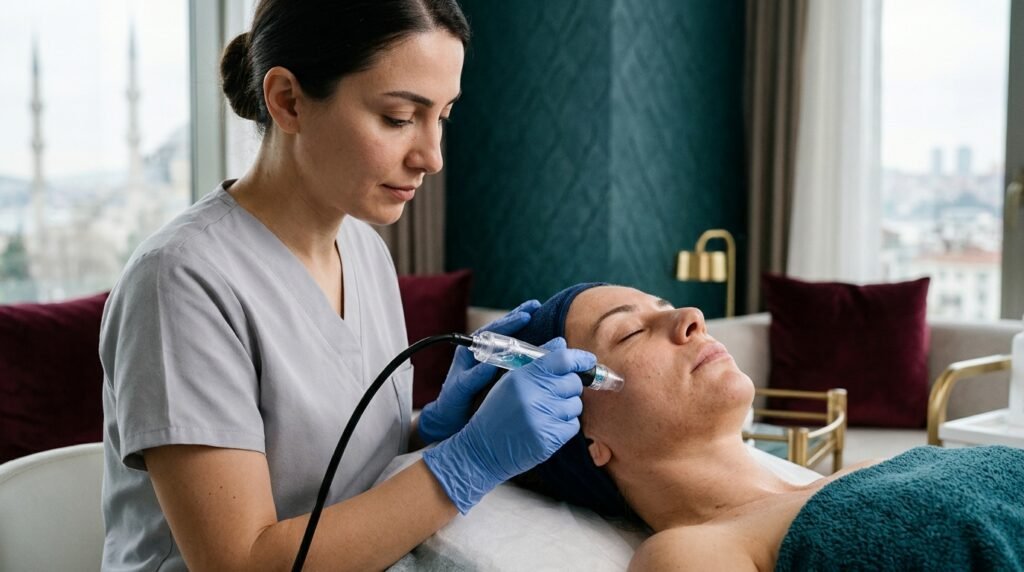
Hydrafacial Istanbul: Professional Skin Cleansing and Glow Care
Hydrafacial Istanbul searches often come from people ready to compare professional facial providers rather than browse general skin-care tips. This independent booking guide explains the treatment’s intended process, who may benefit, practical safety questions, the difference between real branded equipment and generic claims, and how to assess a personalized facial plan in Istanbul.
Editorial note: This is educational material, not diagnosis, a guarantee of outcomes or confirmation of particular product availability. Generated editorial imagery, if used, is illustrative and not proof of a real clinical procedure.
Why people search for Hydrafacial Istanbul
Searching for Hydrafacial Istanbul usually means you are comparing more than facial photographs. You may want a comfortable professional cleanse before a trip, help with surface congestion, a brighter-looking complexion before an event, or a provider who can explain each step in English. A sensible decision begins with your actual skin condition, not a promise that one device solves every concern. Istanbul offers many facial service formats and names; the right question is what is included, who assesses your skin, and how the provider manages sensitivity. Hydrafacial is a branded device-based treatment, not a generic word for any facial performed with water or suction. The official manufacturer describes a multi-step process that incorporates cleansing, exfoliation, extraction and hydration. That describes its intended mechanism; it does not guarantee equal results for every individual.
What is a Hydrafacial treatment?
Hydrafacial uses a specialized handpiece and treatment solutions to cleanse and exfoliate the skin, loosen and extract surface debris, and deliver hydrating ingredients. Some treatment variations add targeted boosters or additional modalities, depending on the menu and suitability assessment. The familiar cleanse–extract–hydrate sequence is useful shorthand, but it should not obscure differences between official treatment tiers, a provider’s own named facial protocols, and optional additions. Not all treatments advertised locally as a hydra facial are necessarily the original branded system. Ask which equipment and solutions are being used and whether an official Hydrafacial treatment is actually available. A provider who is transparent about this distinction is easier to evaluate than one relying on photographs or labels alone.
Who might consider it?
People who notice a temporarily dull-looking surface, dry feeling, minor visible congestion or a desire for a professionally guided routine may consider a facial assessment. Skin that looks oily can also be dehydrated, and a dry-feeling surface may coexist with an impaired barrier. A professional should consider sensitivity, recent product use, current medications, sun exposure and visible inflammatory changes before selecting any exfoliation intensity. People living with medical skin diseases should not treat a cosmetic facial as a substitute for diagnosis. Those with painful acne, widespread active inflammation, suspected infection, recurrent sores or changing pigmented lesions deserve the appropriate clinical assessment before undergoing an aesthetic procedure.
What results can you realistically expect?
A professional cleansing and hydrating session may leave the face feeling cleaner, more comfortable and smoother, with a fresher-looking finish. That immediate appearance can reflect surface hydration, removal of debris and changes in how light reflects from the stratum corneum. It is not proof that pores have permanently shrunk, scars have disappeared, or pigmentation has been medically treated. A visible short-term glow is different from measurable long-term improvement. Results vary with the skin’s baseline state, technique, ingredients and aftercare. Photographs are useful only when lighting, camera distance, makeup and timing are comparable; exaggerated before-and-after comparisons are not a substitute for evidence.
How professional skin assessment changes the plan
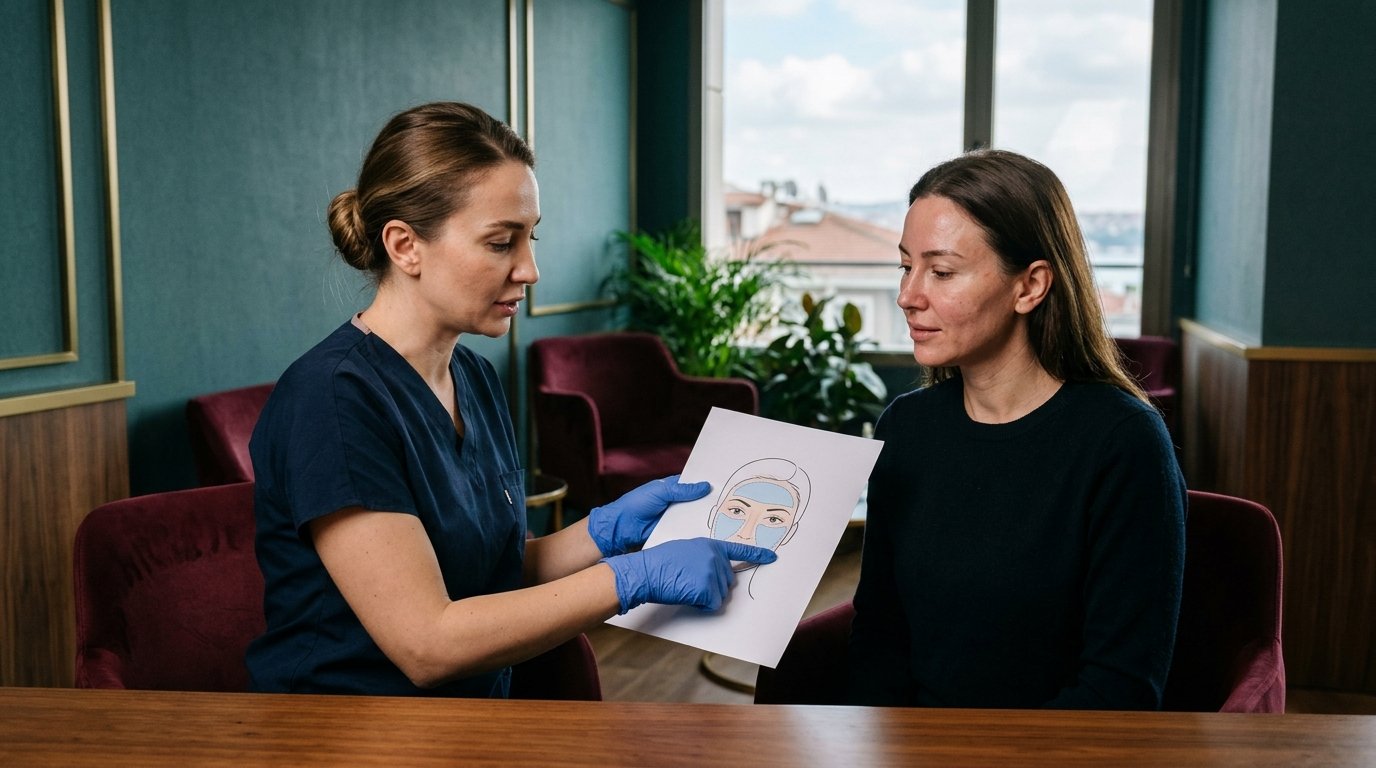
A helpful consultation asks why you want treatment and what you have been using. Bring a short list of cleansers, exfoliating acids, retinoids, prescription creams and any products that have recently caused burning. Explain whether your skin is usually oily, dry, reactive or prone to post-inflammatory discoloration. The provider may examine texture, visible redness and congestion and may ask whether you are traveling, sunbathing or attending an event soon. Assessment can identify reasons to adjust, postpone or avoid exfoliation. A scanner or AI-generated skin score might support a conversation, but neither replaces history, direct examination or medical evaluation for a suspicious finding.
Cleansing and exfoliation: the balance
Facial cleansing and exfoliation should not be measured by how intense they feel. The American Academy of Dermatology advises choosing exfoliation methods in line with skin type, medications and history of irritation, and avoiding exfoliation on sunburned or wounded skin. Someone already using a retinoid or benzoyl peroxide may experience more sensitivity when additional exfoliation is layered on without a plan. Excessive pressure, repeated passes or unnecessary combinations of strong peels can cause dryness or redness rather than a better outcome. For sensitive or easily pigmented skin, a more conservative approach is often more appropriate than an aggressive treatment immediately before travel.
Extraction and visible pores
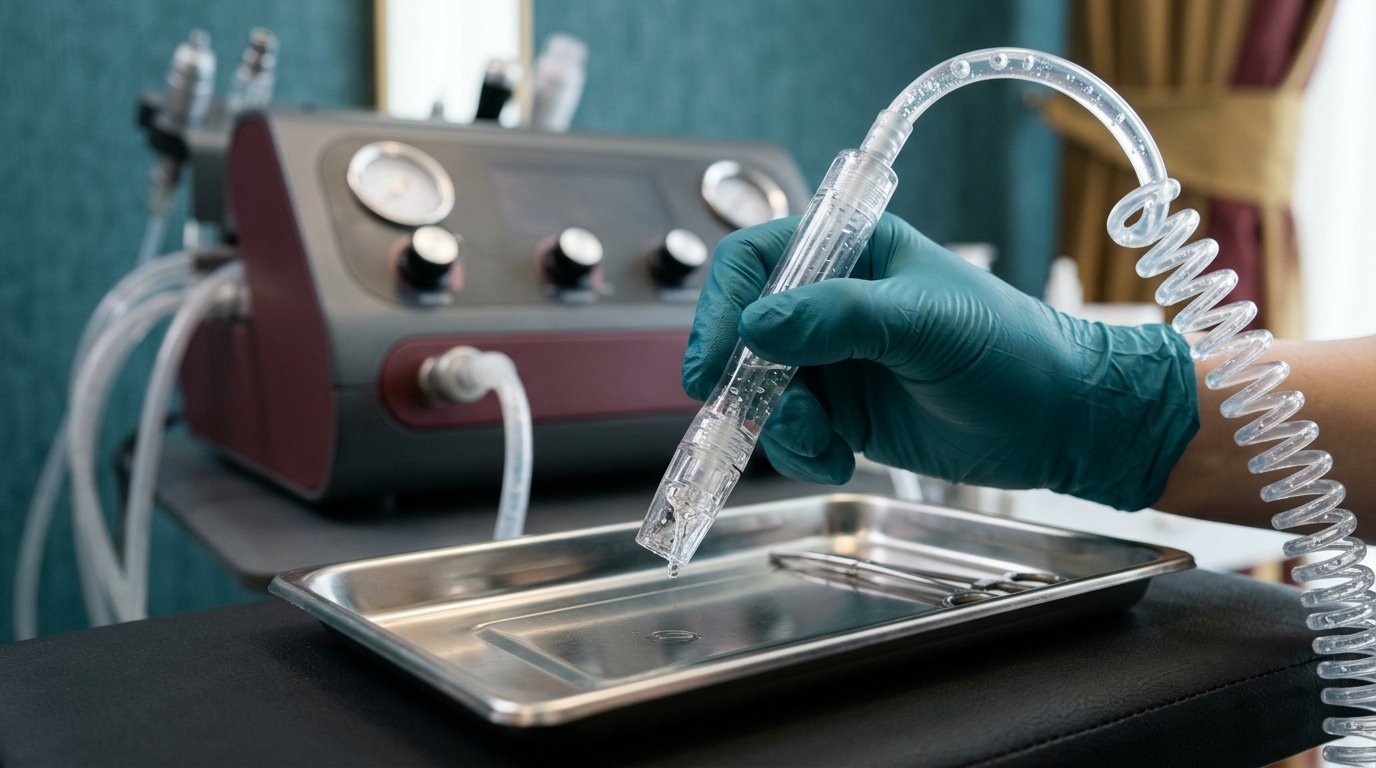
Congested pores can contain oil and surface debris, but a blackhead is not the same as an inflamed acne lesion. Suction-based extraction may remove some accessible material, depending on skin condition, device and settings. It cannot permanently remove the underlying tendency to produce sebum or prevent every future clogged pore. Inflamed lesions are not an invitation for forceful extraction. Unnecessary squeezing can aggravate inflammation and post-inflammatory marks. If acne is recurrent, painful or scarring, a longer-term medical treatment plan matters more than repeatedly booking a cosmetic clean-out.
Hydration and skin-barrier care
After cleansing, hydration is central to the appearance and comfort of the skin. Moisturizers and humectant-containing formulations can help reduce a dry feeling and support surface smoothness. Yet the chosen formula matters: fragrance, acids and other potentially irritating ingredients may not suit everyone. Hydration does not mean every skin type needs the strongest possible treatment or multiple active products. A careful professional session should consider barrier tolerance and recommend a simple routine rather than overwhelm the skin with new products on the same day. Hydration also does not replace sun protection.
What about boosters, serums and brands?
Different professional brands have different ingredient lists, intended uses and application instructions. The original Hydrafacial system has its own manufacturer-described boosters and solutions. Other reputable brands—including mesoestetic, Dr. med. Christine Schrammek and Rejuvi—may be relevant to a provider’s broader professional facial offering, but a branded bottle should never be portrayed as an official Hydrafacial booster without manufacturer-specific verification. Likewise, the presence of a brand on a shelf does not prove that any particular serum is included in your session. Ask for the exact product name, why it is being selected, and whether it is appropriate for your skin and the planned application method. This guide does not claim that any named product is currently in stock or included at a particular price.
Hydrafacial versus a manual facial
The broad goals can overlap, but the method differs. A traditional facial may rely on manual cleansing, massage, masks or selected exfoliation products, while the branded Hydrafacial approach uses a specialized handpiece to combine several skin-surface steps. Neither method is automatically superior for every concern. A manual barrier-supportive facial may better fit a highly reactive client, while someone seeking a device-guided extraction experience may prefer a suitably planned Hydrafacial. The skill of assessing the skin, selecting appropriate ingredients and explaining limits still matters as much as treatment branding.
| Question | Device-assisted Hydrafacial | Other professional facial |
|---|---|---|
| Core method | Specialized handpiece and solutions | Depends on selected manual or device techniques |
| Extraction | May use controlled suction | May be manual or not included |
| Additional products | Official solutions and optional manufacturer-specific boosters | Varies by professional protocol and verified products |
| Suitable for everyone? | No; assessment matters | No; assessment matters |
Skin tone and post-inflammatory discoloration
People with skin that develops lingering dark marks after irritation should discuss this history early. Even comparatively mild exfoliation can be unwelcome when it is layered with aggressive home care or undertaken on inflamed skin. The desired result should be comfortable, even-looking skin, not a reaction that persists into the next week. Dark spots may arise from acne, sun exposure or a medical pigment condition. A facial may change surface brightness temporarily but cannot diagnose every pigment change or replace dermatologist-directed treatment for melasma, suspicious lesions or other disorders.
Sensitive, rosacea-prone and eczema-prone skin
A person with persistent flushing, burning, active dermatitis or other irritation should not assume all facial technologies are gentle enough merely because they are described as non-invasive. Active flare-ups, impaired skin barriers and certain medications can change the risk-benefit balance. Ask the provider whether any extraction, acids, friction or heat could worsen symptoms. Some people should postpone the session and seek professional medical advice instead. Treating the source of redness or burning is more important than forcing a cosmetic appointment to match a travel itinerary.
Travel and event timing in Istanbul
A visitor may want to book between sightseeing, photographs and flights. Timing must leave room for a consultation and possible short-term sensitivity. It is better not to experiment with multiple unfamiliar products or stack intensive procedures immediately before a wedding, conference or flight. Istanbul involves outdoor walking and seasonal sun exposure; shade, protective clothing and suitable sunscreen should be planned. Do not interpret a marketing reference to minimal downtime as a guarantee that there will be no redness. If a reaction occurs, the provider should explain how follow-up can be arranged after you leave the city.
What to ask before booking
Ask whether the treatment uses an original Hydrafacial device, what stages are included, whether optional boosters are offered, what the consultation involves and which conditions would lead the provider to postpone treatment. Ask whether post-treatment redness is possible, what should be avoided afterward and what happens if your skin reacts unexpectedly. If you have allergies, discuss ingredient disclosures rather than assuming all professional products are interchangeable. Ask for a transparent explanation of the quoted service price; this article does not assign prices. If you are visiting from abroad, clarify communication language, appointment length and follow-up contact.
When a medical evaluation is more appropriate
Cosmetic facial care is not a substitute for dermatology. A lesion that changes in size, color or shape, a wound that does not heal, painful rapidly worsening inflammation, signs of infection or a new severe rash require appropriate clinical advice. Persistent acne that causes nodules or scarring also deserves medical assessment. A qualified provider should be comfortable recommending a different pathway when a facial is not the right first step. Marketing imagery should never imply that cosmetic care has diagnosed or cured a medical condition.
Aftercare after a professional facial
The treating professional’s instructions take priority because the exact protocol and your skin may differ. In general, gentle cleansing, moisturizer and broad-spectrum SPF 30 or higher help protect the surface while avoiding unnecessary irritation. Avoid adding several potent new acids or scrubs immediately afterward. If you already use prescription medicines, ask the prescriber or treating clinician how to coordinate your routine rather than stopping treatment without advice. Seek guidance for persistent pain, unexpected blistering, significant swelling or other symptoms that are not part of the anticipated recovery information.
How to compare facial providers in Istanbul
A useful comparison looks beyond social-media photos. Ask whether the clinic explains the method and product choices, shows realistic expectations, uses hygienic single-use materials where appropriate, and can identify when a medical referral is necessary. A provider should be able to communicate what is included and excluded from the service. Names such as premium, luxury or signature are marketing descriptors unless the actual protocol is specified. Consider the clarity of the booking process, treatment information and aftercare support. Claims such as best facial or best skin care clinic should be treated as questions for the reader to investigate rather than objective rankings.
The Nexja approach to a facial experience
Nexja Select describes a philosophy of carefully curated professional technologies, products and protocols. Nexja Butterflies refers to the selected team involved in the client experience, not a label for customers. Nexja Experience encompasses the journey from enquiry and assessment through personalized care and aftercare. These brand ideas should be judged by actual communication and service delivery; they are not credentials or clinical outcome guarantees. A prospective guest can use the same practical questions to evaluate any provider in Istanbul and choose the care that matches their own priorities.
Planning your appointment
Before booking, write down your main skin concern, any previous irritation, the date of a special event and what you want to understand during the consultation. Be honest about recent sunburn, active rashes, new medications or recent aesthetic procedures. Avoid deciding on a package solely from a social post. The treatment should be selected after review of your skin, and a cautious plan may sometimes mean postponing or choosing a simpler facial. The goal is a clear, comfortable, informed decision, rather than a fixed promise of flawless skin after one visit.
Frequently asked questions
Is Hydrafacial the same as a regular facial?
No. Hydrafacial is a branded device-assisted treatment approach. A regular facial can use different techniques and products. Compare the exact method rather than relying on the name.
How long does a Hydrafacial appointment take?
The timing varies with the particular protocol, optional steps and consultation. Confirm the duration with the provider before planning travel or other appointments.
Will one session remove blackheads permanently?
No facial can guarantee permanent blackhead prevention. Sebum production and new congestion may continue. Persistent acne may require a longer-term treatment plan.
Can Hydrafacial remove acne scars?
A surface-focused facial is not a substitute for an evidence-based scar treatment. Different scar types require individual assessment.
Can sensitive skin have Hydrafacial?
Suitability depends on the cause and current severity of sensitivity, the solutions used and the planned technique. Active irritation may justify deferring treatment.
Is Hydrafacial suitable immediately before a wedding?
Some clients experience little visible downtime, but this is not guaranteed. Schedule conservatively and avoid experimenting with unfamiliar procedures immediately before an important event.
What does Hydrafacial Istanbul cost?
Cost depends on the specific provider, package and optional stages. Ask for the current written price and what it includes; this article does not provide an unverified figure.
Are mesoestetic, Schrammek and Rejuvi the same as Hydrafacial boosters?
No. These are distinct professional brands. Their products should not be described as compatible Hydrafacial boosters unless the exact product and manufacturer’s instructions support that claim.
Can I combine the facial with strong peels?
Not automatically. Multiple exfoliating treatments may increase irritation. A clinician or appropriately trained provider should assess timing and suitability.
Do I need sunscreen after treatment?
Sun protection remains important. The American Academy of Dermatology advises broad-spectrum SPF 30 or higher along with shade and protective clothing.
Does Hydrafacial permanently shrink pores?
No facial should promise permanent pore closure. Temporary changes in surface appearance or congestion do not mean pores have been anatomically eliminated.
Is Hydrafacial a treatment for melasma?
A cosmetic facial is not a substitute for medical assessment and management of melasma or other pigment disorders.
What if I develop unusual swelling or blistering?
Contact the treating provider promptly. Significant pain, blistering, rapidly worsening symptoms or possible infection warrant medical advice.
How do I know whether a provider uses authentic equipment?
Ask for equipment and solution details, and use official distributor or manufacturer channels when you need to verify branded authenticity.
Can tourists book facial care in Istanbul?
Yes, but account for sun exposure, your departure date and access to aftercare. A short stay should not compress consultation or recovery.
What is the difference between Hydrafacial and hydradermabrasion?
Hydradermabrasion describes a category of device techniques. Hydrafacial refers to a particular branded system; do not assume every hydradermabrasion service is Hydrafacial.
Is more extraction always better?
No. Aggressive extraction can aggravate inflammation and discomfort, especially where active acne or sensitivity is present.
What should I disclose during consultation?
Tell the provider about allergies, active skin conditions, prescription products, recent procedures, medications and upcoming sun exposure or events.
Will my face necessarily look red?
Visible reactions vary. Ask what is expected for the specific protocol, and do not rely on a guarantee of zero downtime.
Can a scan choose my treatment automatically?
No. A scanner may provide information, but history, examination and professional judgment are needed to interpret it.
What is the best facial in Istanbul?
There is no universally best facial for everyone. Choose a provider that can assess your skin, describe its products and communicate a realistic plan.
Where can I read about other facial options?
Explore the published Hydrafacial comparison and skin analysis articles linked below, and discuss your individual goals before booking.
Sources and verification
Official product explanations describe intended technology; dermatology guidance informs general skin-safety precautions. These materials do not establish treatment availability or outcomes at a particular provider.