Hydrafacial Classic vs Glow vs Nexja Premium: Which Protocol Fits?
Hydrafacial Classic vs Glow vs Nexja Premium: Which Protocol Fits?
Hydrafacial Classic vs Glow vs Nexja Premium is not simply a comparison of three names or three price points. It is a question about how much professional care your skin needs today, which steps are appropriate, how much time you have, and whether a straightforward device-led facial or a broader personalised protocol makes more sense. The most responsible choice is not automatically the longest option. It is the protocol that matches your current skin condition, tolerance, priorities and schedule after a professional assessment.
This guide explains the comparison in practical terms for people considering a facial in Istanbul. It separates Hydrafacial’s manufacturer terminology from Nexja Skin Clinic’s clinic-specific menu names, describes what can reasonably be expected from a hydradermabrasion-style treatment, and shows why assessment matters more than choosing a package from a headline. It also covers preparation, safety screening, aftercare, travel timing, realistic limitations and the questions worth asking before you book.
A crucial distinction comes first. Hydrafacial uses its own treatment terminology, including Signature, Deluxe and Platinum in manufacturer materials. Classic, Glow and Nexja Premium are names used by Nexja Skin Clinic for its own service levels. They should not be treated as universal Hydrafacial categories, and the contents of a similarly named facial at another clinic may be different. This article therefore compares the protocols as they are described on Facial Istanbul and explains where individual planning can change the session.
The Quick Answer: Which Protocol Fits?
Hydrafacial Classic is the essential option on Nexja’s menu. It is described as a roughly 30–40 minute protocol centred on professional cleansing, pore purification, removal of surface debris and hydration. It can be a sensible choice for routine maintenance, first-time visitors, people with a limited schedule, or skin that does not need multiple additional steps.
Hydrafacial Glow is the middle level, described as approximately 50–60 minutes. It builds on the Classic approach with extra professional products and targeted care selected after assessment, such as customised peeling solutions, serums, masks and more intensive hydration. It may suit someone who wants a broader facial than a maintenance cleanse but does not need the length or possible supporting procedures of the Premium protocol.
Hydrafacial Nexja Premium is Nexja’s most comprehensive, clinic-specific signature protocol. The current service description places it at about 105 minutes and states that it combines detailed cleansing, professional peeling, selected active products, masks, hydration, massage and, only when appropriate, superficial microneedling support. The exact active products and optional steps are not identical for every client. That variability is part of the concept rather than a missing detail.
If your goal is simply routine cleansing and hydration, Classic may be enough. If you want added product-based care for brightness, dehydration or a more refined finish, Glow may be the better conversation. If you want a longer, highly individualised session addressing several compatible priorities, and you are suitable for every planned component, Premium may be considered. None of these shorthand descriptions replaces an assessment, and “more” is not always “better” for reactive, inflamed or compromised skin.
Decision principle: choose the least intensive protocol that appropriately serves the skin’s present needs. Upgrade because the added steps have a clear purpose, not because the package name sounds more advanced.
Manufacturer Terminology vs Clinic-Specific Protocol Names
Confusion often begins because Hydrafacial is both a brand name and a term many consumers use generically for water-based or serum-assisted facial cleansing. On its professional pages, the manufacturer describes a system built around Vortex-Fusion technology and discusses treatment levels such as Signature, Deluxe and Platinum. Those names refer to the manufacturer’s menu framework. They do not automatically define what every clinic calls Classic, Glow or Premium.
Nexja’s Hydrafacial Classic, Hydrafacial Glow and Hydrafacial Nexja Premium are clinic menu labels. They describe increasing session time and scope within Nexja’s own service architecture. They should not be mapped one-to-one onto Signature, Deluxe or Platinum without the clinic explicitly confirming that relationship. A client should ask what will actually be performed, which products will be used, which steps are optional and how the plan changes if the skin assessment identifies sensitivity, active inflammation or another reason to simplify the protocol.
This distinction protects informed consent. A label such as “Glow” can mean a targeted brightening concept at one provider, an LED add-on at another, or simply a longer hydration facial somewhere else. “Premium” is even more variable because it is a marketing adjective rather than a regulated treatment category. The useful question is not “Is Premium always better?” but “Which additional steps are proposed for me, why are they proposed, what are their limitations, and what aftercare do they require?”
It also prevents accidental overstatement. Hydrafacial’s manufacturer information describes device capabilities and commercial treatment options, while clinic pages describe local service design. Independent clinical evidence generally studies a defined technique, product or series of sessions in a particular group; it does not validate every package name used in the marketplace. A balanced comparison keeps those sources separate.
Questions that clarify any menu name
- Is this an official Hydrafacial treatment performed with an authentic Hydrafacial device and consumables?
- Which steps are core device steps, and which are clinic-specific additions?
- Which products or boosters are planned, and will the selection change after assessment?
- Does the protocol include LED, lymphatic drainage, a peel, a mask, microneedling or massage?
- Which additions create extra contraindications or aftercare?
- How long is active device treatment compared with the total appointment time?
- What will be removed or modified if the skin is irritated on the day?
How Hydrafacial Technology Works
Hydrafacial’s official device information describes Vortex-Fusion as a controlled spiral action that cleanses, exfoliates, extracts and infuses. The handpiece uses separate pathways to lift loosened surface material while delivering solutions to the skin. Disposable tips and adjustable treatment choices support different stages and areas. In everyday language, the process combines surface exfoliation, fluid movement, suction-assisted removal of debris and application of topical solutions.
The treatment is not the same as ablative resurfacing. It does not intentionally remove deep columns of skin in the manner of an ablative laser, and a standard device session should not be confused with medical procedures designed to remodel scar tissue or create controlled wounds at depth. It is also not identical to traditional crystal microdermabrasion. Hydradermabrasion-style approaches use a fluid-and-suction system rather than loose abrasive crystals, although both sit within the broad family of mechanical surface-exfoliation techniques.
The sequence commonly moves from cleansing and exfoliation to a peel step, extraction and hydration. The manufacturer also lists optional elements such as boosters, LED therapy and lymphatic drainage. Whether an optional step is appropriate depends on the device, the protocol, the person’s skin and the provider’s assessment. Optional additions should never be assumed from a package title.
The visible short-term appeal is understandable. Removing surface buildup and applying hydrating products can leave skin feeling smoother and looking more reflective. Congested pores may appear cleaner, and makeup may sit more evenly on a well-hydrated surface. These are cosmetic appearance goals. They are different from curing acne, erasing pigmentation, treating a vascular disorder or permanently tightening lax skin.
Technique matters. Suction that is unnecessarily strong, excessive passes over one area, aggressive exfoliation, poorly selected acids or combining too many active steps can increase irritation. Conversely, a cautious protocol may need to be simplified so much that a long package offers no meaningful advantage over a shorter one. Good treatment planning is therefore a balance between effective surface care and preservation of the skin barrier.
Core concepts in plain English
| Concept | What it means | What it does not promise |
|---|---|---|
| Cleansing | Removing surface oil, residue and loosened debris | A permanent change in oil production |
| Exfoliation | Reducing some surface corneocyte buildup | Deep scar removal or permanent resurfacing |
| Extraction | Suction-assisted removal of accessible pore contents | A cure for the causes of acne or enlarged pores |
| Infusion | Applying topical solutions during the protocol | Drug-like effects or guaranteed penetration to a specific depth |
| Hydration | Supporting a more comfortable, supple surface | Permanent correction of dehydration without home care |
| Glow | A temporary brighter or more reflective appearance | A medical diagnosis, fixed outcome or universal duration |
What the Evidence Can and Cannot Tell Us
Hydradermabrasion has been studied, but the evidence base is not unlimited. A small randomized study published in 2008 compared six hydradermabrasion sessions using an antioxidant serum with manual application of the same serum. Twenty women aged 34–56 participated. The hydradermabrasion group showed clinical and histological changes in the study, while the manually applied serum group did not. The result is interesting, yet its small sample, specific protocol, limited population and short study structure mean it should not be turned into a promise for every person or every modern package.
Later publications have examined hydradermabrasion with imaging or specific protocols for concerns such as acne. Such studies can support the idea that the technique may improve selected appearance measures in studied groups. They do not establish that every booster, clinic add-on or combined treatment is superior. They also do not tell us that a longer menu option is automatically more effective than a simpler one for a particular client.
Manufacturer pages are valuable for understanding how a device is designed and how the company describes its treatment platform. They are not independent evidence. Marketing statements may be based on company studies, selected endpoints or commercial surveys. A careful reader should distinguish technical description from comparative clinical proof.
The United States Food and Drug Administration explains an important general principle about cosmetic products: claims matter. Products intended only to alter appearance are regulated differently from drugs intended to treat disease or affect body structure or function. In practical terms, a facial can be discussed as supporting hydration, smoothness and a fresher appearance without claiming to diagnose, prevent or cure a disease. People with persistent acne, rosacea, dermatitis, infection, unexplained lesions or sudden pigment changes may need medical evaluation rather than a cosmetic package comparison.
How to read before-and-after evidence
Before-and-after photographs can be useful only when conditions are reasonably controlled. Lighting, camera angle, focal length, distance, makeup, skin moisture and image processing can all change the apparent result. Immediate post-treatment shine can look dramatic but may reflect hydration and lighting rather than durable structural change. Ask when the “after” photograph was taken, whether the client completed one session or a series, and whether home-care products or other procedures were used.
Testimonials describe individual experiences, not probabilities. They cannot predict your response or replace screening. The most trustworthy consultation explains both likely cosmetic benefits and limits, acknowledges uncertainty, and avoids guaranteed language.
Hydrafacial Classic vs Glow vs Nexja Premium: Side-by-Side Comparison
The following table summarises the current clinic descriptions. Because every session may be adjusted, it is a decision aid rather than a fixed treatment contract. Confirm the final plan on the day.
| Feature | Hydrafacial Classic | Hydrafacial Glow | Hydrafacial Nexja Premium |
|---|---|---|---|
| Approximate clinic-described duration | 30–40 minutes | 50–60 minutes | About 105 minutes |
| Primary role | Essential cleansing, pore care and hydration | Classic foundation plus added targeted professional care | Comprehensive, individualised signature experience |
| Device-led cleansing | Central focus | Included | Included within a wider protocol |
| Additional professional products | Essential protocol products | Custom serums, peels or masks as selected | Broader selection of professional actives and masks as selected |
| Skin analysis | Clinic states assessment precedes selection | Clinic states assessment precedes selection | Detailed AI-assisted analysis and specialist assessment described |
| Microneedling | Not described as part of Classic | Not described as a routine Glow step | Superficial support may be included only when appropriate |
| Massage/ritual component | Shorter maintenance format | More time for additional care | Long relaxation and massage component described |
| Best starting conversation | Routine maintenance and limited time | Brightness, hydration or targeted added care | Multiple compatible priorities and a longer personalised session |
| Main caution | Do not expect deep correction from a maintenance facial | More actives are not always better for sensitive skin | Each added step has its own suitability and aftercare |
There is deliberate uncertainty in several cells. For example, a Glow session should not be assumed to contain a particular acid or branded serum unless it is confirmed. Premium’s possible microneedling component is not suitable for everyone and changes the recovery conversation. If it is omitted, that is not necessarily a reduced-quality session; it may be the safest personalisation.
Similarly, duration is not a dose. A 105-minute appointment includes assessment, product applications, masks and relaxation time, not 105 minutes of continuous suction or exfoliation. Longer active device exposure would not automatically be desirable. The value of the longer appointment lies in the planned sequence, professional attention and selected supporting steps, not simply the clock.
Hydrafacial Classic: The Essential Maintenance Option
Classic may be the most rational choice for someone whose main goals are straightforward: a professional cleanse, light surface exfoliation, pore-focused care and hydration. It can be suitable for people beginning professional skincare because it gives the provider a chance to observe how the skin responds without layering many additional interventions.
The shorter format may also suit a busy Istanbul itinerary. A local client might book it during a lunch break or between work commitments; a visitor might choose it when there is no room for a long treatment. Convenience should not override screening, but a focused protocol can be preferable to compressing a more complex facial into an unrealistic time window.
Classic should not be dismissed as “basic” in a negative sense. Appropriate restraint is a professional skill. If the skin is mildly dehydrated, generally stable and mainly needs maintenance, a longer protocol may add cost and exposure to products without a proportionate benefit. People using prescribed topical acne or retinoid treatments, or those whose skin barrier is easily disrupted, may need an even gentler version or a postponement based on professional advice.
Classic may be worth discussing if you:
- want routine professional cleansing and hydration;
- are trying Hydrafacial for the first time;
- have limited appointment time;
- prefer fewer product layers;
- have an upcoming event but do not want a complex new protocol immediately beforehand;
- want to observe tolerance before considering more additions;
- do not have a goal that requires a different medical or procedural approach.
What Classic is unlikely to replace
A Classic facial is not a substitute for assessment of persistent inflammatory acne, melasma, rosacea, suspicious lesions, scarring or progressive pigment change. It will not reproduce the mechanism of a fractional laser, medical microneedling, injectable treatment or prescription therapy. It may improve how the surface looks and feels, but it should not be sold as a permanent pore-shrinking or wrinkle-removal treatment.
For congestion, the provider should decide whether suction is appropriate and how much extraction the skin can tolerate. Trying to empty every visible pore in one session can provoke redness or trauma. A good endpoint is cleaner, calmer-looking skin, not a pursuit of perfect porelessness.
Hydrafacial Glow: Added Product-Based and Targeted Care
Glow is positioned between the focused Classic and the extensive Premium protocol. It begins with the core cleansing concept and adds time for products and steps chosen according to the assessment. The clinic’s current public description refers to customised professional serums, peeling solutions, hydrating masks and targeted skincare products. These additions can make sense when surface dullness, dehydration or uneven-looking tone is more prominent than simple maintenance needs.
The word “glow” deserves careful interpretation. It normally refers to a brighter, smoother, more hydrated appearance. It is not a diagnosis and has no standard measurement. Someone with dullness caused by surface dryness may see a pleasing immediate change, while another person with established pigmentation or vascular redness may need a different plan. A facial can support the appearance of the skin without correcting the underlying cause of every colour irregularity.
Because Glow can include more actives, the consultation should be more specific. Ask which peel or serum is proposed, why it fits your skin and whether it conflicts with products you use at home. Acids, retinoids, benzoyl peroxide, scrubs and recent procedures can influence tolerance. The provider may recommend temporarily pausing certain non-prescription products, but prescribed medicines should not be stopped without advice from the clinician who prescribed them.
A hydrating mask may feel soothing after cleansing, but even “hydrating” products can contain fragrances, botanical extracts or other ingredients that a sensitive person does not tolerate. Disclose known allergies and previous reactions. If you have reacted to adhesives, latex, topical anaesthetics, antiseptics or cosmetic ingredients, mention them before the session rather than after a product has been applied.
Glow may be worth discussing if you:
- want the cleansing foundation of Classic plus more hydration;
- are concerned about a dull or tired surface appearance;
- want a targeted mask or serum selected after assessment;
- have enough time for a 50–60 minute appointment;
- prefer a broader facial but do not need Premium’s possible microneedling component;
- are preparing for an event with enough lead time to test tolerance;
- want more individualisation while keeping recovery relatively simple.
When Glow may not be the right upgrade
If the skin is actively inflamed, sunburned, recently over-exfoliated or reacting to a new product, adding acids and multiple active layers can be counterproductive. If your primary goal is deep acne-scar remodeling, major laxity improvement or treatment of a medical skin condition, Glow may not address the mechanism you need. If Classic already meets your maintenance goals, choosing Glow every time is not obligatory.
How Skin Assessment Changes the Choice
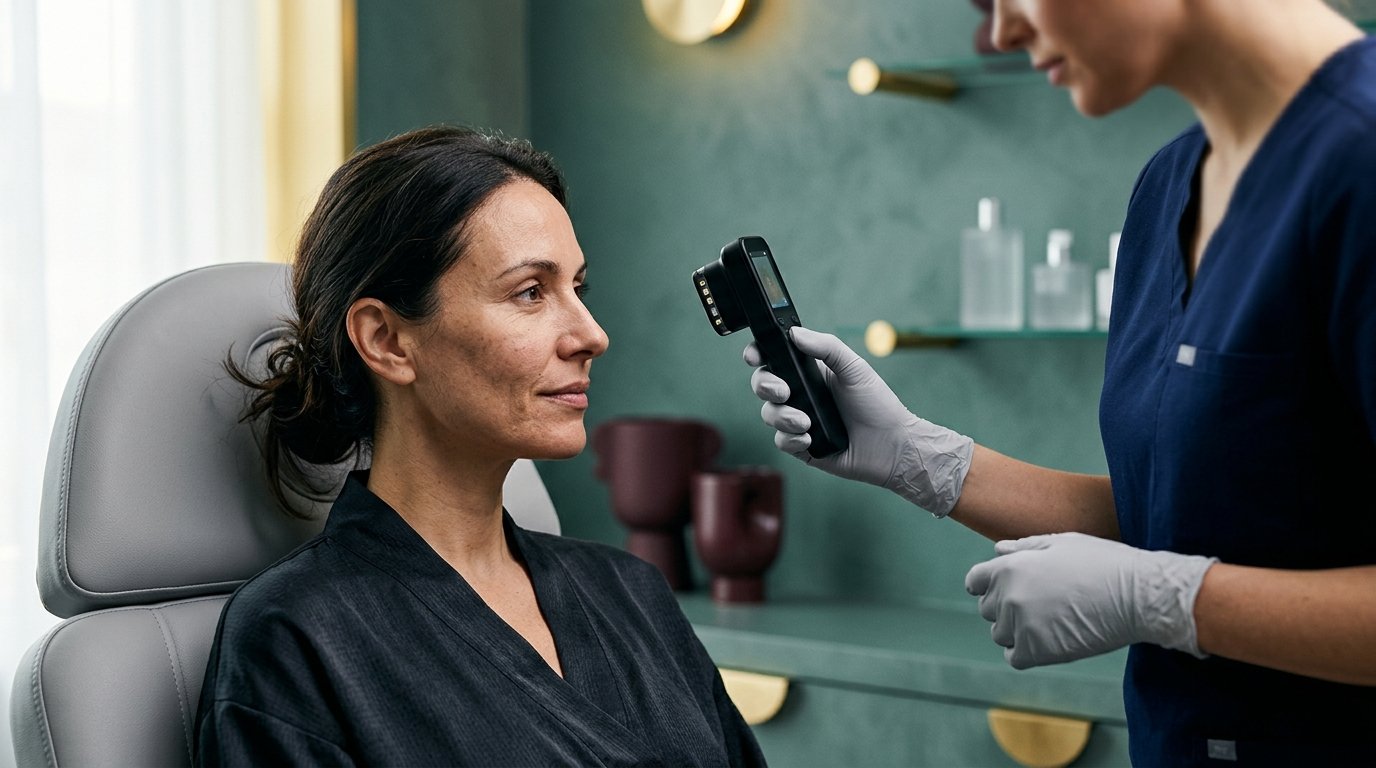
Package comparison becomes useful only after the skin is assessed. A professional evaluation combines observation with history. Imaging or AI-assisted analysis may add structured measurements or visualisation, but it does not replace human judgement or medical diagnosis. Device-generated scores should be interpreted in context; they are not definitive statements about disease or “skin age.”
Current condition matters more than a fixed skin type
People often describe themselves as oily, dry, combination or sensitive. Those labels are a starting point, not a complete treatment plan. An oily person can be dehydrated. A usually resilient person can arrive with temporary irritation after travel. A dry person can have active comedones. Hormonal changes, weather, air conditioning, sun exposure, sleep, recent products and previous procedures can alter the skin from one appointment to the next.
The assessment should therefore look at what is happening now: barrier comfort, visible inflammation, scaling, oil distribution, congestion, active lesions, sensitivity, pigmentation patterns and healing history. It should also ask what you want to change. “I want glow” might mean reduced flaking, a smoother makeup surface, fewer visible blackheads or more even-looking tone. Each interpretation points to a different emphasis.
Your history can change or stop the protocol
Tell the provider about diagnosed skin conditions, cold sores, allergies, pregnancy or breastfeeding, medications, isotretinoin history, immune suppression, diabetes, bleeding disorders, keloid tendency and previous poor healing. Disclose recent injectables, lasers, peels, waxing, threading, surgery, dental work and sunburn. The relevance differs by procedure, especially if microneedling or stronger exfoliation is considered.
Also report home products honestly. Retinoids, exfoliating acids, benzoyl peroxide, hydroquinone, scrubs, essential oils and high-strength vitamin C can affect tolerance. More skincare is not always safer skincare. A provider cannot plan responsibly around information they do not have.
Goal, tolerance and timing form a triangle
A protocol must balance three things. First is the cosmetic goal: cleansing, hydration, brightness, texture or a broader maintenance experience. Second is tolerance: how much exfoliation, suction and active product exposure the skin can reasonably handle. Third is timing: travel, events, sun exposure and access to aftercare. If one side changes, the recommendation may change.
For example, Glow might match a brightness goal, but Classic may be safer if the person used a strong retinoid the night before and feels tender. Premium might match several long-term goals, but a simplified version may be better two days before an outdoor wedding. The best assessment gives permission to step down, postpone or refer rather than forcing the appointment to match the original booking.
Assessment questions that deserve clear answers
- What do you observe today that supports this protocol?
- Which concern is the primary target, and which concerns are outside the session’s scope?
- Which planned step carries the highest irritation risk for me?
- What would make you omit the peel, suction, booster or microneedling?
- Is there anything that should be assessed by a dermatologist first?
- What result is reasonable after one session?
- What change in my schedule would make you recommend a simpler option?
Choosing a Protocol by Skin Concern and Practical Goal
No table can select a treatment by itself, but concern-based reasoning can prepare you for the consultation.
Routine maintenance
If the skin is stable and the goal is periodic cleansing and hydration, Classic is the logical first discussion. A consistent home routine may matter more than adding many in-clinic steps. Glow can be considered when seasonal dryness or dullness creates a reason for extra product-based care. Premium may be unnecessary unless the client values the longer personalised experience and has additional compatible goals.
Blackheads and visible congestion
Hydrafacial’s extraction stage may help remove accessible pore material, but congestion has multiple drivers. Occlusive products, acne biology, irritation, shaving habits and incomplete cleansing can all contribute. Classic may be sufficient for moderate maintenance. Glow may add products selected for an oily or congested surface. Premium may allow more detailed care, but aggressive extraction or combining irritation-producing steps is not automatically better. Inflamed or cystic acne needs a different level of assessment.
Dehydrated or tight-feeling skin
Dehydration describes insufficient water content at the surface and can occur in oily or dry skin. A gentle Classic may offer useful hydration with minimal complexity. Glow may suit someone needing a mask or targeted hydrating products. Premium may provide a longer barrier-support experience if the skin is otherwise suitable. If tightness is accompanied by burning, cracking or rash, the priority may be barrier recovery or medical evaluation rather than exfoliation.
Dull surface appearance
Dullness may reflect surface buildup, dehydration, sleep, smoking, sun exposure or uneven pigmentation. Classic can improve cleanliness and surface feel; Glow is designed around added radiance-oriented care; Premium may combine multiple compatible strategies. None can guarantee correction of melasma or established sun damage. Daily photoprotection remains central to preventing further uneven appearance.
Uneven-looking tone or pigmentation concerns
First identify what “pigmentation” means. Freckles, post-inflammatory marks, melasma and suspicious changing lesions are not interchangeable. A cosmetic facial may support overall brightness but should not treat an undiagnosed lesion. People prone to post-inflammatory hyperpigmentation need careful avoidance of unnecessary irritation. Glow or Premium products should be chosen conservatively, and needling or peels require separate suitability decisions.
Acne-prone skin
A facial can support cleansing and hydration, but acne is a medical condition with different forms and severities. Comedonal congestion is not the same as painful nodules or widespread inflammatory acne. Suction over actively inflamed lesions may be uncomfortable, and needling should not spread through active infection. Classic may be adapted for mild congestion; Glow may include acne-focused cosmetic products; Premium is not inherently more appropriate. Persistent or scarring acne deserves dermatologic care.
Visible pores
Pores are normal anatomical structures. Their visibility is influenced by genetics, oil, congestion, age-related support and lighting. Cleaning pore contents may make them look less prominent temporarily, while hydration can improve surface smoothness. No facial permanently deletes pores. Choose Classic for maintenance, Glow for added surface refinement or Premium for a broader plan, but reject guarantees of permanent pore closure.
Fine lines and early ageing concerns
Hydration can soften the appearance of fine dehydration lines, and exfoliation can improve light reflection. This is not the same as reversing structural ageing. Glow may be selected for extra hydrating and antioxidant-oriented products; Premium may offer a more comprehensive approach and possible superficial needling when suitable. Expectations should remain cosmetic and incremental. Significant laxity, deep wrinkles or volume loss involve different mechanisms and may require a medical consultation about alternatives.
Sensitive or rosacea-prone skin
“Sensitive” is a symptom description, not one diagnosis. The American Academy of Dermatology advises people with rosacea to use gentle skincare, avoid rubbing or scrubbing and identify personal triggers. Active flushing, burning or inflammation may be a reason to simplify or postpone. Classic may be modified to reduce suction and exfoliation; Glow’s extra actives may not be helpful during a flare; Premium’s multiple steps require particularly cautious selection. A longer package should never override the need for gentleness.
Before a wedding, meeting or photo shoot
Immediate hydration and smoothness are common reasons for booking. Do not test an unfamiliar complex protocol the day before a major event. Leave enough time for unexpected redness or a breakout. A previously tolerated Classic or Glow may be more predictable than adding needling or a new peel. If Premium is desired, schedule it with a buffer and clarify which components could extend redness.
Men’s skin and beard-area considerations
The protocol is not gender-specific. Shaving, ingrown hairs, beard density and folliculitis affect planning. Avoid arriving immediately after an aggressive shave if the skin is nicked or irritated. Suction and exfoliation should be adjusted around dense hair and inflamed follicles. The choice among Classic, Glow and Premium still depends on concern and tolerance, not gender.
First professional facial
A first facial is an information-gathering opportunity. Classic often offers the clearest baseline. Glow can be reasonable when assessment supports additional hydration or a targeted product. Premium may suit a first-time client who wants a long consultation and experience, but optional invasive additions should never feel mandatory. Starting conservatively makes future personalisation more evidence-based because the provider can observe your actual response.
Safety, Suitability and Reasons to Postpone
Hydrafacial is often described as gentle and non-invasive, but “gentle” does not mean suitable for every skin on every day. Suction, exfoliation, acids, topical products and optional procedures can each cause irritation. Safety depends on screening, hygiene, authentic consumables, technique, product selection and the willingness to stop.
Conditions that need assessment before treatment
- active cold sores, bacterial or fungal infection;
- open wounds, recent bleeding, broken skin or severe excoriation;
- sunburn, windburn or a recent significant heat reaction;
- an active eczema, dermatitis, psoriasis or rosacea flare;
- widespread inflamed, painful or cystic acne;
- recent laser, deep peel, surgery or another procedure with incomplete healing;
- unexplained lesions or changing pigmented spots;
- a history of severe allergy to topical products;
- medication or medical conditions that affect healing, immunity or bleeding;
- pregnancy or breastfeeding when a proposed ingredient or add-on has not been cleared;
- planned microneedling in a person with a keloid tendency or poor healing history.
This list is not exhaustive. Some issues call for postponement; others require a modified protocol; some require medical clearance. A cosmetic provider should not diagnose an uncertain rash or lesion. Referral is a sign of responsible practice.
Why combined protocols need extra screening
Classic primarily raises questions about cleansing, exfoliation, suction and treatment solutions. Glow adds more product and peel variables. Premium may add superficial microneedling and a longer sequence. Risk does not increase in a simple linear way, but each additional intervention creates another decision point. A safe Premium plan therefore requires more detailed consent than “Would you like the premium package?”
Combining exfoliation and needling deserves particular care because both can influence barrier integrity. The provider should explain sequence, intensity, sterility and aftercare. Stronger is not automatically synergistic. In some cases, separating treatments may be more prudent.
Hygiene signals to observe
- hand hygiene before contact with your skin;
- clean treatment surfaces and organised product handling;
- single-use tips or components opened and discarded appropriately;
- sterile, single-use needle cartridges if microneedling is performed;
- no double-dipping into communal containers;
- clear separation of clean and used items;
- protective measures appropriate to the step;
- a documented plan for adverse reactions and follow-up.
Stop signals during the session
Communicate if you experience sharp pain, intense burning, sudden swelling, hives, dizziness or a feeling that something is wrong. Mild suction sensation or brief tingling can occur, but a provider should not dismiss escalating discomfort as proof that the treatment is working. The session can be adjusted or stopped.
How to Prepare for Classic, Glow or Premium
Good preparation reduces uncertainty. Begin by sending an accurate history and asking whether an in-person assessment is required before the booked time. If you are travelling, do not hide recent sun exposure or procedures in the hope of keeping the appointment. A modified facial is better than an avoidable reaction.
One to two weeks before
- Avoid scheduling the facial too close to a new laser, peel, microneedling, waxing or other procedure unless both providers confirm the sequence.
- Protect your skin from excessive sun exposure and do not plan treatment over sunburn.
- Keep the routine stable rather than introducing several new active products.
- Tell the clinic about a cold-sore history, allergy history and medications.
- If an event matters, leave a buffer instead of booking the night before.
In the days before
Ask the provider which non-prescription exfoliants or retinoids should be paused. Advice varies with the product, concentration and planned protocol. Do not stop prescription medication on a cosmetic clinic’s generic timetable; contact the prescriber if a change is being considered. Avoid aggressive scrubbing, picking and home extraction.
On the day
Arrive with a list or photographs of the products you use. Makeup can be removed at the clinic, but arriving with minimal product can save time. Men may wish to shave the day before rather than immediately before if shaving causes irritation. Eat and hydrate normally unless you have been given medically appropriate instructions for another procedure.
Confirm the plan after assessment. The final protocol may be different from the online booking. Ask what is included, what has been removed and whether any addition changes aftercare. Consent should occur before the first active step, not halfway through the treatment.
What the Appointment May Feel Like
A Hydrafacial handpiece usually creates a moving suction sensation as it passes across the skin with fluid. People often describe it as unusual but comfortable. Sensation can vary by area: the nose and around the mouth may feel more intense than the cheeks. The provider can adjust technique and should avoid repeated aggressive passes.
During Classic
The shorter appointment is likely to feel device-led. After cleansing and assessment, the sequence may include exfoliation, a peel step, extraction and hydration. You may notice temporary pinkness where suction is used. The exact sequence and products should be confirmed because protocols can be customised.
During Glow
Glow adds time for targeted products, masks or peel choices. A mild tingle may accompany some products, but strong burning is not a normal goal. The mask portion may feel cooler and more relaxing than the extraction stage. If the skin becomes progressively uncomfortable, say so immediately.
During Premium
Premium is a longer journey. The clinic describes analysis, detailed cleansing, professional product applications, masks, hydration, massage and selected care rituals. If superficial microneedling is included, the sensation and aftercare can differ from the rest of the facial. You should receive a separate explanation before that step. Do not assume that a soothing mask cancels the recovery considerations of needling or exfoliation.
The longest part of the appointment should not be interpreted as continuous device intensity. Masks, massage, consultation and rest all contribute to time. Ask for a pause if you are uncomfortable, need to change position or feel anxious. A premium experience includes communication and respect for boundaries.
Aftercare and Recovery
Many people return to ordinary indoor activities after a straightforward Hydrafacial, but the appropriate aftercare depends on the actual protocol. Classic, Glow and Premium should not share one automatic recovery script if the products and procedures differ.
General gentle-care principles
- Use a mild cleanser and lukewarm water.
- Avoid rubbing, scrubbing, picking and home extraction.
- Apply a simple moisturiser that you already tolerate.
- Use broad-spectrum sun protection and practical shade.
- Avoid introducing a new strong active immediately after treatment.
- Follow the provider’s specific timeline for retinoids, acids and benzoyl peroxide.
- Keep hands, phones and makeup tools clean.
- Contact the clinic if a reaction is more intense or persistent than expected.
After Classic
Recovery is often simple. Mild transient redness or tightness can occur. The main goal is to avoid undoing a gentle session with an aggressive home routine. If the skin feels calm, normal activities can usually resume, but sun protection remains important.
After Glow
Because Glow may include a peel or more active products, ask how long to wait before resuming exfoliants and retinoids. Do not assume that no visible peeling means the skin is ready for every product. If an event is planned, avoid heavy makeup until the skin feels settled and the provider’s advice allows it.
After Premium
Premium aftercare depends heavily on whether microneedling or stronger exfoliation was included. If needling occurred, the provider should give written instructions about cleansing, product use, makeup, exercise, heat, swimming and sun exposure. Follow those instructions rather than generic Hydrafacial advice. A combined protocol can create more sensitivity even when each individual step is described as superficial.
When to seek help
Contact the provider promptly for increasing pain, significant swelling, blistering, spreading rash, pus, fever, eye-area symptoms or signs of infection. Seek urgent medical care for breathing difficulty, facial or throat swelling, fainting or other signs of a severe allergic reaction. Do not try to correct a reaction with multiple unplanned products.
Sun protection is part of the result
Professional exfoliation cannot compensate for repeated unprotected ultraviolet exposure. Use a sunscreen you tolerate, reapply as appropriate, seek shade and use protective clothing. This is particularly important in Istanbul during bright months and on sightseeing days spent outdoors. If the provider recommends avoiding direct sun after an added procedure, plan transport and activities accordingly.
Planning a Hydrafacial During an Istanbul Visit
Istanbul visitors often want skin to look refreshed for photographs, a celebration or onward travel. The city’s hills, ferries, wind, seasonal heat, cold and long outdoor days can all affect freshly treated skin. A travel-friendly plan considers logistics as carefully as the package name.
Do not book immediately after intense travel exposure
A long flight, dehydration, unfamiliar hotel products and a full day outdoors can leave skin different from the photographs you sent in advance. Allow time for an in-person reassessment. If you arrive sunburned or irritated, postpone or simplify rather than trying to “repair” the skin aggressively.
Leave a buffer before important plans
Classic may be the simplest option when your trip is tightly scheduled. Glow can work well before an event if you have previously tolerated similar steps and leave enough time. Premium deserves more buffer, particularly if microneedling is considered. Avoid booking a complex new protocol immediately before wedding makeup, professional photography, a beach trip or a long flight.
Plan transport and sun exposure
Know how you will return to the hotel without extended midday sun. Carry a hat and the sunscreen your skin already tolerates. If you plan a Bosphorus cruise, rooftop visit or walking tour, remember that reflective water and long outdoor exposure can be significant even when the air feels cool.
Make follow-up possible
Save the clinic’s contact details and ask what to do if a reaction occurs after you leave Istanbul. Provide the correct country code and messaging method. If you are departing Türkiye soon, tell the provider before any optional invasive step. A treatment that is acceptable for a local client with easy follow-up may not be the best choice for a visitor flying away within hours.
Bring useful information
- photos of current home products and prescriptions;
- dates and names of recent procedures;
- allergies and previous reactions;
- the date of your flight and important events;
- your outdoor itinerary and sun exposure;
- a way to receive written aftercare in a language you understand.
Language and informed consent
International hospitality is more than a warm welcome. You should understand the proposed steps, risks, alternatives, price and aftercare. Ask for clarification if translated terms are vague. “Peeling,” “booster,” “Dermapen” and “premium serum” need specific explanations. Consent is meaningful only when you understand what will happen.
Realistic Results, Limitations and Maintenance
After a well-selected session, skin may look cleaner, smoother, plumper and more reflective. Pores may appear less congested, and makeup may apply more evenly. These changes can be valuable, especially before an event or as part of regular care. They remain variable and often temporary.
What one session may reasonably do
- improve surface cleanliness;
- remove some accessible pore debris;
- reduce rough surface buildup;
- support short-term hydration;
- create a fresher, brighter appearance;
- help the provider understand tolerance for future planning.
What one session should not promise
- permanent pore closure;
- cure of acne, rosacea, eczema or another disease;
- complete removal of melasma or pigmentation;
- erasure of deep wrinkles or scars;
- permanent lifting or replacement of lost facial volume;
- identical results for every skin type;
- zero chance of irritation.
How long does glow last?
There is no honest universal number. Duration depends on baseline hydration, barrier condition, home care, climate, sun exposure, smoking, sleep, products and the definition of “glow.” Immediate smoothness may be most noticeable in the first days, while a consistent routine can support the result. Claims of a fixed guaranteed duration should be treated cautiously.
How often should treatment be repeated?
Frequency should be based on need and tolerance, not a package subscription alone. Some people enjoy periodic maintenance; others need longer intervals or only event-based care. Repeated exfoliation too often can undermine the barrier. The clinic should reassess rather than assuming that last month’s plan still fits.
Home care remains the foundation. Gentle cleansing, moisturising, sun protection and condition-appropriate products do more daily work than occasional facials. If a treatment plan depends on constant in-clinic correction while home irritation continues, address the routine.
How to evaluate progress
Use consistent photographs and note comfort, oiliness, breakouts and product tolerance. Do not judge only by immediate shine. If digital analysis is repeated, ask whether conditions were similar and how meaningful the observed difference is. Progress should align with your goal, not merely a higher device-generated score.
How to Compare Hydrafacial Providers Responsibly
A service menu is only part of the decision. Device authenticity, practitioner competence, hygiene, assessment quality, communication and follow-up can matter more than decorative surroundings.
Verify the treatment rather than the logo alone
Ask whether the device and consumables are authentic and how the clinic maintains them. A familiar brand name on an advertisement does not prove that every step follows manufacturer guidance. The provider should be comfortable explaining the device, tips, solutions and cleaning process without making unrealistic claims.
Ask who performs each component
A long Premium protocol may involve different skills than a short facial, particularly if microneedling or another advanced procedure is proposed. Ask who will perform the treatment, what training and legally applicable competence they have, and who is available if a reaction occurs. Do not infer qualifications from clothing, social-media popularity or the word “expert.”
Assess the consultation
A good consultation asks about history, products, procedures, goals and timing. It explains why a protocol fits and why another does not. It does not use fear, urgency or embarrassment to upsell. The provider should be willing to recommend Classic even if you booked Premium, and willing to postpone when the skin is not suitable.
Demand clarity about additions
If Glow includes a peel, ask its name or active type, purpose and expected sensation. If Premium includes microneedling, ask about sterility, depth, contraindications and aftercare. If a branded professional product is proposed, ask for the exact product rather than relying on the prestige of the brand family.
Look for proportionate claims
Trustworthy language uses terms such as “may support,” “aims to improve the appearance” and “results vary.” Be cautious with guarantees, permanent outcomes, cure language, “detox” claims, universal suitability or promises that a facial replaces medical treatment.
Review photography and reviews carefully
Look for consistent lighting and timing. Reviews can reveal communication and service patterns but do not verify clinical effectiveness. A large number of positive reviews does not eliminate the need for personal screening.
Questions to ask before paying
- Which exact protocol do you recommend after assessment, and why?
- What is included in the quoted price?
- Which steps are optional or may be omitted?
- What products and consumables will be used?
- Who performs each step?
- What redness or recovery is typical for the exact plan?
- What should I pause before and after treatment?
- Who should I contact if I have a reaction?
- Can I receive written aftercare?
- Would a simpler protocol achieve my main goal?
How the Nexja Approach Relates to Protocol Choice
Nexja uses three brand concepts to describe its service philosophy. They are not medical certifications or separate procedures, and they should be understood in practical terms.
Nexja Select
Nexja Select refers to the clinic’s curated approach to professional products, technologies and protocols. In the Hydrafacial comparison, the useful expression of Select is choosing a product or step because it serves the assessed skin, not because adding it makes a package sound more luxurious.
Nexja Butterflies
Nexja Butterflies refers to the selected transformation team and personnel. The relevant standards are appropriate education, applicable competence and certification where required, experience, careful hand skills, hygiene, communication and the ability to adapt. The butterfly is a metaphor for transformation; it is not a name for clients and does not guarantee an outcome.
Nexja Experience
Nexja Experience covers the journey from first inquiry through assessment, planning, the appointment environment, treatment communication and aftercare. A premium experience should make the plan clearer and safer. Comfort and hospitality are valuable, but they should support—not replace—professional judgement.
The brand thought “You Choose Change. We Create the Transformation.” works best when “transformation” is realistic and individual. In practice, that means helping a client choose the right level of care, including the possibility that Classic is enough or that treatment should wait.
Common Myths About Classic, Glow and Premium
Myth 1: Premium is always better
Reality: Premium is longer and broader, but suitability determines value. Sensitive or irritated skin may do better with fewer steps. The best protocol is the one with a clear purpose and acceptable risk.
Myth 2: A longer appointment means more device treatment
Reality: Consultation, masks, massage and rest contribute to the appointment. Continuous aggressive device use would not be a benefit.
Myth 3: Glow is an official universal Hydrafacial level
Reality: Glow is a clinic-specific menu name here. Hydrafacial’s manufacturer terminology includes Signature, Deluxe and Platinum. Always compare actual steps.
Myth 4: Extraction should remove every blackhead
Reality: Excessive suction and manipulation can irritate skin. Safe treatment does not chase a perfectly empty pore at any cost.
Myth 5: Redness proves the facial worked
Reality: Redness can indicate stimulation or irritation. It is not a measure of effectiveness, and escalating pain should not be ignored.
Myth 6: Hydration cures dry-skin conditions
Reality: A facial can support surface hydration. Persistent scaling, itching or rash may require diagnosis and targeted medical care.
Myth 7: One Premium session replaces a complete routine
Reality: Daily gentle care and sun protection influence results far more consistently. In-clinic care complements rather than replaces them.
Myth 8: Microneedling is included for everyone
Reality: Nexja’s page describes superficial microneedling as optional and suitability-dependent. It should be omitted when not appropriate.
Myth 9: More professional products mean a stronger result
Reality: Product selection, compatibility and tolerance matter more than quantity. Too many actives can increase irritation.
Myth 10: No downtime means no risk
Reality: Many people resume daily activities, but reactions remain possible. Added peels or needling can change recovery.
Myth 11: A facial can diagnose skin disease
Reality: Imaging and professional observation can inform cosmetic planning, but diagnosis belongs to qualified medical professionals.
Myth 12: The same protocol should work every month
Reality: Skin changes with season, products, hormones, travel and procedures. Reassessment should precede repetition.
A Practical Decision Checklist
Use this checklist before confirming the appointment:
- My main goal is clear: maintenance, hydration, brightness, congestion care or a longer personalised experience.
- I understand the names: Classic, Glow and Nexja Premium are clinic-specific labels.
- I know the proposed steps: device stages, peel, products, mask, massage and any microneedling.
- I disclosed my history: diagnoses, medications, allergies, cold sores, healing problems and recent procedures.
- My timing is sensible: I left room before flights, sun exposure and events.
- The provider can step down: the plan can be simplified or postponed after assessment.
- Claims are realistic: cosmetic improvement is discussed without promises of cure or permanence.
- Aftercare is specific: I know what to use, avoid and watch for.
- Follow-up is available: I know who to contact with a concern.
Frequently Asked Questions
Is Hydrafacial Classic the same everywhere?
No. “Classic” is not a universal legally standardised package. At Nexja it refers to the essential professional protocol, but another clinic may use the name differently. Compare the steps, products, duration and device rather than the name alone.
Is Hydrafacial Glow an official manufacturer treatment?
Glow is a Nexja clinic menu label in this comparison. Hydrafacial manufacturer materials use their own framework, including Signature, Deluxe and Platinum. A clinic can design a service around its professional judgement, but it should explain what is manufacturer-defined and what is clinic-specific.
What is the main difference between Classic and Glow?
Classic centres on essential device-led cleansing, pore care and hydration in a shorter appointment. Glow adds time for selected professional serums, peeling solutions, masks and targeted care. The exact additions depend on assessment.
What is the main difference between Glow and Nexja Premium?
Premium is a longer signature protocol with a broader personalised sequence, detailed assessment, professional products, masks, hydration and relaxation components. Superficial microneedling may be considered when appropriate. Glow is a more compact advanced facial without the full Premium structure.
Does Premium always include microneedling?
No. The clinic’s public description states that superficial microneedling support is included only when appropriate and seasonally suitable. Suitability, consent, hygiene and aftercare should be discussed separately.
Which option is best for a first visit?
Classic is often a sensible baseline because it uses fewer variables, but Glow or Premium may be appropriate after a thorough assessment. The best first protocol depends on current skin condition, goals, history and available recovery time.
Which protocol is best for dry skin?
Dry-feeling skin may benefit from gentle hydration in any level. Glow offers more room for targeted hydrating products, while Premium may provide a broader barrier-support experience. If dryness includes itching, cracks, rash or inflammation, seek assessment before exfoliation.
Which protocol is best for oily or congested skin?
Classic may be enough for routine cleansing. Glow can add selected products for oil balance or congestion. Premium is not automatically better; inflamed acne and infection can make extraction or needling inappropriate.
Can a Hydrafacial remove acne scars?
A facial may improve surface hydration and texture appearance but should not be expected to remove established atrophic or raised scars. Scar treatment requires classification and may involve other medical procedures. Read the site’s guide to CO2 laser vs microneedling for acne scars for a broader discussion of mechanism and suitability.
Can it cure acne?
No. It may support cleansing and the cosmetic care of some acne-prone skin, but acne has medical causes and different severity levels. Persistent, painful or scarring acne should be evaluated by a dermatologist or qualified medical clinician.
Can Hydrafacial shrink pores permanently?
No. Removing debris and improving surface hydration may make pores look less noticeable temporarily. Pore size and visibility are influenced by anatomy, oil, congestion, age and lighting. For a detailed comparison, see enlarged pores treatment in Istanbul.
Can sensitive skin have Hydrafacial?
Some sensitive clients can have a carefully modified treatment, while active inflammation or a damaged barrier may require postponement. Suction, exfoliation and product choices should be reduced according to tolerance. The sensitive skin facial guide explains why reactive skin needs a different decision process.
Is Hydrafacial suitable during pregnancy?
Do not rely on a general internet answer. Pregnancy can affect skin, and particular acids, boosters or add-ons may be unsuitable. Inform the clinic and obtain advice appropriate to the exact proposed products and your medical situation.
Can I have Hydrafacial while using isotretinoin?
Tell the provider and the clinician managing your medication. Isotretinoin can affect dryness and fragility, and treatment decisions must be individual. Do not pause or change prescribed medication solely to keep a cosmetic appointment.
Can I combine Hydrafacial with injectables?
Sequence and timing matter because pressure, massage, skin sensitivity and infection control can affect planning. Tell both providers about every procedure and follow the timing recommended by the qualified injector and facial provider. Do not improvise same-day combinations.
Can I wear makeup afterward?
Advice depends on the protocol. A straightforward Classic may allow a quicker return than Premium with microneedling. Freshly treated skin may be more sensitive, and makeup tools can introduce contamination. Follow the written aftercare for your exact session.
How soon before an event should I book?
Leave enough time to observe your response, especially for a first treatment. A previously tolerated simple protocol may be scheduled closer than a new combined treatment, but no session is completely reaction-free. Ask the clinic for a recommendation based on the exact steps.
Will my face peel after Glow?
Not necessarily. “Peel” can describe different acids and strengths. Some create little visible flaking. Lack of peeling does not mean lack of effect, and visible peeling is not a required endpoint. Ask which solution is planned and what recovery is expected.
How often can I have a Hydrafacial?
There is no universal ideal interval. Frequency depends on the skin, protocol, home routine and other treatments. Reassess before repeating rather than booking solely by calendar. Too-frequent exfoliation can cause sensitivity.
Is a longer session better value?
Only if the additional steps are useful for you. Value includes assessment, professional time, appropriate products, communication and follow-up—not minutes alone. Classic can be better value when it fully meets the goal.
Does the treatment hurt?
Standard Hydrafacial stages are commonly described as comfortable, though suction and acids can create sensation. Microneedling changes the experience. Sharp pain, intense burning or rapidly increasing discomfort should be reported immediately.
Can Hydrafacial treat pigmentation?
It may support a brighter or more even-looking surface, but pigmentation has different causes. Melasma, post-inflammatory marks, freckles and suspicious lesions require different assessment. A cosmetic facial should not promise removal or treat an undiagnosed lesion.
What if my skin is irritated on the appointment day?
Tell the provider before treatment begins. The safest decision may be to reduce the protocol, use only calming care, postpone or refer for medical evaluation. You should not lose the right to a safe recommendation because you booked a higher package.
How do I know whether a booster is worth adding?
Ask what concern it targets, which ingredients it contains, what evidence supports the claim, whether you have used similar ingredients, and whether it changes risk or aftercare. A booster is worthwhile only when it adds a clear, compatible purpose.
What does AI-assisted skin analysis add?
It can organise images or measurements and support discussion of hydration, pores, spots or other visible features. It does not diagnose disease or guarantee objective truth. Results should be interpreted by a competent professional alongside history and direct examination.
Should tourists choose Classic because it is safer?
Not automatically. Tourists can be suitable for any protocol, but travel timing, sun exposure and access to follow-up matter. A simpler option may be preferable for a tight itinerary, while a longer protocol can be planned when there is adequate buffer and aftercare.
What should I do if I react after leaving the clinic?
Use the clinic’s follow-up contact, stop unplanned active products and document the reaction with clear photographs. Seek medical care for severe or worsening symptoms. Breathing difficulty, facial or throat swelling, fainting or other severe allergic signs need urgent care.
Can I choose based only on price?
Price is a practical factor, but it does not reveal suitability. Compare what is included, provider competence, hygiene, product selection, aftercare and whether a simpler protocol meets your goal. Do not assume the most expensive package is the correct one.
What is the single best question to ask?
Ask: “Which specific added step makes this protocol more appropriate for my skin today than the simpler option?” A clear answer should connect assessment, goal, expected benefit, limitation and aftercare.
Sources and Further Reading
This article distinguishes company descriptions, clinic-specific service information and independent research. Useful primary and authoritative sources include:
- Hydrafacial: device and Vortex-Fusion technology — manufacturer information about device features, core steps and optional add-ons.
- Hydrafacial: treatment information — manufacturer overview of treatment customisation and products.
- Hydradermabrasion: an innovative modality for nonablative facial rejuvenation — a small randomized study published in the Journal of Cosmetic Dermatology.
- Hydradermabrasion examined with line-field confocal optical coherence tomography — a later imaging-based investigation.
- Efficacy and tolerability of a HydraFacial clarifying treatment series for active acne — a protocol-specific study whose findings should not be generalised to every package.
- American Academy of Dermatology: rosacea skin-care tips — guidance emphasising gentle care and avoidance of irritation.
- US FDA: wrinkle treatments and other anti-ageing products — explanation of cosmetic versus drug claims.
- Facial Istanbul: Hydrafacial Nexja Premium — the clinic’s current description of its signature protocol.
- Facial Istanbul: skin rejuvenation in Istanbul — comparison principles for different treatment mechanisms.
- Facial Istanbul: professional peels in Istanbul — practical considerations when acids or peels are proposed.
Final Perspective
The most useful way to compare Hydrafacial Classic vs Glow vs Nexja Premium is to move from name to purpose. Classic is the focused maintenance option. Glow adds time and targeted professional products. Nexja Premium is a long, personalised signature protocol that may incorporate a wider set of compatible steps, including superficial microneedling only when appropriate. These descriptions are specific to Nexja’s menu and should not be confused with Hydrafacial’s manufacturer categories.
A thoughtful choice begins with the current condition of the skin, a clear goal, honest history and realistic timing. It includes permission to simplify or postpone. It treats hydration, smoothness and brightness as valuable cosmetic outcomes without turning them into medical promises. It also recognises that device quality is only one part of care; assessment, technique, product selection, hygiene, communication and aftercare shape the experience.
If you are considering a facial during an Istanbul visit, plan around travel, sun exposure, events and follow-up. Ask exactly what is included and why. The right protocol is not necessarily the one with the most steps. It is the one whose steps are appropriate, proportionate and clearly explained for your skin today.
Medical information notice: This article is for general education and does not diagnose a skin condition or replace an examination by a qualified healthcare professional. Treatment suitability, products, device settings and aftercare must be decided individually. Results vary.


