Sensitive Skin Facial in Istanbul: Choosing Care for Reactive Skin

Sensitive Skin Facial in Istanbul: Choosing Care for Reactive Skin
A sensitive skin facial in Istanbul should begin with an assessment of what makes skin react, rather than a predetermined intensive treatment. Burning after cleansing, flushing, itching and tightness are experiences, not diagnoses. This guide explains cautious professional facial choices, signs that call for medical assessment, product selection, preparation, recovery and practical planning for residents and travelers. No cosmetic facial is a cure for eczema, rosacea, allergies or infection.
What sensitive skin means
“Sensitive skin” can describe burning, stinging, itching, tingling or a feeling of tightness after ordinarily tolerated stimuli. DermNet distinguishes subjective sensory discomfort from visible inflammation and from diseases that themselves make skin sensitive. These distinctions matter in professional facial care: a person’s description is an important starting point, but it is not proof of one particular condition. Some people have reactive skin with little visible change; others develop a rash that needs diagnosis. A facial provider should therefore ask what happens, how often it happens and whether the symptoms are new, persistent or worsening.
One person may experience a brief sting after hot-water cleansing with no lasting changes. Another may develop an itchy, scaly eruption around both eyelids a day after trying a new shampoo. The word “sensitive” does not adequately describe the difference. The first situation might call for reviewing temperature, cleanser and barrier care. The second can raise questions about a delayed contact reaction and may need clinical investigation. A spa facial does not perform the work of a medical assessment, even when it includes a skin-analysis camera or an elaborate questionnaire.
Skin sensitivity is not necessarily permanent. Sunburn, repeated exfoliation, harsh cleansing, cold wind, a new topical medicine or a recent procedure can create temporary vulnerability. Someone with established rosacea or eczema may have both baseline reactivity and acute flare-ups. For this reason, a treatment that was comfortable previously is not guaranteed to be appropriate today. Reviewing the current condition, not just the client’s preferred facial package, is central to safety.
Nor is visible redness a universal measure. Red or inflamed skin can look pink, violet, brown or darker than usual across different complexions. Lighting, photographs and filters can conceal these differences. It is important to listen to descriptions of discomfort, pain, heat and itch instead of deciding that skin is calm because no obvious pink color appears. Sensitive-skin conversations work best when clients can describe sensations without being asked to prove them through an image.
Patterns and triggers
A simple diary can clarify possible triggers before an appointment. Record which products touched the face, when they were used, whether the skin was damp, the surrounding weather and whether exercise, heat, cold or sunlight preceded a reaction. Note when discomfort began and whether it cleared quickly or persisted. For recurrent issues, give the diary to a medical professional rather than deliberately reapplying a suspect product. Reaction timing and location help organize questions; neither alone establishes a diagnosis.
Look beyond the face cream. Hair spray, shampoos, fragrance, nail products transferred by fingers, shaving products, adhesive patches, cleansing wipes and makeup-removal habits may contribute. Friction from a washcloth or powered brush can cause problems even when its accompanying liquid is mild. The American Academy of Dermatology recommends gentle cleansing with fingertips and avoiding rubbing or scrubbing for rosacea-prone skin. For a reactive facial, minimizing mechanical stimulation is a reasonable design choice, not a substitute for diagnosis.
Pay attention to the difference between irritation and allergy. A formula may sting because the skin barrier is temporarily vulnerable, while allergic contact dermatitis involves an immune response to a specific sensitizing substance. They can overlap and are not reliably separated by an at-home patch test. A recurring itchy rash deserves medical evaluation and may warrant professionally interpreted patch testing. In comparison, a cosmetic spot test can only help observe how one product is tolerated under limited conditions.
Product marketing is a weak substitute for history. Words such as natural, botanical, clean, hypoallergenic, dermatologically tested or premium do not mean that every person will tolerate a formula. “Unscented” can even refer to products with masking fragrance; “fragrance-free” is generally the more useful starting label for those avoiding fragrance. Ingredient lists still matter, but the complete formula, exposure frequency and individual triggers matter as well.
Look-alike conditions requiring different decisions
Rosacea: Repeated facial flushing, central facial color change, burning, visible fine vessels or acne-like bumps can suggest rosacea. Sunlight and heat may be triggers. A soothing product may make a person feel more comfortable, but it does not diagnose rosacea or replace evidence-based medical management. Steaming, vigorous extraction and energetic massage can be inappropriate for a person whose face flushes from heat and friction. If symptoms involve gritty, painful or light-sensitive eyes, seek an appropriate medical assessment rather than assuming the concern is only cosmetic.
Atopic dermatitis: Eczema-prone skin often develops pronounced dryness and itch, sometimes with cracks, inflammation or scaling. A compromised barrier can make ordinary products uncomfortable. The National Eczema Association advocates gentle cleansing and regular moisturizing as foundations of care, but the best strategy during a flare may be to follow prescribed treatment and avoid a facial until the skin settles. A supportive cosmetic visit cannot replace a clinician’s assessment of a severe eruption or possible secondary infection. Do not use an open or weeping lesion as a testing surface for new skincare.
Irritant and allergic contact dermatitis: Irritants can directly aggravate the skin; allergies involve immune sensitization. Cosmetic fragrance, certain preservatives and other repeated exposures are recognized possibilities. Irritation may be relatively immediate, whereas delayed allergic reactions can appear after an interval, but that distinction is not absolute. If a recurrent rash follows a product, preserve the ingredient list and document its use. Dermatologists can arrange medical patch testing for suspected allergic contact dermatitis. The result needs professional interpretation; a negative home spot test is not equivalent.
Periorificial dermatitis: Small bumps and scale around the mouth, nose or eyes may be misread as acne that needs extraction. The treatment plan can be quite different from a traditional cleansing facial, particularly when occlusive products or inappropriate topical steroid use are involved. DermNet discusses a simplified skincare approach for this condition. Applying thick oils or layers of active masks simply because the skin seems dry can be counterproductive. A newly developing cluster of persistent bumps deserves assessment before cosmetic manipulation.
Other possibilities: Seborrheic dermatitis, acne, sun damage, medication reactions, inflamed shaving areas, fungal problems and post-procedure irritation can all produce sensitivity-like complaints. A rash after a new medicine deserves particular care, while repeated scaling in a fixed location may require a different evaluation from occasional tightness after cleansing. No single facial protocol safely covers every possibility. When staff cannot explain why a service suits the presenting skin, they should offer a consultation, modification or deferral rather than an invented diagnosis.
Several problems may occur simultaneously. Someone with rosacea can also develop an allergy to a cosmetic preservative; a person with eczema may irritate the skin with too many acids. Therefore, “I already know my skin type” does not close the conversation. Ask how today’s symptoms differ from baseline, whether prescribed medicines are being used, and whether the clinician has recently changed the plan. This protects clients from treating all redness as the same phenomenon.
When medical assessment should come first
Do not book a cosmetic facial to resolve an unexplained rash that is spreading, persistent, repeatedly returning or becoming painful. Seek medical advice for severe itching, facial swelling, blisters, cracks that are not healing, or suspected infection. Symptoms that rapidly worsen, discharge or pus, fever, chills and increasing pain require prompt medical attention. Emergency help is appropriate for breathing difficulty, severe swelling of the tongue or throat, faintness, or other signs of a potentially serious allergic reaction. An aesthetic center cannot substitute for emergency assessment.
New symptoms around the eyes deserve special attention. Significant eye pain, changes in vision, light sensitivity or pronounced eyelid swelling should be evaluated medically. Similarly, a widespread eruption after starting a drug, painful mouth lesions, or a rapidly progressing skin reaction is not a suitable problem for cosmetic treatment. A conscientious provider should communicate these boundaries clearly without suggesting a quick calming mask as a workaround.
Clients sometimes worry that postponement means losing progress. In fact, choosing not to manipulate actively inflamed skin may be the most meaningful professional decision of the visit. Providers can explain what information to take to a clinician, offer copies of product ingredient lists, and schedule a reassessment only when appropriate. The decision should not be presented as proof that the skin is dangerous, defective or permanently excluded from all future facials; it reflects today’s level of uncertainty.
Where a diagnosed condition is stable, a conservative cosmetic appointment may still be considered with the treating clinician’s advice. Tell the facial provider the exact diagnosis, recently used prescription products, relevant allergies and any restrictions. Do not independently stop a prescribed medicine simply to qualify for an appointment. The medical professional guides disease management; the aesthetic provider works within a defined cosmetic role. This separation is especially important when topical steroids, retinoids, antibiotics or other medications are involved.
The skin barrier: why ordinary products can sting
The stratum corneum, the skin’s outer layer, helps limit water loss and buffer environmental exposures. Cells, lipids and the local surface environment contribute to that function. When harsh cleansing, friction, dry air or an inflammatory condition disturbs this system, the face may feel tighter, rougher or more reactive. The popular phrase “barrier repair” describes a useful aim, but it can oversimplify a complex biological process. One facial does not construct a permanent new barrier, and a “barrier score” on a cosmetic device does not establish a medical diagnosis.
Supporting moisturizers generally combine ingredients with several different roles. Humectants help retain water in the outer skin; emollients soften and smooth; occlusive materials can reduce evaporation. Glycerin, certain ceramides, petrolatum and mineral oil are examples used in relevant formulas. No ingredient is universally suitable. A richer ointment can be helpful for a person with markedly dry areas yet unsuitable for someone whose particular facial eruption worsens with heavy occlusion. A thoughtful practitioner considers the whole formulation and the individual history.
Moisturizer can paradoxically sting when applied to inflamed or vulnerable skin. That does not necessarily indicate allergy, and it certainly does not prove that the formula is “working harder.” The concentration, solvent, fragrance, skin condition and application method all matter. If a product repeatedly burns, stop using it and review the reaction with an appropriate professional. Clients should not be persuaded to tolerate persistent pain in the name of renewal or detoxification.
Temperature, water contact and friction matter as much as ingredients. Lukewarm cleansing with fingertips and gentle patting may be easier to tolerate than hot water, rough fabric or prolonged rubbing. Cleansing frequency should reflect exposure to sunscreen, makeup and sweat; more washing is not always better. For some individuals, a simple evening routine is more sustainable than several complex cleansing steps. Medical instructions take priority whenever a diagnosed condition is being treated.
In a facial room, consider ambient scent, towel temperature, pressure, steam and whether a client is asked to tolerate intense massage. Even a mild cream can be paired with uncomfortable mechanics. A genuinely conservative protocol reviews all of these details. The aim is to keep the experience predictable and allow the client to stop an individual step immediately when discomfort occurs.
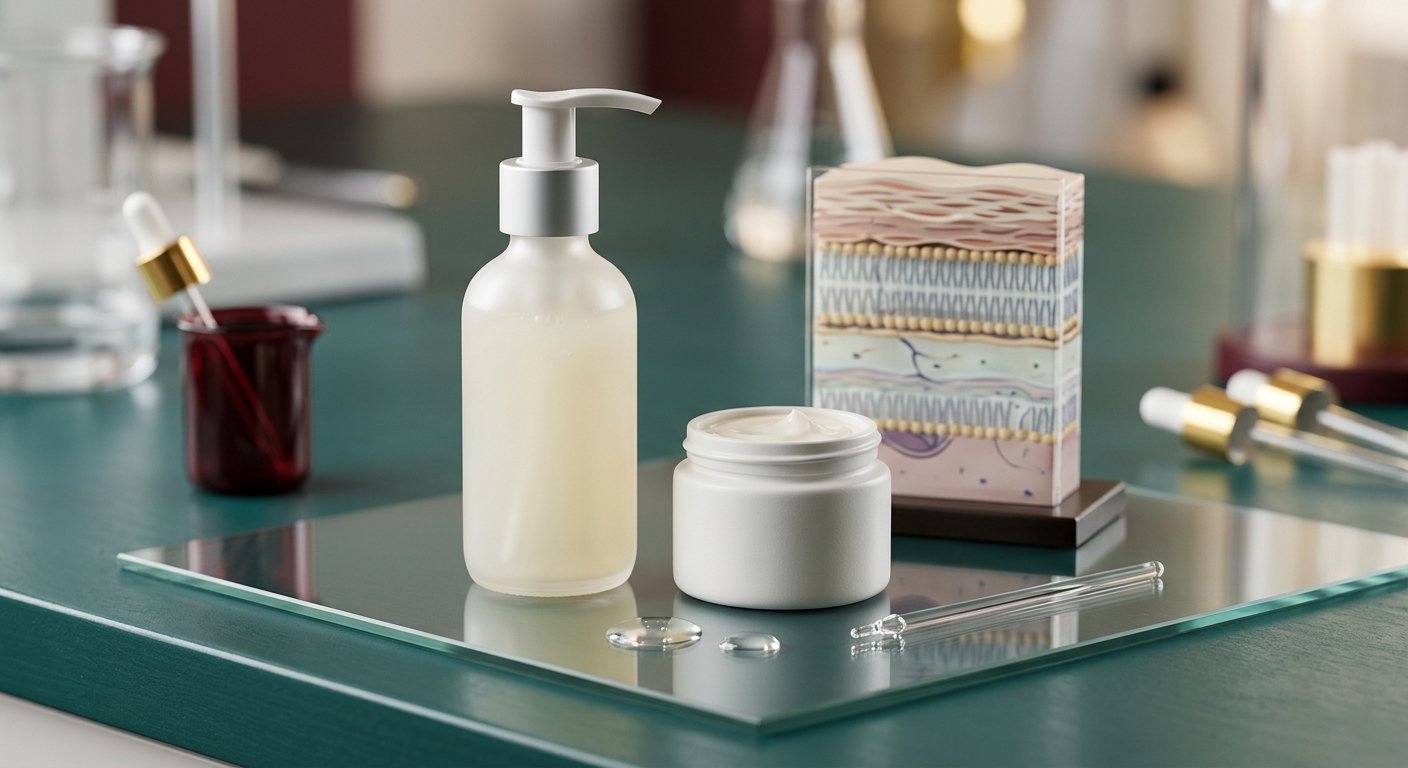
What a gentle professional facial can and cannot achieve
Short-term comfort and long-term control are not interchangeable. A facial may make skin temporarily feel softer, but ongoing symptoms can require adjustments in daily products or medical care. The provider should explain the limited cosmetic goal before discussing optional upgrades.
A conservative cosmetic facial may help suitable, stable skin feel cleaner, more comfortably moisturized and less burdened by unnecessary steps. Its purpose need not be dramatic immediate transformation. Reviewing cleanser tolerance, simplifying an overcomplicated routine and giving calm aftercare advice may be valuable outcomes. A facial should have a clearly defined cosmetic goal, and the client should be able to understand why each stage is included.
No cosmetic facial cures rosacea, eczema, contact allergy or infection. A provider cannot diagnose these conditions with an app, a scanning camera or a magnifying lamp. A product labelled “for sensitive skin” may still cause problems, especially if the skin is already inflamed. The responsible promise is a careful process, not a guaranteed biological result. Before treatment, clarify whether the goal is comfort, maintenance, a less irritating cleansing experience or help choosing between care options.
Doing less can be excellent service. A client who already uses a scrub, acid toner, retinoid, perfumed mask and several new serums may not need a sixth active. Adding friction, suction or heat to that regimen creates more variables to interpret if a flare follows. Fewer carefully considered products make it easier to identify individual responses. An ethical provider should be willing to shorten the session, leave a step out or recommend no facial at all.
Comfort is also a legitimate outcome measure. Was the client able to describe triggers without being dismissed? Were products explained? Could they stop a step at the first sign of discomfort? Were warnings about delayed reactions and the limits of a cosmetic facial communicated? These indicators are more meaningful than an unvalidated claim that the treatment reduced sensitivity by a numerical percentage. Where a diagnosed skin disorder is present, medical follow-up remains separate from cosmetic satisfaction.
Comparing gentler facial formats
A service name cannot reveal its real intensity. Two providers may use the same word, such as “hydrating,” for different combinations of products and tools. Request a step-by-step explanation instead of assuming the label defines safety. Even a minimal protocol should be reviewed against current symptoms and known allergies.
Minimal cleansing and moisturizer: For a client with stable but reactive skin, a carefully selected non-abrasive cleanse followed by suitable moisturizer may be the most straightforward option. The absence of multiple serums or device passes is not an incomplete facial. It reduces opportunities for fragrance, friction and cumulative stimulation. Ask whether the cleanser is thoroughly rinsed, whether warm towels are too hot and whether any finishing product contains a previously identified trigger.
Short hydrating protocol: A provider may select a few well-tolerated water-binding and moisturizing formulations when the client mainly complains of tightness or environmental dryness. That does not guarantee that a high concentration of a fashionable humectant will be comfortable; formulation, application and recent exposures still matter. Applying products in layers merely to make a session appear premium can create needless complexity. The ideal protocol should be easy to describe and compatible with the client’s home routine.
Mask-based relaxation: A gentle mask may improve comfort for some people but can also include fragrance, preservatives, occlusive ingredients or adhesives that trigger reactions in others. Cooling is not universally soothing; extreme cold can be uncomfortable. Ask whether the mask is a leave-on formulation, whether it requires rubbing to remove, and what the practitioner will do if itching starts. A positive sensory experience is not medical evidence of barrier restoration.
Device-led facials: Suction, microdermabrasion, aggressive brushing, intense steam, resurfacing and certain heat-based modalities add physical stimuli. For highly reactive skin, the brand or popularity of a device does not establish appropriateness. Device intensity, skin status, diagnosis and training matter; sometimes the safer recommendation is to avoid the device entirely. A service should not be sold as suitable for all skin types simply because its screen offers a “sensitive” setting.
Medical treatment pathway: When persistent flushing, eczema, suspicious dermatitis or infection is the real issue, professional diagnosis and treatment may be the priority. The comparison is not between a luxury facial and a cheaper facial but between cosmetic support and a healthcare need. Aesthetic professionals should communicate the distinction respectfully and collaborate with medical advice rather than offering an improvised disease treatment.
Why sequencing and touch matter
A facial with apparently mild ingredients can become irritating when the face is repeatedly wiped, massaged, steamed and cleansed between applications. Conversely, brief contact with a suitable cleanser and moisturizer can feel supportive despite looking simple on a menu. Each step deserves its own justification: does it serve the stated goal, does it create a known trigger, and is there a way to achieve the same purpose with less manipulation? If the answer is unclear, omission is a sensible option.
Clients should never be asked to tolerate pronounced burning, persistent itching or pain while waiting for a therapist to finish the protocol. The professional response is to stop, assess, remove the suspected product appropriately and arrange medical help if indicated. Sensory feedback is a safety signal, not a challenge to the practitioner’s expertise. Written records can help track products used and the timing of any delayed reactions.
Consider timing relative to events. If a client has an important meeting, wedding or flight the following morning, experimentation with previously untried active treatments is difficult to justify. Even gentle products can cause a delayed reaction. An appointment before a major occasion may be better limited to familiar, previously tolerated care, or postponed. There is no ethical reason to promise “zero downtime” for a person whose reactions have not been characterized.
Ingredients, claims and formulation choices
Product selection begins with tolerance history, not a universal blacklist. A fragrance-free gentle cleanser and a moisturizer chosen for the person’s needs are reasonable starting points, but even bland products can be irritating during an active flare. A formula’s complete composition matters: ingredient concentration, pH, preservative system, delivery vehicle, frequency and how products interact affect comfort. A luxurious botanical scent does not make a product medically safer. Equally, a synthetic ingredient is not necessarily harmful because its name sounds unfamiliar.
Humectants such as glycerin help retain water; ceramide-containing formulations may support barrier care; and emollients smooth dry, rough surfaces. These are formulation categories, not individual prescriptions or guarantees. A rich ointment can be welcome in some dryness patterns, while a person prone to certain facial eruptions may prefer a lighter product after medical guidance. Product choice should not be reduced to “dry skin equals the thickest cream.” Sensory response, diagnosis, climate and previous success with the product all matter.
Ingredients sometimes problematic for currently irritated skin include fragrance, strong exfoliating acids, abrasive particles, some astringents and high concentrations of certain actives. That does not mean an ingredient is universally unsafe in a healthy, tolerant person. For someone with rosacea, the American Academy of Dermatology lists common ingredients that may aggravate symptoms, and recommends avoiding unnecessary exfoliation. A qualified clinician can later decide whether a particular active belongs in a stable maintenance regimen. During active irritation, experimentation is rarely the priority.
Labels deserve precise reading. “Fragrance-free” is preferable to “unscented” for people avoiding fragrance because unscented formulas may contain masking ingredients. “Hypoallergenic” is not proof that a product cannot provoke allergy. “Dermatologically tested” says little without details of methods or population. “Natural,” “organic” and “clean beauty” are not standardized guarantees of tolerance. The most helpful evidence is a combination of a clearly identified formula, an honest account of its intended use and the individual’s own reaction history.
Trying new products with care
Keep three activities separate: reviewing an ingredient list, observing everyday tolerance to a cosmetic, and obtaining medical allergy testing. The first identifies known substances and possible duplicates across products. The second may reveal discomfort during normal use but cannot rule out every delayed reaction. The third is a diagnostic process led by appropriately trained clinicians. The American Academy of Dermatology explains medical patch testing for persistent allergic-rash concerns; it includes structured observation and interpretation, rather than applying a cream briefly to a wrist. Someone who has experienced a significant reaction should not intentionally repeat exposure for a casual cosmetic trial. If the history is unclear, simplify the appointment or seek medical assessment first.
The American Academy of Dermatology describes testing a new skincare product on a small area before broad use. This is an observation exercise and is not the same as diagnostic allergy patch testing performed by a specialist. Do not intentionally re-expose the face to a product that previously produced severe swelling or blistering. A history of serious reactions calls for professional advice before introducing new formulas.
Introduce one unfamiliar item at a time where practical. If a cleanser, serum, sunscreen and mask all change during one weekend, tracing a later reaction becomes much harder. Keep the ingredient list and record where the item was used, when discomfort began and how long it persisted. The purpose of a simple diary is to give a clinician useful information, not to diagnose an allergy yourself.
Pay attention to packaging and application technique. A formula removed through vigorous wiping can be more irritating than a suitable one rinsed gently. A fragranced treatment room can be uncomfortable even when the products are fragrance-free. A sticky mask can require more friction to remove. Careful practitioners look at the entire process rather than judging the safety of each ingredient in isolation.
The consultation before a sensitive-skin facial
A useful consultation records the exact products recently used, the timing of sensations, relevant allergies and whether symptoms vary by location. Ask who will conduct the session, which steps can be omitted and what happens if a client reports burning. The practitioner should share the purpose of each product and identify anything outside cosmetic care that may need medical review. Written notes help travelers communicate details later.
The first question should be what the client experiences, not which expensive package they want. Ask about burning, itching, flushing, visible eruptions, medication, diagnosed conditions, previous treatment reactions, recent sun exposure and planned travel. Note the location and duration of symptoms. A questionnaire can help, but it should never replace listening to the person’s history.
Relevant history includes prior use of retinoids, acids, prescribed acne treatments, topical medicines and recent professional procedures. A facialist should understand whether the skin is recovering from a peel or laser, whether a clinician has given restrictions and whether current symptoms differ from the usual baseline. A medication should not be stopped or modified on a cosmetic provider’s initiative. If the planned treatment conflicts with clinical advice, the appropriate action is to defer it.
Assessment is not simply a scan. Look for evidence of active inflammation, fissures, crusting or other findings that may make the session unsuitable; ask about symptoms that may not be visible. Skin cameras and magnifiers may assist conversation but do not independently confirm allergy, rosacea or eczema. The professional should be prepared to refer a client when the concerns are beyond cosmetic scope.
Consent must be specific. Explain which cleanser, moisturizer and optional mask will be used, what the steps feel like and which components will be deliberately omitted. Confirm that the client can ask to stop at any point. Record products, approximate contact duration, relevant feedback and aftercare guidance so delayed reactions can be investigated. Photography and marketing permissions should be separate from treatment consent.
For visitors, verify language access and written instructions. A person returning home soon after the appointment should know how to obtain product details, how to contact the provider and when to seek local medical care. Avoid promises that a problem can always be handled remotely. Establishing a reasonable escalation pathway is part of a thoughtful international-client experience.
A realistic appointment journey
A professional session should start with a clear explanation and consent, including permission to decline individual steps. A client may ask for products to be shown before use. If the skin begins to sting, the provider should stop and reassess rather than insist that discomfort is expected.
The visit begins before skin contact. Booking staff can ask whether there is an active rash, known allergy or recent resurfacing procedure and invite relevant information privately. On arrival, the practitioner reviews symptoms, goals and timing, checks the current condition and decides whether to proceed. A person with an unexplained worsening rash might leave with referral advice instead of receiving the advertised treatment. That is an appropriate outcome, not an incomplete service.
For a suitable client, the therapist may begin with a brief mild cleanse, minimal mechanical friction and a careful rinse using comfortable water temperature. A simple moisturizer can follow. Optional additions should be justified individually rather than included merely because they appear on a long protocol card. Throughout, the client should be asked about burning, tingling, itching or excessive heat. Severe discomfort means stop, not add another masking product.
At the end, provide a concise written summary of products used, home steps and reasons to seek assistance. Clients should understand that a delayed reaction remains possible even if the appointment felt comfortable. A care plan can include which habitual products may reasonably be continued and which new items should not be introduced impulsively. Avoid claiming that the skin barrier was permanently repaired in one session.
Small decisions during a gentle treatment
In a careful facial, the therapist can adjust towel temperature, avoid steaming, shorten contact with a cleanser and use fingertips rather than textured pads. These adjustments may seem minor, but they make the experience less aggressive. A client should not need to justify avoiding a product that previously caused a reaction. Explaining an unfamiliar ingredient is better than applying it and hoping for the best.
Extraction deserves special caution. Not every bump is a blocked pore; some inflammatory disorders resemble acne. Pressure on irritated tissue may worsen discomfort. Likewise, roughness is not sufficient evidence that scrubbing or peeling will help. When the diagnosis is uncertain, a sensible practitioner documents the concern and recommends medical assessment instead of performing an extraction merely because it appears on a menu.
Massage should reflect individual tolerance. Pressure, heat and repeated rubbing can be uncomfortable for some rosacea-prone or otherwise reactive clients. A short facial without massage may therefore be the better option. A complete service does not have to include suction, steaming, layered masks and exfoliation. Individualization means being willing to omit steps rather than following an inflexible sequence.
Preparing before the appointment
Keep a record of products used and previous reactions. Mention recent procedures and prescriptions. The provider needs this information to decide whether the session is appropriate. Do not change prescribed treatment without the advice of the clinician managing it.
In the days before visiting a facial provider, maintain a consistent routine and note any recent reactions. Avoid introducing several new cosmetics at once. Bring a list of current medicines and photographs of relevant product ingredient labels. Mention recent professional procedures and whether a clinician has provided restrictions. Plan enough time for the consultation, because an informed decision may require postponing treatment.
If traveling to Istanbul, consider how flights, weather and a busy itinerary may affect comfort. A skin-focused appointment should fit around recovery, not the other way around. Ask whether a consultation without treatment is an option when symptoms are uncertain.
Aftercare and possible reactions
Before leaving, ask for a short written record of what touched the skin, including cleansers, masks and moisturizer. This information can help identify possible exposures if symptoms appear later. A delayed reaction is not automatically a confirmed allergy; describing its timing and character accurately is more useful than guessing. Seek medical advice for persistent or concerning symptoms rather than applying several corrective products at once.
After a conservative facial, keep the routine simple. Follow individual instructions and favor products already known to be comfortable. Avoid experimenting with several new formulas or adding vigorous exfoliation immediately afterward. A new “recovery kit” with many unfamiliar items is not automatically safer than a familiar moisturizer and suitable sun protection.
Because delayed reactions can occur, keep a record of the products used and their ingredient lists. If skin becomes uncomfortable, stop the suspected item and ask an appropriate health professional about persistent symptoms. Documentation of timing and location can help with later assessment.
A calm home-care routine
Sun protection deserves a separate tolerability discussion because choosing a sunscreen is not only about its SPF number. The whole product matters: fragrance, texture, film formers, finish and the cleanser needed to remove it. The American Academy of Dermatology advises broad-spectrum, water-resistant SPF 30 or higher in rosacea-prone care, alongside shade and protective clothing. Some people prefer mineral filters such as zinc oxide or titanium dioxide, but no filter category guarantees comfort for everyone. A sunscreen that feels pleasant in a store may behave differently during perspiration or repeated application. Ask about realistic daily use and avoid making a visitor dependent on an unfamiliar product that may not be easily available after the journey.
A practical routine for reactive skin usually values consistency over novelty. A gentle familiar cleanser, suitable moisturizer and sun protection are starting points. Keep a product diary and avoid layering several unfamiliar formulas at once. The full formulation, application method and personal history matter more than price or a prestige label.
Morning routines need not replicate evening routines. A person who wakes with a comfortable face may prefer a minimal wash, while a person using overnight products or sweating heavily may need appropriate cleansing. The guiding principle is not rigid frequency but skin comfort, cleanliness and any clinical instruction. Dryness after washing is a reason to examine the cleanser and technique, not automatically to add an exfoliating toner.
Evening routines can prioritize removing sunscreen and makeup without unnecessary scrubbing. If a product is hard to remove, consider whether a different familiar formula or a gentler removal method is available. Repeated cotton-pad passes, hot water and prolonged rubbing can be aggravating. Moisturizer selection should balance texture, tolerance and skin condition; “heaviest possible” is not a universal goal.
Seasonal changes are relevant. Dry indoor heating, windy weather and different humidity may change comfort. Reassess whether a moisturizer remains adequate without replacing the entire routine. If persistent symptoms continue despite sensible adjustments, avoid endless product trials and seek relevant professional evaluation. The point is to reduce uncertainty and support a sustainable routine, not create dependence on frequent facials.
Planning a sensitive-skin facial while visiting Istanbul
Skin may behave differently during travel. Cabin air, an unfamiliar hotel cleanser, changed humidity, long outdoor days, pollution exposure, sun, heat and interrupted sleep can all alter the experience of a routine. These factors are not a diagnosis. Nonetheless, a person whose skin has just begun stinging should reconsider adding several new treatments to a packed itinerary. Keep familiar essentials in carry-on luggage where feasible and document any reaction after arriving.
When choosing an appointment date, leave room to observe the skin afterward. A same-day facial immediately before a long international flight or major photograph session leaves little opportunity to respond to an unexpected problem. If the trip is short, a cautious consultation may be a better investment than an intensive last-minute service. Do not accept a guarantee of no downtime merely because the treatment is marketed as relaxing.
Weather and activities deserve discussion. Istanbul itineraries can include extensive walking, outdoor waterfront time, heated interiors, swimming, wind and strong sun. Ask whether the plan is compatible with expected exposures. Comfortable sun protection and a predictable routine are more practical than attempting to correct every issue in one appointment. A provider should explain how to maintain care if the client leaves Türkiye the next day.
Travel logistics and communication
Consider your itinerary when planning the appointment. Outdoor heat, long flights and formal events may affect comfort. A client traveling soon afterward should retain the names of every applied product and a written record of treatment steps. A later healthcare professional may need these details.
For international clients, confirm the appointment language, location, available consultation time, payment terms and written aftercare. Make sure the provider can describe the exact products to be used and offer ingredient information if needed. A polite English-language consultation is part of service quality, but fluent marketing copy is not evidence of medical qualifications. Ask who will perform the procedure and whether that person is appropriately trained for its scope.
Pack a basic kit of familiar moisturizer, cleanser and tolerable sunscreen rather than assuming a clinic’s retail shelf contains precisely the same formulations. In Türkiye, ingredient names may appear under international cosmetic nomenclature even when package instructions are in Turkish. Photograph both the front and ingredient panel of products you buy. If a delayed reaction occurs after departure, share the product record with a local healthcare professional rather than relying exclusively on remote reassurance.
Travel medical coverage and follow-up arrangements are separate from a facial’s cost. A cosmetic provider should explain what support it can reasonably give after the visitor leaves and when independent medical care is needed. Reputable communication includes limitations. Being told “you can always message us” is helpful but does not replace knowing where to seek timely assessment if symptoms become severe.
How to evaluate a facial provider
Ask whether the provider distinguishes a cosmetic service from clinical diagnosis. A confident claim that every rash can be solved with a signature facial is a warning sign. Providers should be willing to explain referral decisions, product disclosure, informed consent and the limits of their qualifications. If a planned service is unsuitable, postponement should be an acceptable outcome, not a reason to substitute an unrequested procedure.
Ask who will assess the skin and who will perform the service. Verify that the professional’s training, role and permissible practice match the procedure being offered. A premium interior or an expensive machine is not proof of clinical expertise. For symptoms suggesting a disease, establish how the provider coordinates with qualified medical practitioners. Responsible staff should acknowledge the difference between choosing skincare and diagnosing a skin disorder.
Look for a meaningful intake process. Does someone ask about allergies, current medications, recent procedures, reactions and expected travel? Can the service be modified or postponed without pressure? Are ingredient lists available? Is informed consent explained in a language the client understands? These are stronger signals than a claim that every facial works for every skin type.
Hygiene should be observable rather than decorative. A clean treatment area, appropriate hand hygiene, hygienic handling of applicators and products, and safe management of single-use items matter. Ask how reusable implements are cleaned and how cosmetics are dispensed without unnecessary contamination. Procedures that involve skin penetration or medical devices require additional standards; do not assume a basic facial’s hygiene practices automatically qualify a venue for invasive work.
Assess aftercare and complaint handling. A provider should make it easy to report a later reaction, obtain the list of products used and understand which symptoms need medical assessment. A promise that adverse reactions never happen is less credible than a clear response pathway. Clients should be encouraged to ask questions and decline a treatment they do not understand.
Realistic outcomes and ways to assess progress
For a conservative facial, a pleasant cleansing experience and improved short-term comfort may be the most realistic aims. A moisturizer can make skin look temporarily smoother, but this should not be confused with curing an inflammatory disease. Cosmetic improvements vary across individuals and may not persist without suitable daily care. Honest consultation distinguishes a momentary change in appearance from longer-term symptom control.
Measure progress using meaningful questions. Was the session comfortable? Did any product sting? Was the routine afterward manageable? Did a delayed reaction appear? Could the client explain what to use at home? These observations are more useful than an unsupported claim that a device reduced sensitivity by a particular percentage.
Photographs have limits. Camera settings, lighting, makeup and differences between skin tones can alter how redness and texture appear. A dramatic before-and-after collage does not establish which step caused a change. Service records may include images with appropriate consent, but permission for marketing should be separate. A good practitioner values comfort and communication over a visually exaggerated promise.
Follow-up frequency should reflect the individual rather than a fixed sales plan. Some people prefer a later routine review, while others need a dermatology evaluation before further cosmetic care. The best appointment can increase a client’s confidence in simple daily decisions rather than encourage dependence on endless treatments.
When procedures should be modified or delayed
Exfoliation is not automatically suitable just because a facial is described as gentle. With active irritation, reducing stimulation may be more sensible than adding an acid, scrub, brush or extraction. Review the current skin condition and recent treatments before proposing suction, steam or any intensive device. A method that has a legitimate use for one concern may be inappropriate for a different client or at a different point in recovery.
Heat, friction and vigorous massage can aggravate some reactive skin patterns. This does not mean that every device is categorically unsafe, only that the actual technology, settings, symptoms and provider competence matter. Claims that one program is safe for every skin type without assessment are unreliable. If the client cannot explain the purpose of a step, invite questions before proceeding.
After laser resurfacing, microneedling, a chemical peel or certain prescription treatments, follow the treating clinician’s restrictions. A cosmetic facial does not shorten a recovery interval recommended by the treating clinician. When a new rash has no clear explanation, the right next step may be medical assessment rather than a different cosmetic treatment. Rescheduling is a valid choice, and clients should not be pressured to replace a postponed procedure with a stronger one.
How the Nexja philosophy fits cautious care
Nexja Select describes an approach of deliberately choosing professional products, technologies and protocols rather than treating the largest number of steps as a sign of quality. In sensitive-skin planning, that idea matters most when it leads to appropriate restraint: verifying formulations, avoiding unnecessary stimulation and recognizing when referral is more useful than a product purchase. This is a statement of service philosophy, not a claim that any specific product is risk-free.
Nexja Butterflies refers to the clinic’s selected professional transformation team, not to clients or a community membership. The concept emphasizes relevant experience, education, competence and procedure-specific standards. Every provider should operate within the limits of their actual qualifications. A visitor should still ask who will conduct the consultation, who will apply products and whether medical concerns can be referred to an appropriately qualified professional. A brand name never replaces those checks.
Nexja Experience is the full journey from initial contact and assessment through personalized selection, a considered environment, respectful communication and aftercare. For a client with reactive skin, the important parts can include allowing extra consultation time, avoiding scented room products, recording ingredient concerns and providing understandable written instructions. Premium service should reduce uncertainty rather than create pressure to accept a complex package.
The brand phrase “You Choose Change. We Create the Transformation.” can be understood responsibly as a commitment to an informed, individualized process. Transformation is not a promise of a medical cure or universal absence of reactions. Sometimes the most valuable transformation is a clearer understanding of the skin’s needs, a smaller routine and confidence to seek clinical evaluation for symptoms outside cosmetic scope.

Practical comparison tables
Use these comparisons to start a conversation, not to identify a diagnosis. A person can have several triggers and conditions at once, so a single symptom rarely determines a complete plan. The safest next step depends on the current skin condition and the professional role of the person giving advice.
| Concern | First question | Possible next step |
|---|---|---|
| Tightness after travel | Any new rash? | Review familiar products and hydration routine |
| Stinging with new cosmetics | Which products and when? | Reduce variables and document exposures |
| Repeated flushing | Heat or other known triggers? | Limit stimulation and consider medical evaluation |
| Itchy eyelid eruption | New cosmetic or hair product? | Medical assessment for recurrent symptoms |
| Stable dry skin | Known tolerances and restrictions? | Consider minimal supportive cosmetic care |
This table is for planning conversations, not diagnosing conditions. Similar symptoms can result from different causes. Skin requiring medical care should not be redirected to an alternative facial merely because a cosmetic option is available.
| Question | Why it matters |
|---|---|
| Which steps are optional? | Allows a less stimulating protocol |
| Can I review ingredients? | Helps identify known triggers |
| What if something stings? | Confirms a clear stopping plan |
| Who performs the treatment? | Supports training and scope checks |
| What aftercare is written down? | Supports follow-up after travel |
Misconceptions about reactive skin
Be cautious when a service advertises a precise percentage reduction in skin sensitivity without naming a credible method of measurement. A client-reported comfort score can be valuable, but it is not interchangeable with a validated clinical outcome. Ask what was measured, for how long, and in whom.
“Redness always means sensitive skin.” Color change has several possible explanations, and its appearance differs by skin tone. Symptoms and history must be considered alongside what is visible.
“If a formula stings, it is working.” Stinging is not a reliable sign of benefit. Repeated discomfort deserves attention, especially when skin is already irritated.
“Natural ingredients never cause allergy.” Plant extracts and fragrance compounds can also cause unwanted reactions. Natural origin does not guarantee individual suitability.
“More devices mean a better facial.” For reactive skin, extra passes and stimulation can add unwanted variables. A simple appointment may be the most appropriate plan.
“A home product test guarantees safety.” Observing tolerance on a small area is useful but cannot exclude every later reaction or replace medical allergy assessment.
“Sensitive skin means a person can never have a facial.” Some stable clients may tolerate careful cosmetic care. The current condition, any diagnosis and professional guidance must determine suitability.
Frequently asked questions about sensitive skin facials in Istanbul
1. Is a sensitive-skin facial suitable for someone with rosacea?
Possibly, but the decision depends on the person’s diagnosis, current stability, known triggers and medical advice. Heat, friction, steaming and vigorous massage may aggravate some rosacea-prone faces. A cautious cosmetic session should avoid known triggers and never claim to treat the underlying disorder. Persistent redness, bumps or eye symptoms warrant assessment by a qualified healthcare professional. Inform the facial provider about prescribed products and restrictions.
2. Can a facial fix a damaged skin barrier in one day?
No single cosmetic appointment guarantees lasting biological repair. Gentle cleansing and a compatible moisturizer may improve short-term comfort and appearance. Barrier function is influenced by skin conditions, exposures and routine habits. A sustainable plan often centers on reducing avoidable irritation and maintaining appropriate care. Persistent symptoms or recurrent flares should be evaluated rather than repeatedly treated as temporary dryness.
3. Should I choose the facial with the fewest steps?
Not automatically, but every step should have a purpose. A short protocol can minimize unnecessary product exposure and mechanical stimulation. Ask what the cleanse, moisturizer, mask or device is supposed to achieve and whether it can be omitted. When the goal is simple comfort, an elaborate sequence may offer little additional value. A professional should be able to adapt the session without treating fewer steps as lower quality.
4. Is fragrance-free the same as unscented?
No. An unscented product may include ingredients that mask odor. For people avoiding fragrance because of irritation or a known allergy, fragrance-free is generally a more useful label. However, a fragrance-free formula can contain other ingredients that do not suit a particular person. Reading the full ingredient list and considering reaction history remain important. Marketing words alone cannot promise universal tolerance.
5. What if my skin reacts only when I travel?
Travel changes several variables at once: temperature, humidity, cabin environment, cleansers, sun exposure, sleep and perhaps new makeup. Keep a predictable routine and record changes before attributing everything to the destination. Avoid introducing multiple unfamiliar treatments during a short trip. If a reaction is severe, persistent or recurrent, seek medical assessment. A provider can help make a conservative cosmetic plan only when the skin is suitable for such care.
6. Can a home product trial diagnose a cosmetic allergy?
No. Observing a small area after using a product may reveal intolerance but cannot replace medical allergy testing or exclude every delayed response. People with recurrent unexplained facial eruptions should consult a qualified clinician. Retain ingredient lists of suspected products and avoid deliberate re-exposure to something that caused a serious reaction.
7. Can I have a facial during an eczema flare?
During an active flare, follow the treating clinician’s plan and do not add unfamiliar products to irritated areas. Cosmetic manipulation can aggravate discomfort, especially when skin is cracked or inflamed. Once stable, carefully limited cosmetic support may be considered if compatible with medical advice. The purpose is comfort and gentle maintenance, not treatment of eczema itself.
8. What should I do if something stings during the appointment?
Tell the practitioner immediately. A responsible professional will stop the step, respond appropriately and document the product and timing. Persistent stinging is not evidence of successful treatment. If symptoms continue, increase or cause concern, obtain medical advice. Discuss a safer future plan only after the reaction has been understood rather than automatically replacing the product with a stronger active.
9. Are hydrating masks always suitable?
No. Masks vary considerably in formula, ingredients, contact time and removal technique. Fragrance, preservatives and adhesives may be unsuitable for particular people. Cooling masks may also feel uncomfortable to someone with temperature-triggered reactivity. Ask what the mask adds beyond a familiar moisturizer and whether it can be skipped. A long ingredient list does not imply better hydration or better tolerance.
10. Must facial bumps be extracted?
No. Not every facial bump is a clogged pore, and some inflammatory conditions resemble acne. Manipulation can worsen discomfort when skin is already reactive. If bumps appear repeatedly with redness, dryness or burning, assessment may be more useful than extraction. A personalized session can omit this step entirely without becoming an inferior service. The aim is to avoid unnecessary trauma.
11. Can a sensitive skin facial prevent future allergies?
No cosmetic service can guarantee that someone will never become sensitized to an ingredient. Avoidance of known allergens, appropriate product choices and professional advice for recurrent dermatitis are more relevant. A gentle facial may reduce immediate exposure to known irritants when carefully designed, but it cannot replace diagnostic testing or future vigilance. Ask any provider making preventive-allergy claims for credible supporting evidence.
12. Is mineral sunscreen always better?
Some people with reactive or rosacea-prone skin tolerate zinc oxide or titanium dioxide sunscreens more comfortably than certain alternatives. That does not mean every mineral formula suits everyone. Vehicle, fragrance, tint, texture and removal method still matter. The AAD recommends broad-spectrum SPF 30 or higher for sun protection in rosacea care. Choose a tolerable product you can use consistently and seek personalized advice where needed.
13. Why might my face react to a product I previously liked?
The skin’s condition changes with weather, medications, procedures, illness, washing habits and underlying disease activity. A familiar formula may sting on temporarily irritated skin even without a new allergy. Product reformulation or degradation could also matter. Record timing, packaging and the circumstances, and do not assume the reaction proves anything on its own. Recurrent or severe problems should be evaluated clinically.
14. Is redness in photographs a reliable outcome measure?
No. Lighting, white balance, makeup, filters and camera processing can change visible color. Redness can also look different across skin tones. A photograph may help document an individual’s experience under consistent conditions but cannot establish the cause of symptoms or prove a treatment cured inflammation. Personal comfort, tolerance and medical assessment where appropriate are more meaningful measures than a dramatic collage.
15. How far ahead of an event should I book?
There is no universally safe lead time for every reactive individual. An unfamiliar facial shortly before a wedding, flight or formal photograph session introduces a risk of unexpected irritation. A consultation well in advance permits discussion of history and may allow a limited test of familiar care. If an event is imminent, simplicity or postponement may be wiser than promising an immediate glow with zero chance of reaction.
16. Can I combine a peel and a calming facial?
A calming label does not cancel the effects of a peel. Combining procedures may add exposure and make a later reaction harder to interpret. The decision depends on the exact peel, skin condition, provider qualifications and any medical instructions. A client with current stinging or an unexplained eruption should not assume that a soothing mask makes aggressive exfoliation appropriate. Review the intended benefit and alternatives first.
17. Does expensive skincare guarantee better tolerance?
No. Price may reflect branding, packaging, distribution or formulation choices, but it does not guarantee that a particular person will tolerate a product. Both luxury and budget items can contain effective moisturizing ingredients or potential irritants. A good selection process examines the full formula, client history and actual response. A provider should be able to explain a product’s purpose without relying on its price tag.
18. Can cooling masks irritate sensitive skin?
Yes. The formula, temperature, contact time and removal method matter. A mask can contain an ingredient the client does not tolerate, and abrupt temperature changes may cause discomfort. Cooling sensation alone does not establish safety or medical benefit. Clients should be able to decline the step or ask to stop it immediately.
19. Are steam and facial massage essential?
No. Some people enjoy them, but heat and friction can aggravate certain patterns of reactivity. A facial tailored for comfort may omit steam, massage, suction or repeated wiping. This can be a sign of professional judgment rather than a reduced-value service. Ask whether each step serves a goal and how the plan will change if the client reports discomfort.
20. Does a skin scanner diagnose rosacea or allergy?
A cosmetic imaging device may illustrate surface appearance but cannot independently establish a dermatologic diagnosis or identify a contact allergen. Diagnosis depends on clinical assessment and, in selected cases, testing. Results displayed as percentages should be interpreted cautiously unless the measurement has a clear validated basis. A responsible provider refers suspected medical problems rather than claiming a machine settles them instantly.
21. Is a consultation-only appointment worthwhile?
Yes. For someone with changing symptoms or uncertain product history, a careful discussion may be more valuable than applying several products. Consultation can identify questions to bring to a clinician, simplify cosmetic choices and help decide whether postponement is sensible. It should not include confident medical diagnoses beyond the provider’s scope. A professional who can recommend no treatment when appropriate demonstrates respect for the client.
22. Do I need a different facial for oily but reactive skin?
Oiliness does not mean that the skin can tolerate strong exfoliation, aggressive cleansing or repeated extraction. An oily face may also sting, flush or have a disrupted barrier. Review the main symptom and diagnose persistent eruptions appropriately. Choose products compatible with the individual’s concerns and tolerance rather than assuming that every oily person needs drying masks or astringent toners.
23. Why can my eyelids react to products used elsewhere?
Ingredients may reach eyelids through fingertips, hair products, aerosol sprays or indirect contact. Thin eyelid skin can also make symptoms more noticeable. A recurring itchy eyelid rash is not necessarily caused by an eye cream. Keep a record of all relevant exposures and consult a qualified clinician for assessment when the problem persists. Avoid covering unexplained inflammation with additional cosmetic layers.
24. Is there a best season for a gentle facial in Istanbul?
There is no single ideal season for everyone. Summer sun and heat, winter wind and indoor heating, and transitional humidity can each affect comfort. What matters is current skin condition, itinerary and the person’s known triggers. A well-chosen appointment can be adapted to weather, but no seasonal calendar guarantees safety. Maintain appropriate sun protection and avoid scheduling untested intensive procedures immediately before major travel.
25. Can I use prescription skincare immediately after the facial?
Follow the prescribing clinician’s instructions and clarify compatibility before the appointment. The answer depends on the medication, skin condition and exactly what the facial included. An aesthetic practitioner should not unilaterally advise stopping or doubling a prescription. Where there is uncertainty, request written procedure details and ask the clinician. It is safer to coordinate than to create an improvised universal rule.
26. What if my skin looks normal but burns frequently?
Visible findings and sensations do not always correlate. Sensitive-skin syndrome and other causes of discomfort can present with few obvious surface changes. Recurrent burning deserves a careful history and, when needed, medical evaluation. The absence of obvious redness should not lead a provider to dismiss the experience or assume stronger products are tolerated. Describe the timing, location and triggering activities as precisely as possible.
27. How do I compare clinic reviews about sensitive skin?
Look for specific descriptions of consultation, hygiene, individualized decisions, clear aftercare and respectful handling of concerns rather than only photographs and star ratings. A single review is an anecdote, not clinical evidence. Ask whether the service suited someone with an actual diagnosed condition or simply a preference for gentle products. Verify training and scope separately from social proof, and be cautious of promises that no client ever reacts.
28. What is the single most important booking question?
Ask whether the provider will change or decline the treatment if your present skin condition makes the original plan unsuitable. The answer reveals whether personalization is genuine. A clear consultation, simple protocol, professional boundaries and appropriate referral can matter more than the promise of an elaborate package. A trustworthy response will acknowledge uncertainty and put the client’s comfort and safety ahead of completing every advertised step.
Scenario A: repeated flushing and an upcoming celebration
A client reports intermittent central-facial flushing, particularly after heat and spicy meals, and wants a brighter complexion for a ceremony in three days. This history merits attention to possible rosacea and other causes; a facialist should not make a diagnosis. The provider can discuss avoiding hot steam, forceful massage and unfamiliar actives, but medical assessment may be more appropriate if symptoms are persistent or unexplained. Promising a complete disappearance of redness before the event would be misleading.
If a medically appropriate, conservative appointment is still desired, the client should understand that even gentle products can provoke reactions and the timing leaves little room for observation. A familiar home routine and carefully chosen makeup may be more predictable. The professional should make postponement easy, without using the concern as an opportunity to sell a more intensive device. The lesson is that scheduling pressure must not override suitability.
Scenario B: an itchy eruption after changing cosmetics
A resident develops an itchy rash around the eyelids and jawline after trying a new shampoo and facial mask. They ask for a detox facial to remove the irritant. The important next step is not automatically a deep cleanse. Document the products, exposure timeline and distribution of the eruption, and encourage medical evaluation for persistent or worsening symptoms. An allergen can arrive from hair or hands; there is no guarantee that the newest face cream is responsible.
Professional diagnostic testing may be appropriate if allergic contact dermatitis is suspected. Until the cause is clearer, layering more unfamiliar cosmetics adds uncertainty. If the person later seeks cosmetic care after the condition is stable, product lists and any confirmed allergens should guide the protocol. This scenario demonstrates why a referral can be a valuable part of the cosmetic service journey rather than a failed sale.
Scenario C: a crowded routine with occasional stinging
A client uses a retinoid, exfoliating acid, scrub, toner, fragranced facial oil and several rotating serums. They experience brief stinging after cleansing yet want another active facial. The consultation should explore application frequency, timing and relevant medical instructions without assuming that every product is harmful. A simplified approach can reduce the number of variables and make responses easier to observe. The provider should not instruct a client to stop prescription medication independently.
A conservative service may prioritize review of cleansing technique and compatible moisturization instead of adding suction, needling or a strong peel. A written routine plan can specify which questions should be referred to the prescribing clinician. Success may look like fewer unnecessary experiments, better understanding of triggers and a calmer decision process rather than a dramatic one-day photograph. The scenario is illustrative, not personal medical advice.
Clinical and consumer references
For guidance on everyday reactivity and medical causes, see DermNet: Sensitive Skin. For gentle rosacea-prone skincare, see the American Academy of Dermatology recommendations. This article is informational and is not a substitute for personalized diagnosis or medical treatment.


