Fractional CO2 Laser Recovery and Aftercare: What to Plan For

Fractional CO2 Laser Recovery and Aftercare: What to Plan For
CO2 laser recovery is not one fixed seven-day schedule. It is a wound-healing process whose intensity depends on the device, treatment density, energy, number of passes, treated area, skin characteristics, medical history and the reason for treatment. A light fractional session on a small area can look and feel very different from a high-density full-face procedure. The safest plan therefore comes from the clinician who examines you, selects the parameters and remains available during healing.
This guide explains what people commonly need to plan for after fractional carbon dioxide laser resurfacing: early redness and swelling, cleansing and barrier care, peeling, social downtime, sun avoidance, pigment risk, travel timing and warning signs. It also distinguishes fractional ablative treatment from fully ablative resurfacing and from non-ablative procedures. Those distinctions matter because generic advice from another patient may be inappropriate for your treatment.
The article is educational rather than a replacement for individual medical instructions. Do not use it to prescribe your own wound products, antibiotics, antivirals, pain medicines or topical steroids. Your written plan should identify what to apply, how often to cleanse, when to restart normal skincare, what symptoms require contact and who will provide follow-up.
CO2 Laser Recovery: The Quick Answer
After fractional ablative CO2 treatment, many people experience heat, redness and swelling first, followed by dryness, pinpoint crusting or bronzing, and then flaking as the surface re-epithelialises. Social downtime may be several days or longer. More intensive resurfacing can require roughly one to two weeks before the surface looks healed enough for ordinary presentation, while pinkness can persist for weeks or months. The American Society of Plastic Surgeons notes that CO2 resurfacing recovery is generally up to two weeks, but that broad estimate must not be applied to every fractional setting.
Plan more conservatively than the shortest recovery you see online. Schedule time away from strong sun, exercise, swimming, steam rooms, dusty work and events that require makeup. Keep the first days flexible for cleansing and prescribed barrier care. Arrange follow-up and know the clinic’s emergency contact method before you leave.
Expected healing should move gradually in the right direction. Redness, swelling, tightness, tenderness, oozing and crusting may be anticipated to different degrees, depending on treatment. Increasing pain, spreading redness, pus, fever, grouped blisters, delayed healing, eye symptoms or a sudden deterioration are not signals to wait for the next routine appointment. They require prompt professional review.
Planning principle: the provider’s written instructions for your actual settings take priority over generic online timelines. Do not copy another person’s wound routine simply because the procedure had the same name.
What Fractional CO2 Laser Does to the Skin
Carbon dioxide lasers emit light at a wavelength strongly absorbed by water. In ablative resurfacing, that interaction removes microscopic amounts of water-containing tissue and produces controlled thermal effects around the treated zones. Fractional delivery creates a pattern of microscopic treatment columns separated by intervening skin. The untreated bridges can support re-epithelialisation, which is one reason fractional treatment generally heals faster than traditional fully ablative resurfacing.
“Fractional” does not mean non-invasive. The treatment intentionally disrupts the skin barrier. This is why wound care, hygiene and monitoring matter. A fractional pattern can still be delivered at different depths and densities. Increasing the percentage of skin treated, stacking pulses or using greater energy can change both the clinical target and the recovery burden.
The procedure may be used for selected acne scars, surgical or traumatic scars, photoageing, texture concerns and other indications after medical assessment. It does not create one universal result. Scar type, scar depth, location, surrounding skin, active acne, previous procedures and healing history all influence whether CO2 laser is appropriate. Read the detailed comparison of CO2 laser vs microneedling for acne scars if your main question is which mechanism fits a scar pattern.
Why the skin looks injured afterward
The early redness, warmth and swelling are part of the inflammatory response to controlled injury. Pinpoint bleeding or oozing can occur with some settings. Tiny dark dots or a grid-like bronzed appearance may reflect the fractional treatment pattern and surface debris. As the epidermal barrier reforms, treated material sheds and the surface becomes less raw. Deeper remodelling continues after the visible wound has closed.
The goal is controlled healing, not maximum injury. More redness, longer crusting or greater pain is not proof of a superior treatment. Parameters should be chosen to balance the target with the person’s ability to heal safely.
“CO2 Laser” Is Not One Treatment: Why Timelines Differ
Two people can both report having fractional CO2 laser and describe completely different recoveries. That does not necessarily mean one account is inaccurate. The label omits many variables.
| Variable | How it can affect recovery planning |
|---|---|
| Treatment density | A greater proportion of treated skin can increase redness, crusting and downtime. |
| Energy and depth | Deeper columns may be chosen for some scars and can increase healing demands. |
| Number of passes | Additional or overlapping passes change cumulative thermal injury. |
| Area treated | A small scar, full face, eyelids, neck and chest have different risks and practical needs. |
| Skin phototype and pigment history | Post-inflammatory colour change requires individual risk planning. |
| Barrier condition | Irritated, sunburned or recently treated skin may heal less predictably. |
| Medical history | Cold sores, immune status, diabetes, smoking and healing disorders may change the plan. |
| Home and travel environment | Heat, sun, dust, swimming and limited follow-up can make recovery harder. |
| Aftercare adherence | Picking, unapproved products and missed cleansing can raise complication risk. |
Fractional ablative vs fully ablative
Fractional ablative treatment leaves untreated islands between microscopic columns. Fully ablative resurfacing removes the surface across a continuous area and generally carries a more demanding wound-care course. Advice for fully ablative treatment should not be automatically applied to a light fractional session, and the reverse is equally unsafe. A 2025 consensus statement addresses fully ablative facial resurfacing specifically; it should not be misrepresented as a protocol for every fractional treatment.
Ablative vs non-ablative fractional treatment
Non-ablative fractional lasers heat microscopic columns without vaporising the epidermis in the same way. They often involve less surface wound care, though redness and swelling can still occur. If a clinic uses the word “fractional,” ask whether the device is ablative CO2, erbium, non-ablative, radiofrequency microneedling or another technology. Recovery advice depends on the mechanism.
Face vs neck, chest and body
Areas outside the face may have fewer pilosebaceous units and different healing behaviour. Reviews of CO2 complications emphasise particular caution on the neck and chest because excessive settings can increase scarring risk. A provider should not simply transfer facial parameters to another area.
A Practical Fractional CO2 Laser Recovery Timeline
This timeline describes common phases, not promises. Your clinician may give a shorter or longer schedule based on the treatment. If your written instructions differ, follow the treating clinician and ask for clarification rather than combining plans.
Treatment day: hours 0–12
Heat, redness, swelling and a sunburn-like sensation are common. The skin may look intensely pink or red. Depending on settings, there may be pinpoint bleeding, clear or yellowish fluid, and a visible grid. The clinic may apply an ointment, dressing or recovery product and may use cooling. Vision should not be impaired; unexpected eye pain or visual change needs urgent assessment.
You will usually need a clean environment and easy access to the aftercare materials specified by the provider. Do not experiment with fragranced skincare, essential oils, exfoliants, makeup or internet remedies. Avoid touching the area except for instructed care, and wash hands before every contact.
Days 1–2: swelling and active wound care
Swelling often becomes more noticeable during the first 24–48 hours, especially around the eyes. The skin can feel hot, tight, tender or itchy. Oozing may continue in more intensive treatments. The provider may recommend head elevation and limited cooling, but apply ice or compresses only in the manner advised; direct prolonged cold can injure compromised skin.
This period usually requires the most disciplined cleansing and barrier protection. Some clinicians use an open wound-care approach with frequent gentle cleansing and ointment; others use specific dressings. Do not switch methods without contacting the clinic. The wrong adhesive, topical antibiotic or occlusive product can provoke contact dermatitis or alter healing.
Days 3–4: bronzing, tightness and early shedding
Swelling may begin to settle while the surface becomes drier or darker. Tiny dots can form a sandpaper texture. Itching may increase as re-epithelialisation progresses. The skin can look worse before it looks better, but the overall direction should remain stable rather than rapidly deteriorating.
Continue prescribed cleansing and moisture. Do not rub with a towel, scrub away dots or lift attached crusts. Premature removal can create bleeding, delayed healing, infection risk and pigment change. If crusting is thick, painful, foul-smelling or localised with increasing redness, send clear photographs to the clinician.
Days 5–7: peeling and a new pink surface
Many fractional treatments show visible flaking during this phase. The American Society of Plastic Surgeons notes that dryness and peeling often begin around five days to a week after laser resurfacing. More intensive treatments may still be actively healing. Newly exposed skin can be pink, delicate and unusually reactive.
Do not interpret peeling as permission to resume active skincare. Barrier recovery continues after the flakes disappear. Makeup, sunscreen, cleansing devices and exercise should restart only when the provider confirms that the surface is closed enough and product use is appropriate.
Days 7–14: surface closure for many treatments
For some people the main crusting and peeling are over, while others still have visible redness, sensitivity or incomplete healing. ASPS gives a broad estimate of up to two weeks for CO2 resurfacing recovery, and ASDS notes that healing after laser resurfacing can take 10–21 days depending on size and location. These ranges include diverse treatments and should not be used as a guarantee.
Returning to work is a social decision as well as a biological one. You may feel well before the skin looks camera-ready. Conversely, redness can be concealed only after the clinician permits makeup. Remote work, minimal meetings and flexible lighting can make the return easier.
Weeks 2–6: persistent pinkness and sensitivity
Once the surface is closed, redness may remain. It can fluctuate with heat, exercise, alcohol, spicy food, stress or skincare. Dryness and sensitivity may continue even when the face no longer looks wounded. Product reintroduction should be staged rather than restarting every serum at once.
New or worsening brown patches may represent post-inflammatory hyperpigmentation and deserve early review. A uniform gradual fading of redness differs from a local area that becomes more painful, swollen or crusted. Follow-up helps separate normal maturation from a complication.
Months 2–6 and beyond: remodelling
Collagen remodelling and scar change are slow. Early swelling can temporarily make texture look smoother, while the long-term result takes longer to judge. Pigment changes and persistent redness can also evolve over months. Do not schedule repeat energy treatment solely because the final result is not visible after two weeks.
Use consistent photographs in the same lighting and distance. Improvement may be partial rather than complete, particularly for deep or tethered scars. A staged plan can include different mechanisms, but each new procedure should respect healing from the previous one.
What Can Be Normal During Healing—and What Is Not Automatically Normal
Knowing the expected direction is more useful than memorising one appearance. Normal healing usually progresses from inflamed and moist to drier, peeling and then pink but closed. Symptoms should gradually become easier to manage.
Commonly expected to varying degrees
- redness and warmth;
- swelling, often greater around the eyes;
- stinging, tenderness or a sunburn-like sensation;
- clear or lightly yellow fluid during early wound healing;
- pinpoint crusting or a bronzed grid pattern;
- dryness, tightness and flaking;
- itching as the surface repairs;
- temporary acne-like bumps or milia;
- pinkness after the visible peeling ends.
Changes that need professional interpretation
Yellow colour is not always infection; dried wound fluid can look yellow. Redness is not always dangerous; it is expected after an ablative treatment. The concern is pattern and progression: worsening pain, asymmetry, spreading warmth, purulent discharge, bad odour, fever, new erosions or a local area that stops healing while the rest improves.
It can also be difficult to distinguish contact dermatitis from infection because both can cause redness and itching. The complication literature notes this diagnostic challenge. Do not treat an uncertain rash with leftover antibiotics, steroids or antifungals. Send images and obtain clinical review.
Why comparison photographs can mislead
Online “day three” images may represent different density, depth, device, skin tone, lighting and aftercare. Filters can hide redness, while ointment can make texture appear smoother. Your face does not need to match another person’s calendar to be healing normally, but it should match the expectations your clinician set for your specific treatment.
Core Aftercare Principles
Detailed instructions vary, but several principles remain consistent: protect the disrupted barrier, keep care clean and simple, avoid trauma, control sun exposure, attend follow-up and report changes early.
Use the written plan, not memory
Ask the clinic to provide the product names, frequency and stop dates in writing. A phrase such as “keep it moisturised” is not enough if you do not know which product is intended. Confirm whether the clinic uses an open or closed wound-care approach, how to remove residue and what to do if the product stings.
Wash hands before every contact
Keep nails short and avoid touching. Change pillowcases as advised, keep pets away from the treated face and do not share towels. Clean your phone and avoid pressing it against the skin. Hygiene reduces exposure but should not become harsh over-cleansing.
Do not pick
Scratching, peeling or using tweezers can reopen microscopic wounds. Picking increases bleeding, inflammation, pigment change and scar risk. If itching is difficult, ask the clinic how to manage it rather than mechanically removing flakes.
Keep the routine minimal
The first phase is not the time for retinoids, glycolic acid, salicylic acid, vitamin C acids, hydroquinone, benzoyl peroxide, scrubs, cleansing brushes, fragranced masks or essential oils unless the treating clinician specifically prescribes a product. “Natural” does not mean non-irritating, and “medical grade” does not mean suitable for an open barrier.
Follow-up is part of aftercare
A photograph can help but may not replace examination. Attend the planned check even if healing seems straightforward. Early review can identify infection, dermatitis, delayed closure or pigment change before it becomes harder to manage.
Cleansing, Moisture, Ointments and Dressings
Professional sources commonly describe gentle cleansing plus a protective ointment or dressing after ablative resurfacing. The exact method varies. Some instructions include saline or a clinician-directed diluted solution; others use a gentle cleanser and water. Do not improvise concentrations or use household acids without explicit directions.
Gentle cleansing technique
Use clean hands and the solution specified. Water temperature should generally be comfortable rather than hot. Avoid pressure, washcloth friction and high-pressure shower spray. Pat only if the clinician permits and use clean, soft material. If dried fluid is difficult to remove, soak or cleanse as instructed rather than scraping.
Why moisture management matters
A protective ointment can reduce drying and crust formation during open healing. Some dressings create a controlled moist environment. Too little moisture may lead to uncomfortable cracking, while an unapproved heavy product may trap contaminants or trigger acne and dermatitis. The clinic should specify both product and amount.
Topical antibiotics are not neutral
Complication reviews report allergic contact dermatitis from common topical antibiotics. Do not use an antibiotic ointment simply because it is sold over the counter. If prophylaxis or treatment is indicated, the clinician should choose it based on the procedure, history and local practice.
Do not substitute topical steroids
Potent steroids can affect inflammation and infection risk. They may be used in selected medically supervised situations, but replacing petrolatum or another instructed barrier product with a steroid is not a safe self-directed choice. Pigment-prevention research does not justify unsupervised treatment.
What if the prescribed product causes burning?
Mild transient sensation may occur, but persistent burning, rash, swelling or worsening itch should be reported. Stop adding new products and send the clinic the exact ingredient list. Contact dermatitis can mimic infection, so diagnosis matters.
Managing Swelling, Heat, Itching and Discomfort
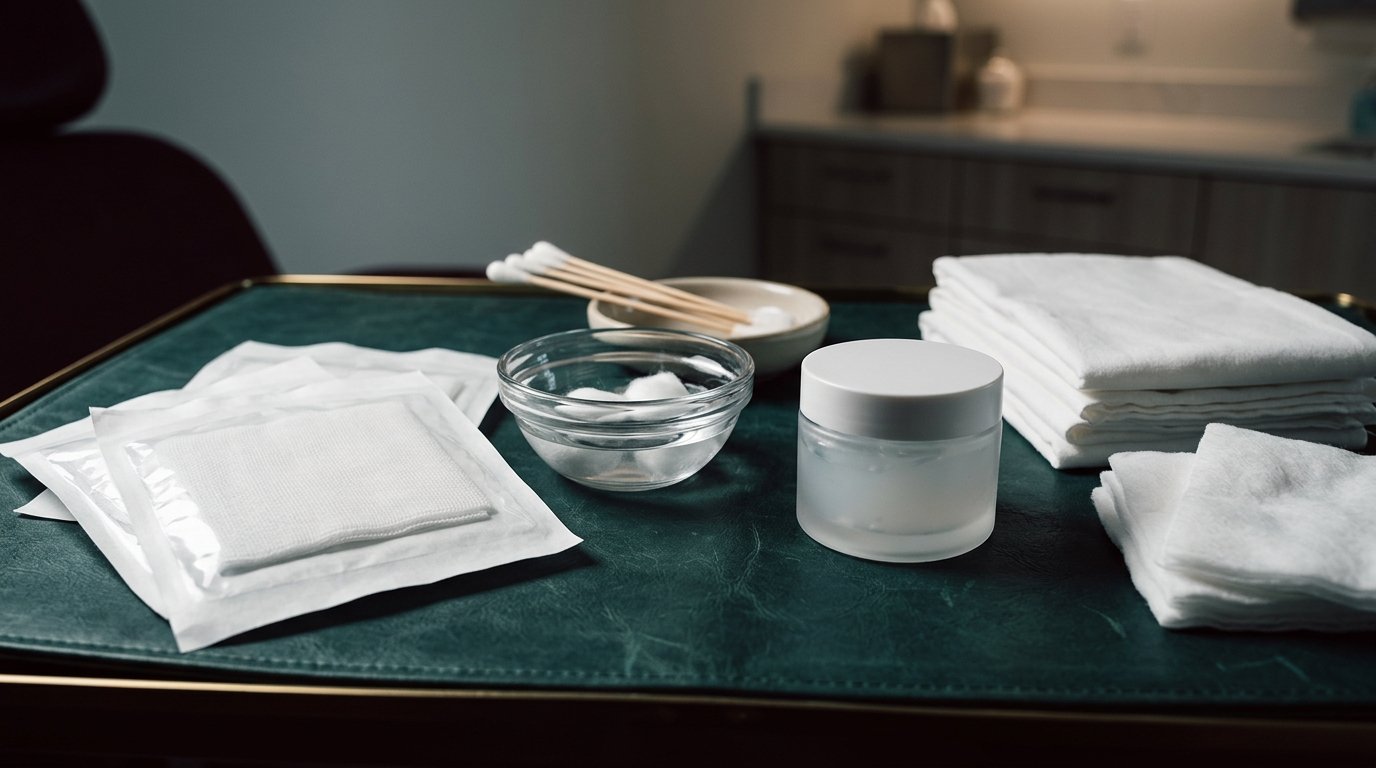
Comfort measures should support healing without masking a complication. Ask in advance what level of pain is expected and which medication is safe for you. People with allergies, stomach disease, kidney disease, bleeding risk, pregnancy, anticoagulant use or other medical issues need individual advice.
Cooling
Clinician-approved cool compresses can reduce heat and swelling. Do not place ice directly on treated skin or apply frozen packs for prolonged periods. Use clean barriers and follow time limits. Unclean compresses can introduce bacteria.
Elevation
Sleeping with the head elevated for the first nights may reduce facial swelling. Arrange clean pillows before treatment. If swelling is severe, one-sided, rapidly increasing or associated with breathing or eye symptoms, elevation is not a substitute for urgent assessment.
Itching
Itching can accompany repair, but it can also signal dermatitis, fungal infection or another problem. Do not scratch or apply an unfamiliar antihistamine cream. Ask whether oral medication is appropriate for you and whether photographs or examination are needed.
Pain
Discomfort often decreases after the first period. Pain that becomes stronger after initial improvement, especially with local swelling, pus or fever, is a red flag. A clinician should review it rather than simply increasing pain medication.
Sun Protection and Pigment Prevention
Ultraviolet exposure can intensify inflammation and pigment change. Sun planning begins before treatment and continues long after surface closure. A person who cannot avoid strong sun during the recovery window may need to postpone.
Before the surface closes
Do not apply a conventional sunscreen to raw or open skin unless the treating clinician specifically instructs it. Physical avoidance—staying indoors, shade, a clean wide-brimmed hat and timing transport—may be the main strategy. Ask exactly when sunscreen should start.
After closure
Use the broad-spectrum sunscreen recommended for your healing skin and reapply appropriately. Fragrance, filters and texture can affect tolerance. A sunscreen that worked before treatment may sting afterward. Patch testing or a clinician-selected simple formulation may be helpful.
Visible light and heat
People prone to pigment change may receive advice about tinted products containing iron oxides after the barrier has healed. Heat can also increase redness. These decisions should be individual; do not apply makeup-like products to an open wound.
Plan the season, not just the date
Istanbul can have intense sun even outside midsummer, and reflective water can increase exposure during Bosphorus activities. Cloud cover is not complete protection. Consider your commute, balcony, car travel and outdoor work, not only beach plans.
Work, Makeup, Exercise, Washing and Daily Life
Return dates depend on biological healing and how visible you are comfortable being. Build a buffer so that you are not forced to conceal incompletely healed skin.
Returning to work
Desk work from home may be possible early if comfort allows. In-person work can be difficult during oozing, swelling and peeling. Jobs involving heat, dust, chemicals, masks, helmets, outdoor exposure or close physical contact may require more time. Ask for a written medical note if needed.
Makeup
Do not apply makeup until the provider confirms that the surface has re-epithelialised sufficiently. Applying foundation too early can irritate, contaminate and hide a developing complication. When cleared, use clean tools, simple products and gentle removal. Replace old sponges or heavily used applicators.
Exercise
Exercise increases heat, sweating and blood flow. Sweat can sting and gym environments add contamination. The restriction depends on treatment intensity and area. Resume gradually only after the clinician’s approval, and stop if heat causes marked throbbing or prolonged redness.
Swimming, sauna and steam
Pools, sea water, hot tubs, sauna and steam rooms are generally unsuitable while the barrier is open. They add heat, chemicals and microorganisms. A hotel spa is not a recovery environment. Ask when each activity can safely resume.
Showering and hair washing
Hot water, shampoo and shower pressure can irritate facial skin. Plan a gentle method and keep hair products away from the treated area. Dyeing hair immediately before or during recovery can expose the skin to irritants.
Shaving
Razors can cut fragile skin. Men and anyone removing facial hair should wait until cleared. Do not wax, thread or use depilatory creams during recovery. Clean electric devices before eventual reuse.
Alcohol and smoking
Alcohol can worsen flushing and dehydration, while smoking impairs wound healing. ASPS specifically advises stopping smoking because tobacco complicates healing. Discuss cessation support and alcohol restrictions with your clinician rather than relying on a generic number of days.
Planning Fractional CO2 Laser Around an Istanbul Trip
Fractional CO2 laser should not be squeezed casually between sightseeing and a flight. The treatment creates a medical aftercare commitment. International visitors need a plan for wound products, communication, follow-up and unexpected changes.
Do not assume next-day tourism
The first days may involve swelling, heat, repeated cleansing and strict sun avoidance. Walking tours, bazaars, ferries and outdoor restaurant seating can expose the face to sun, wind, dust and heat. Plan quiet indoor recovery near the clinic.
Allow follow-up before departure
A same-day or next-day flight can separate you from the treating clinician during the period when swelling and wound changes evolve. Ask how many in-person checks are recommended and when. If the clinic cannot assess you after departure, identify qualified care at home.
Flights and cabin conditions
Air travel involves dry cabin air, shared surfaces and limited access to wound care. Swelling may be uncomfortable. There is no universal safe flight interval because treatment intensity and health differ. The treating clinician should decide whether your itinerary is reasonable.
Pack correctly
- the exact aftercare products in travel-compliant sizes;
- clean gauze or dressings if prescribed;
- written medication instructions and prescriptions;
- the clinic’s direct contact and an after-hours route;
- a clean hat and practical shade plan;
- copies of treatment details to show another clinician if needed.
Language and consent
International hospitality should include clear recovery instructions in a language you understand. Ask the provider to write the device type, treatment area, date and aftercare. “Fractional laser” alone is not enough for a distant doctor trying to interpret a reaction.
Events and photography
Do not schedule treatment immediately before a wedding, conference or professional shoot. Even if peeling resolves, pinkness may remain. Makeup cannot be used until the barrier is ready, and lighting can exaggerate residual redness. A generous buffer is more realistic than a best-case social-media timeline.
Skin Tone, Melanin and Post-Inflammatory Hyperpigmentation
Post-inflammatory hyperpigmentation, or PIH, is a recognised concern after CO2 laser. It occurs when inflammation alters pigment production, leaving darker areas after the wound closes. Risk is influenced by treatment intensity, inflammation, sun exposure, individual pigment response and aftercare. The literature does not support a simple rule that one Fitzpatrick type alone predicts every outcome.
A 2023 review of PIH after CO2 laser found wide variation between studies and noted limited high-powered evidence about risk factors and prevention. This uncertainty is important. It means clinicians must use experience, conservative parameter selection, history and follow-up rather than promising that a topical product eliminates risk.
Questions for pigment-prone skin
- Have I developed dark marks after acne, burns, waxing or procedures?
- Is there active tanning or recent sun exposure?
- Would a test spot add useful information for this area and device?
- How will density and energy be adapted?
- What pre-treatment and post-treatment plan is proposed, and what evidence supports it?
- How quickly will new pigment be reviewed?
- Would another modality offer a safer risk-benefit balance?
Do not self-prescribe bleaching or steroid products
Hydroquinone, retinoids, corticosteroids and other pigment-directed medicines can irritate or carry medical risks. Timing around ablative treatment matters. Use them only under a clinician’s plan. More aggressive prevention can paradoxically create inflammation.
Hypopigmentation also matters
Loss of pigment is less common with modern fractional treatment than with older aggressive full-field resurfacing, but it remains possible after excessive injury. A patch that becomes unusually pale months later needs assessment rather than tanning or cosmetic camouflage alone.
Infection, Cold Sores, Dermatitis and Other Complications
Fractional ablative CO2 treatment perforates the barrier, creating an opportunity for bacteria, viruses and fungi. Published complication reviews describe bacterial infection, herpes simplex reactivation, yeast infection, acneiform eruptions, dermatitis, pigment change, prolonged erythema and, rarely, scarring.
In a retrospective study of 490 deep fractional CO2 treatments, 67 adverse events were recorded. The most frequent included acneiform eruptions, herpes outbreaks, bacterial and yeast infections, hyperpigmentation, prolonged erythema and contact dermatitis. The exact percentages from one practice and older devices should not be used to predict an individual result, but the findings show why monitoring and follow-up matter.
Cold sores
Facial resurfacing can reactivate herpes simplex, sometimes beyond the lips. Tell the clinician about any history of cold sores, even if outbreaks are rare. The clinician may consider antiviral prophylaxis based on area and risk. Do not start, stop or share antiviral medication without a prescription.
Bacterial and fungal infection
Delayed healing, increasing tenderness, pus, odour or a local worsening area can be clues. Yeast may present less dramatically with persistent redness and itch. Culture may be needed because appearance alone can be misleading. Early correct treatment is safer than trying several creams.
Contact dermatitis
Adhesives, topical antibiotics, botanical products and preservatives can trigger dermatitis. A widespread itchy rash at product-contact sites may point to allergy, but infection must still be excluded. Keep a record of every product applied so the clinician can investigate.
Acneiform eruption and milia
Occlusion can contribute to small bumps. Do not respond with benzoyl peroxide, scrubs or acids while the barrier is healing. The clinician may adjust the ointment or recommend a treatment after examining the skin.
Scarring
Scarring is uncommon but serious. Infection, excessive energy or density, pulse overlap, poor aftercare and treatment of higher-risk areas can contribute. Persistent local thickening, contraction or delayed closure requires prompt specialist assessment.
Red Flags: When to Contact the Clinic or Seek Urgent Care
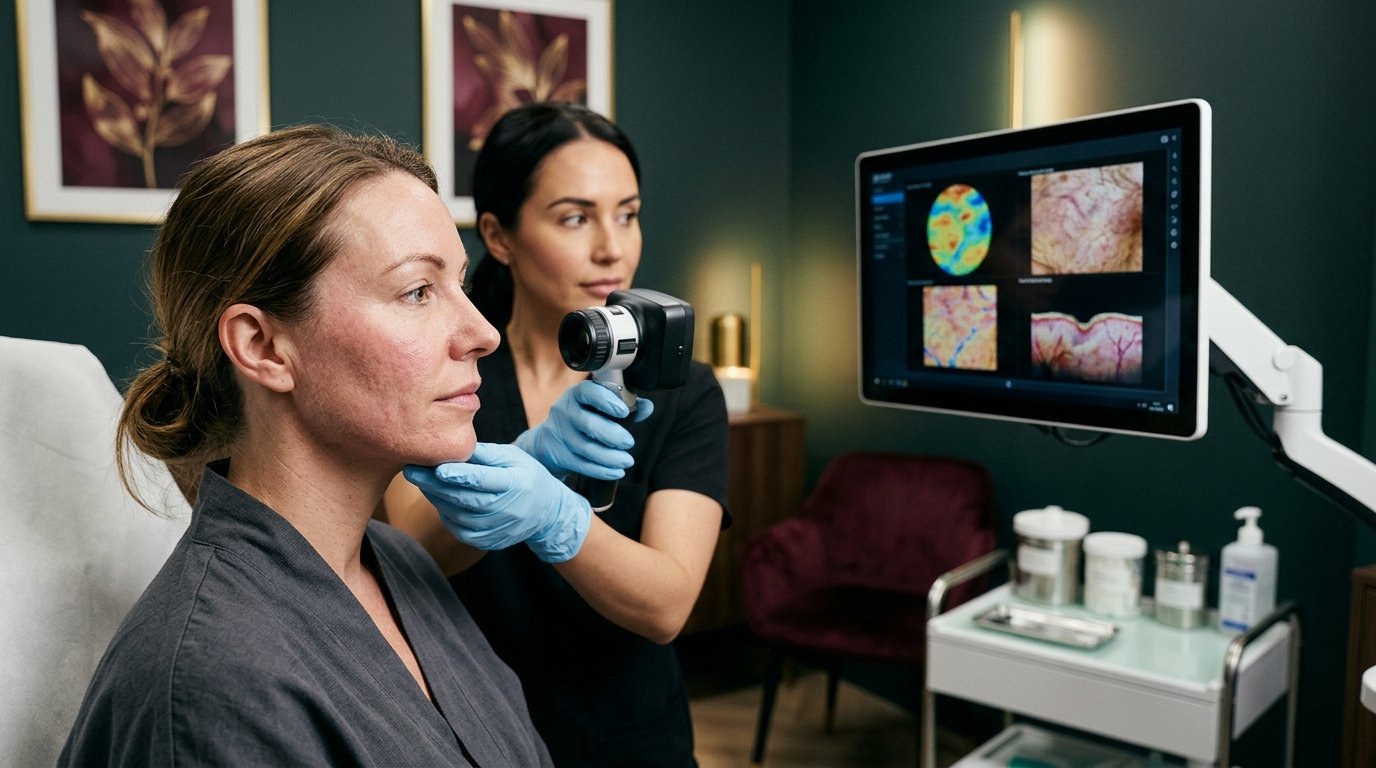
Your clinic should define its own contact thresholds. The following signs commonly justify prompt review rather than waiting for a routine visit:
- pain that increases after initially improving;
- rapidly spreading redness, heat or swelling;
- pus, foul odour or thick discharge;
- fever, chills or feeling systemically unwell;
- grouped blisters, erosions or a suspected cold-sore outbreak;
- a local area that remains open while surrounding skin closes;
- black, grey or unusually pale tissue;
- new eye pain, visual change, inability to open the eye or severe eyelid swelling;
- difficulty breathing, facial or throat swelling, fainting or signs of severe allergy;
- persistent intense itching with a new widespread rash;
- new dark patches that are expanding rapidly;
- any symptom that the written plan identifies as urgent.
Breathing difficulty, severe allergic symptoms and significant eye symptoms require urgent medical care. Do not wait for a reply on social media. Know the emergency number in your location and tell clinicians exactly what procedure was performed.
How to send useful photographs
Use natural light, one full-face image and close views from several angles. Do not apply a filter. Include the treatment date, when the change began, whether it is worsening, pain level, temperature if measured and every product or medication used. A photograph is useful context, but the clinician may still need to examine or culture the area.
Preparation That Supports a Safer Recovery
Recovery planning starts before the laser is switched on. The consultation should review diagnosis, scar type, expectations, medical history, medications, allergies, herpes history, pigment response, previous procedures, smoking and ability to follow aftercare.
Stabilise active skin problems
Active infection, inflamed acne, dermatitis, recent sunburn and uncontrolled irritation can make treatment inappropriate. Treating through a flare to keep an appointment can increase complications. The acne treatment guide explains why active disease and scar treatment require different timing.
Review medication with the correct prescriber
Do not stop anticoagulants, isotretinoin, immune-modifying medicines or other prescriptions based on a website. The laser clinician and prescribing doctor should consider risk together. Supplements also matter, but generic “stop everything” instructions can be unsafe.
Discuss herpes prophylaxis
Report cold sores anywhere around the mouth or face. Ask whether prophylaxis is recommended, when it begins and what to do if lesions appear despite it. Complete medication exactly as prescribed.
Avoid tanning and uncontrolled sun
Arrive without sunburn or active tan. Ask how many weeks of sun avoidance are needed for your plan. If your work or travel makes that impossible, reschedule.
Prepare the recovery space
- buy only the products on the approved list;
- wash linens and prepare clean pillowcases;
- organise food, transport and childcare if needed;
- move work meetings away from the early healing window;
- keep the clinic number and emergency plan visible;
- avoid visitors, pets and tasks that add dust or contamination.
Confirm informed consent
You should understand the target, alternatives, likely number of sessions, expected downtime, pigment risk, infection risk, scarring risk and financial policy for follow-up. A consent form is not a substitute for conversation.
When Results Develop and How to Judge Them
Early swelling can temporarily smooth texture, so photographs taken immediately after treatment do not show the final result. As swelling falls and the surface heals, the skin may look uneven before it settles. Collagen remodelling takes months.
Texture and scars
Improvement is usually partial. Deep ice-pick, rolling and boxcar scars respond differently, and tethered scars may need another technique. Fractional CO2 can be one component of a staged plan. Comparing it with other skin rejuvenation treatments helps prevent unrealistic expectations.
Lines and photoageing
Surface texture and selected lines may improve, but laser does not replace volume or correct every cause of facial ageing. Sun protection and home care influence durability. Deep movement lines and structural laxity may require different discussions.
Colour change
Redness can last longer than the crusting phase. Brown PIH may emerge after the surface looks healed. Judge pigment with consistent photographs and professional follow-up, not day-to-day bathroom lighting.
Repeat treatment
Do not schedule the next session before the clinician can assess healing and response. More frequent is not necessarily more effective. Cumulative inflammation can increase risk. The interval should reflect depth, area, goal and pigment behaviour.
Keep a recovery record
Photograph at baseline and agreed checkpoints. Note discomfort, product changes, sun exposure and any complication. This record helps the provider adjust future settings and may show gradual improvement that memory misses.
How to Choose a Provider and Ask Better Questions
Laser outcome depends on diagnosis, device knowledge, parameter selection, eye protection, hygiene, wound care and complication management. A device model alone does not create safety.
Questions before treatment
- Why is fractional CO2 appropriate for my specific concern?
- Is the treatment ablative fractional, fully ablative or another technology?
- Who diagnoses, selects parameters and performs the procedure?
- What training and legally applicable competence does that person have?
- What recovery is expected for the proposed density, depth and area?
- How does my pigment history change the settings or aftercare?
- What eye protection will be used?
- What is the plan for cold-sore history and infection prevention?
- Which exact products will I use, and where can I obtain them?
- When is the first follow-up?
- Who responds after hours?
- What alternatives offer less downtime?
Warning signs in marketing
- guaranteed scar removal or “glass skin”;
- one downtime promise for every setting and skin;
- before-and-after images without timing or treatment details;
- pressure to add energy or passes because stronger is “better”;
- no medical history or skin examination;
- no written wound-care plan;
- no route for urgent follow-up;
- dismissal of pigment risk in darker or pigment-prone skin;
- treatment immediately before a flight or sunny holiday without discussion.
Why photographs and test spots have limits
Before-and-after images can demonstrate possibility but not probability. Test spots may offer useful information about a device and area, yet they cannot guarantee the response of a full-face treatment. Good consent explains uncertainty.
Compare mechanisms, not package prestige
A professional peel, microneedling, non-ablative laser or conservative skincare may be more appropriate for some goals. The guide to professional peels in Istanbul describes a different type of controlled exfoliation and recovery. The best provider is willing to recommend a less intensive option.
How the Treated Area Changes Recovery Planning
Recovery advice should be adapted to anatomy. Skin thickness, movement, oil glands, hair follicles and the consequences of swelling differ from one area to another. A treatment that is straightforward on the cheeks may require extra caution around the eyelids, mouth, jawline, neck or chest.
Cheeks and acne-scar zones
Cheeks are common targets for acne-scar resurfacing. The provider may vary depth across individual scar types rather than treating the whole cheek uniformly. Swelling can temporarily soften scars, so do not judge the final result in the first week. Beard hair, active acne and recent picking can affect hygiene and parameter selection. A person with tethered rolling scars may need a different procedure before or alongside laser, while narrow ice-pick scars may not respond like shallow boxcar scars.
Nose and central face
The nose has contours that collect ointment and wound fluid. Glasses can rub treated skin, and mask edges can create friction. Ask how to keep creases clean without overworking them. If the nose was treated for texture or visible pores, remember that pores are normal structures and cannot be permanently erased.
Perioral area
Movement, saliva, eating and a history of cold sores make the area around the mouth distinctive. Keep food residue away from the wound and follow hygiene instructions after meals. Report tingling or grouped blisters promptly. Do not assume that chapped lips and herpes are the same. If antiviral prophylaxis was prescribed, take it exactly as directed.
Eyelids and periocular skin
Periocular treatment requires appropriate eye protection during the procedure and careful monitoring afterward. Swelling can be dramatic. Previous eyelid surgery, laxity and eye-surface problems should be disclosed. Increasing eye pain, visual change, severe asymmetry or inability to open the eye is not a routine cosmetic concern and needs urgent evaluation.
Forehead and hairline
Hair products, dye and scalp oil can reach the forehead. Pull hair back with clean, non-abrasive materials and avoid adhesive bands over treated skin. The hairline can hide retained product or crust; cleanse it according to instructions rather than scrubbing.
Jawline and beard area
Stubble can make ointment removal and visual inspection harder. Avoid shaving until the skin is closed and the clinician permits it. Folliculitis can resemble an acneiform eruption, so send photographs if bumps multiply or become painful.
Neck and chest
The neck and chest require conservative planning because healing and scarring behaviour can differ from the face. Clothing collars, jewellery, seat belts and sleeping position add friction. Sun exposure is easily overlooked on the upper chest. Ask whether test spots, lower density or a different modality would be more appropriate.
Body scars
Body areas face movement, clothing pressure and slower healing in some locations. A scar near a joint can be repeatedly stretched. Work uniforms, sports equipment and backpacks may rub the wound. Plan dressings and activity restrictions around the real location rather than following a face-only guide.
Personal and Lifestyle Factors That Influence Healing
The laser creates the controlled injury, but recovery occurs within the person’s broader health context. No single factor predicts the outcome, yet an accurate history helps the clinician reduce avoidable risk.
Smoking and nicotine
Smoking reduces tissue oxygenation and impairs wound healing. Nicotine from other sources can also affect blood vessels. Disclose cigarettes, vaping and nicotine products. A clinician may recommend a cessation interval and support; do not hide use because you fear cancellation. The goal is to choose a safer time and plan.
Diabetes and metabolic health
Diabetes can affect infection risk and healing, especially when glucose control is poor. Tell the provider about your diagnosis, medicines and recent control. Cosmetic treatment may need medical clearance or postponement. Feeling well does not prove that wound healing risk is low.
Immune suppression
Medicines or illnesses that alter immunity can change infection risk and response. This includes systemic steroids, biologics, chemotherapy and transplant medicines. Never stop these drugs for a cosmetic procedure without the prescribing specialist.
Bleeding risk
Anticoagulants, antiplatelet drugs and some supplements can influence bruising or bleeding. The importance depends on the procedure. Stopping them without medical supervision can be dangerous. Provide a complete list and let the relevant clinicians decide.
History of keloid or hypertrophic scarring
Tell the clinician if cuts, piercings or surgery produced raised scars. The risk varies by location and diagnosis. A fractional laser is sometimes used to treat selected hypertrophic scars, but that does not mean every keloid-prone person is automatically suitable for cosmetic resurfacing.
Rosacea, eczema, psoriasis and vitiligo
Inflammatory disorders can flare with trauma, heat or products. Some diseases can appear in injured skin through the Koebner phenomenon. The provider should distinguish stable history from active disease and consider dermatology input. A sensitive skin assessment is relevant, but an ablative laser requires medical-level screening beyond ordinary facial sensitivity.
Nutrition and hydration
There is no special food that guarantees faster laser healing. A balanced diet with adequate protein and fluids supports general health. Avoid extreme restriction during recovery. Supplements marketed for collagen are not substitutes for wound care and can interact with medicines. Ask before starting anything new.
Sleep and stress
Prepare for several disrupted nights if swelling or ointment makes sleep uncomfortable. Arrange help with children or caregiving responsibilities. Stress does not mean a complication will occur, but an overloaded schedule can reduce adherence and make normal healing harder to tolerate.
History of pigment change
Your own past response to acne, burns, waxing and procedures can be more informative than a skin-type label alone. Bring photographs of previous dark or light marks and explain how long they lasted. This history may influence settings, season and whether another modality is preferable.
How to Evaluate Aftercare Products Without Building an Irritating Routine
Laser recovery shelves often become crowded with cleansers, thermal sprays, serums, growth-factor products, masks and supplements. Each additional item creates another ingredient exposure. The most useful question is not whether a product is expensive or popular, but whether it has a defined role at the current wound stage.
Stage 1: open or actively healing surface
The priorities are clinician-directed cleansing, protection and infection surveillance. Products should be simple, clean and approved for the protocol. Cosmetics and performance serums do not belong on an open barrier unless they are explicitly part of medical care.
Stage 2: closed but pink and reactive skin
The routine may expand to a gentle cleanser, moisturiser and suitable sun protection. Introduce only what is necessary. A product that does not sting on ordinary skin can still irritate newly re-epithelialised skin.
Stage 3: gradual return to baseline skincare
Restart actives one at a time on the clinician’s schedule. Waiting between additions makes it easier to identify a reaction. Do not restart a retinoid, exfoliating acid and strong vitamin C on the same evening merely because the peeling has ended.
Questions to ask about any recommended product
- What exact stage of healing is it for?
- Is it necessary or optional?
- What are the active and inactive ingredients?
- Does it contain fragrance, botanical extracts or a common allergen?
- How much and how often should I apply?
- When should I stop?
- What reaction means I should wash it off and contact the clinic?
- Can I use a simpler alternative if it is unavailable while travelling?
Nexja Select is most meaningful here as disciplined selection. A curated routine can contain fewer products than a standard package because individual tolerance matters more than the number of branded items.
A Simple Daily Recovery Log
A short record makes follow-up clearer and reduces anxiety. Use the same time, camera and lighting each day when possible. Do not obsess over hourly changes; look for overall direction.
| Item | What to record | Why it helps |
|---|---|---|
| Date and day after treatment | Calendar date and approximate hours since procedure | Connects symptoms to the expected phase |
| Pain | 0–10 score, location and whether improving | Increasing focal pain can signal a problem |
| Swelling | Mild/moderate/severe and symmetric or one-sided | Shows whether swelling follows the expected trend |
| Redness | Diffuse, localised, spreading or fading | Pattern matters more than redness alone |
| Fluid or crust | Clear, yellow, thick, odorous or bloody | Supports wound and infection assessment |
| Itch or rash | Where it occurs and relation to products | May reveal contact dermatitis |
| Products | Name, time and amount applied | Identifies irritants and confirms adherence |
| Medicines | Prescribed doses taken or missed | Important for antiviral or antibiotic planning |
| Exposure | Sun, heat, exercise, dust, pets or accidental contact | Explains sudden changes and guides advice |
Send the record when the clinic requests it or when symptoms change. Do not delay urgent care to complete a perfect log. The purpose is communication, not self-diagnosis.
Practical Recovery Planning Scenarios
These examples show how the same procedure name can lead to different practical decisions. They are not treatment recommendations; the clinician must assess the person and choose the plan.
Scenario 1: A local office worker with full-face treatment
The person can work remotely for one week but has an in-person presentation on day eight. A responsible plan considers whether the proposed settings are likely to leave obvious pinkness beyond surface peeling. The worker arranges video-free days during early swelling, places the presentation on a flexible date, prepares clean aftercare supplies and avoids promising colleagues that makeup will definitely be possible by day eight. The clinic schedules a review before makeup restart.
Scenario 2: An international visitor leaving Istanbul in three days
A short trip is a poor fit for a treatment that may require active wound care and an in-person check after swelling peaks. The consultation should discuss postponing, lowering treatment burden or selecting another option. The visitor’s willingness to accept risk does not remove the provider’s responsibility to consider follow-up access.
Scenario 3: Pigment-prone skin with old acne scars
The person has developed dark marks after acne and waxing. Planning includes scar classification, pigment history, sun exposure, possible test treatment, conservative parameters and a clear post-inflammatory hyperpigmentation strategy. The provider explains that avoiding CO2 entirely is not the only possible decision, but that a strong full-face session is not automatically appropriate. The client understands that pigment follow-up may extend for months.
Scenario 4: A wedding guest seeking rapid texture improvement
The event is ten days away and the person has never had ablative laser. A best-case recovery advertisement is not enough. Persistent redness, acneiform eruption or delayed peeling could interfere with makeup. The safer discussion may be to postpone CO2 until after the event and choose a lower-downtime facial if suitable. Event pressure should not compress wound biology.
Scenario 5: A person with recurrent cold sores
The history is disclosed before treatment. The clinician decides whether antiviral prophylaxis is indicated, documents the schedule and explains what symptoms need contact. The client does not wait for a classic lip blister; facial herpes after resurfacing can present across the treated field.
Scenario 6: A healthcare or industrial worker
Masks, goggles, dust, heat and long shifts create friction and contamination concerns. Return-to-work planning considers protective equipment resting on treated skin. A medical note and longer leave may be more appropriate than trying to fit treatment before a weekend.
Scenario 7: Treatment of a neck or chest scar
Clothing, seat belts and slower healing outside the face influence the plan. The provider discusses conservative settings and alternatives. The client arranges soft clothing and avoids necklaces. Advice copied from a facial-resurfacing influencer would miss these local risks.
Scenario 8: Skin becomes more painful on day four
Instead of assuming that pain is part of peeling, the person contacts the clinic, sends unfiltered photographs and reports temperature, products and medication. The clinician may need examination or culture. Early review matters because infection can cause delayed healing and scarring.
Scenario 9: An itchy rash develops under an ointment
The person records when the rash began and which product touched the area. They do not add a steroid, antibiotic or essential oil. The clinic assesses possible contact dermatitis while excluding infection. Product simplicity makes the cause easier to identify.
Scenario 10: Healing looks good but the person wants another session quickly
Visible closure is not the end of remodelling. The provider waits long enough to judge the response, redness and pigment behaviour. A second session is scheduled only if the expected benefit justifies cumulative injury. Patience is an active part of treatment planning.
Nexja Select, Nexja Butterflies and the Recovery Experience
Nexja’s brand architecture can be applied to CO2 laser recovery without turning it into a guarantee.
Nexja Select
Nexja Select means curating products, technologies and protocols rather than adding them automatically. In recovery, that means an aftercare product should be selected for a clear reason, appropriate barrier stage and known ingredient profile. More products are not more premium.
Nexja Butterflies
Nexja Butterflies refers to the selected transformation team and personnel. Relevant qualities include education, applicable competence and certification where required, experience with skin, careful technique, hygiene and the ability to recognise complications. The term describes the team, not clients, and does not replace professional credentials.
Nexja Experience
Nexja Experience spans inquiry, assessment, planning, procedure, communication and aftercare. For an ablative laser, the days after treatment are part of the service—not an optional add-on. Clear written instructions, accessible follow-up and honest recovery expectations are essential.
“You Choose Change. We Create the Transformation.” is most responsible when transformation includes safe pacing. Sometimes the right transformation plan is to postpone, lower intensity or choose another modality.
Common Myths About Fractional CO2 Laser Recovery
Myth 1: Everyone heals in seven days
Reality: settings, area and individual healing differ. Peeling may end in a week while redness continues much longer.
Myth 2: Fractional means no open wound
Reality: fractional ablative CO2 creates microscopic barrier disruption. Infection prevention and wound care still matter.
Myth 3: More crusting means more collagen
Reality: visible injury is not a reliable dose meter. Excess injury can raise scarring and pigment risk.
Myth 4: Sunscreen is enough from day one
Reality: raw skin may not tolerate conventional sunscreen. Early protection may rely on strict avoidance and physical shade until the clinician permits product use.
Myth 5: Antibiotic ointment is always safer
Reality: common topical antibiotics can cause allergic contact dermatitis. Use only the clinician-approved product.
Myth 6: Itching always means healing
Reality: itch can accompany repair but can also signal dermatitis or infection. Pattern and progression need assessment.
Myth 7: Darker skin cannot have fractional CO2
Reality: suitability is individual. Pigment risk, parameters, indication and provider experience require careful evaluation; blanket promises and blanket exclusions are both oversimplified.
Myth 8: Pink skin is fully healed skin
Reality: the surface may be closed while barrier function and inflammation are still recovering. Product reintroduction should remain gradual.
Myth 9: Makeup can be used once oozing stops
Reality: the provider should confirm adequate re-epithelialisation. Premature makeup can irritate and contaminate.
Myth 10: A flight is harmless because CO2 laser is outpatient
Reality: outpatient does not mean no aftercare. Early swelling, dryness and limited access to the treating clinician can make travel impractical.
Myth 11: One session removes all acne scars
Reality: scar types respond differently, and improvement is usually partial. Combination or staged treatment may be discussed.
Myth 12: Redness should be hidden at any cost
Reality: covering incompletely healed skin can delay recognition of a complication. Medical recovery takes priority over social appearance.
Frequently Asked Questions
How many days of downtime should I plan?
Plan according to the clinician’s estimate for your exact parameters. Several days to two weeks of visible recovery is common in broad patient guidance, but more intensive treatment can take longer and redness may persist after the surface closes. Add a buffer for work and events.
When is swelling usually worst?
Swelling often becomes more noticeable during the first one to two days, especially around the eyes. Rapidly increasing, one-sided or severe swelling, breathing difficulty or eye symptoms require prompt assessment.
Is yellow fluid normal?
Clear or lightly yellow wound fluid can occur and dry into crust. Thick pus, foul smell, increasing pain or spreading redness is different. Send photographs and contact the clinic if unsure.
Can I wash my face the same day?
Follow the clinic’s written protocol. The timing, solution and technique differ with settings and dressing method. Do not use your usual cleanser unless it is approved.
Can I put petroleum jelly on the skin?
Petrolatum is used in some resurfacing protocols, but it is not the universal answer. Use the specific barrier product, amount and schedule your clinician prescribes.
Should I use an antibiotic cream?
Only if prescribed. Topical antibiotics can cause contact dermatitis, and an incorrect product may confuse the clinical picture. Infection prevention and treatment should be clinician-directed.
Can I use aloe vera or a natural oil?
Not unless approved. Botanical products can contain allergens, fragrance or contaminants. “Natural” is not a sterility or safety standard for ablated skin.
When can I use sunscreen?
Ask the treating clinician. Before surface closure, strict shade and physical avoidance may be needed. After closure, use a suitable broad-spectrum product and reapply as instructed.
When can I wear makeup?
Only after the provider confirms adequate healing. The date depends on intensity and area. Use clean tools and simple products when restarting.
When can I exercise?
Exercise may need to pause while heat, sweat and contamination could irritate the wound. The restriction varies. Resume gradually after the clinician clears you.
Can I take a shower?
Usually some washing is possible, but hot water and direct pressure can irritate. Keep shampoo and hair products away from the area and follow the exact instructions.
Can I sleep on my side?
Head elevation and avoiding pressure on treated skin may be recommended early. Use clean linens. Ask the provider for instructions based on the treated area.
Is itching normal?
Mild itching can occur as skin repairs. Severe, spreading or persistent itch with rash may indicate dermatitis or infection. Do not scratch or self-treat without advice.
What do I do about peeling?
Let it release naturally. Do not scrub, pick, shave over or use exfoliating acids. Continue the approved moisture routine and contact the clinic if crusting is painful or unusual.
When can I restart retinol?
The answer depends on treatment depth and healing. Professional patient guidance may delay retinoids for weeks after significant resurfacing. Restart only on the treating clinician’s schedule.
When can I restart vitamin C or acids?
After barrier recovery and clinician approval. Reintroduce one product at a time so that irritation can be identified. Acidic vitamin C can sting even after visible peeling ends.
What if I get small white bumps?
Milia or acneiform bumps can occur. Do not squeeze them or apply acne actives during open healing. Contact the clinic; the routine may need adjustment.
What if I have a history of cold sores?
Tell the clinician before treatment. Antiviral prophylaxis may be considered. Grouped blisters or erosions after treatment need prompt contact even if medication was used.
Will my skin become darker?
Post-inflammatory hyperpigmentation is possible. Risk varies, and sun exposure can worsen it. Early review of new brown patches allows an individual plan.
Can CO2 laser make skin lighter permanently?
Hypopigmentation is uncommon with appropriate modern fractional treatment but possible after excessive injury. Persistent pale patches should be professionally assessed.
How long does redness last?
It varies from days to weeks or longer, depending on intensity and individual response. ASPS notes that pinkness after resurfacing can gradually fade over months. Ask what is expected for your settings.
Can I fly two days later?
Do not assume so. Early swelling, wound care, cabin dryness and distance from follow-up can make this inappropriate. The treating clinician should review the itinerary before treatment.
Can I go sightseeing after treatment?
Outdoor sightseeing exposes healing skin to sun, wind, dust and heat. Plan indoor rest during the early phase and follow the clinic’s sun-avoidance timeline.
Can I have CO2 laser in summer?
Season alone does not decide suitability, but reliable sun avoidance does. If work or travel makes protection unrealistic, another date or modality may be safer.
Is fractional CO2 safe for darker skin tones?
It can be considered in selected patients by an experienced clinician using an individual strategy, but pigment risk must be discussed. No online answer can replace assessment of history, indication and parameters.
Does a test spot guarantee safety?
No. It may add information but cannot reproduce full-face treatment, overlapping passes or every aftercare variable. It is one tool, not a guarantee.
Can I combine CO2 laser with microneedling, PRP or another treatment?
Combination protocols require evidence, sequence planning and informed consent. More procedures can increase inflammation and complexity. Do not add them solely because they are available.
When will I see the final result?
Surface changes appear after healing, while collagen remodelling continues for months. Scar improvement should be assessed with consistent photographs and sufficient time before repeat treatment.
How many sessions will I need?
It depends on the target, severity, settings, response and tolerance. One session may provide improvement but rarely erases established scars. A series should be reassessed rather than sold as a certainty.
What is the most important aftercare rule?
Follow the written plan from the clinician who knows your settings, and contact them early when healing deviates from expectation. Clean, simple, consistent care is safer than adding products.
What should I bring to follow-up?
Bring photographs, a timeline of symptoms and every product or medication used. Mention sun exposure, picking, accidental contamination and missed doses honestly; accurate information helps correct management.
Can I treat a reaction at home?
Basic instructed wound care can continue, but suspected infection, herpes, severe dermatitis, pigment change or delayed healing needs professional assessment. Do not use leftover prescription products.
What if the clinic is in another country?
Obtain the device type, treatment date, area, aftercare and clinician contact in writing. Identify qualified local care before treatment. Do not depend only on messaging across time zones.
Sources and Further Reading
The following professional and peer-reviewed sources informed this guide:
- American Society of Plastic Surgeons: laser skin resurfacing recovery — general healing phases, care principles, complications and broad recovery ranges.
- American Society for Dermatologic Surgery: laser resurfacing for scars — procedure, risks and recovery overview.
- Fractional CO2 laser resurfacing complications — review of infection, scarring, dermatitis and pigment complications.
- Adverse events of deep fractional CO2 treatment — retrospective study of 490 treatments.
- Post-inflammatory hyperpigmentation after carbon dioxide laser — review of prevention evidence and risk factors.
- Complications and post-treatment care following invasive laser resurfacing — literature review on post-treatment management.
- 2025 consensus statement on fully ablative facial laser resurfacing complications — relevant to the fully ablative end of the spectrum, not a universal fractional protocol.
Final Recovery Checklist
- I know whether my treatment is fractional ablative CO2 and understand the proposed intensity.
- I have written cleansing, product and medication instructions.
- I planned enough social downtime with a buffer.
- I can avoid sun, heat, swimming and strenuous activity as directed.
- I disclosed cold sores, medicines, allergies, pigment history and previous healing problems.
- I know when makeup and active skincare may restart.
- I arranged local follow-up before travel.
- I know the red flags and how to reach the clinician urgently.
- I understand that redness can outlast peeling and results develop over months.
- I will not pick, scrub or add unapproved products.
Final Perspective
Fractional CO2 laser recovery is best understood as a planned wound-healing period, not a cosmetic inconvenience to hide. The surface may peel within days, but inflammation, barrier recovery and remodelling continue longer. A realistic plan accounts for work, sun, travel, product use, follow-up and the possibility of pigment change or infection.
Good aftercare is not the longest product list. It is the correct cleansing and protection method for the treatment, performed consistently with clean hands and early communication. Good clinical care is not the highest energy setting. It is an appropriate diagnosis, conservative parameter selection where needed, competent technique, eye safety and responsive follow-up.
If you are travelling to Istanbul, recovery should be built into the itinerary before booking. Leave time for assessment and follow-up, stay close enough for review and avoid a schedule that forces outdoor tourism or a flight during active wound care. Your safest timeline is the one developed for your skin, your treatment area and the actual settings used.
Medical notice: This article provides general education and does not diagnose a condition or prescribe aftercare. Fractional ablative laser treatment and its recovery should be managed by an appropriately qualified clinician. Seek urgent medical care for severe allergy, breathing difficulty, significant eye symptoms or other emergencies.


