Microneedling in Istanbul: A Guide to Suitability and Treatment Planning

Microneedling in Istanbul: A Guide to Suitability and Treatment Planning
This draft provides an educational overview of professional microneedling in Istanbul, including consultation, treatment planning, recovery, and travel considerations.
Overview
Microneedling is a professional skin procedure that uses fine needles to create controlled microchannels in the skin. Treatment plans vary according to the concern, the area being treated, and the individual’s skin characteristics.
For a shorter service overview, see Microneedling in Istanbul. Readers comparing a different technology category can also review BBL Skin Treatment in Istanbul.
Table of Contents
- How microneedling works and what the evidence supports
- Suitability and treatment planning
- Skin tone and pigmentation considerations
- What a high-quality consultation should cover
- What happens on treatment day
- Recovery and aftercare
- Session planning and expectations
- Planning microneedling around an Istanbul trip
- Frequently asked questions
How Microneedling Works and What the Evidence Supports
Professional microneedling creates many controlled micro-injuries with fine needles. The skin responds through wound-healing phases that involve inflammatory signaling, cellular activity, and later tissue remodeling. Collagen and extracellular-matrix changes are central to the treatment rationale, which is why visible improvement develops gradually rather than instantly. A treatment session does not “fill” a scar on the day it is performed; the intended change comes from the skin’s subsequent repair process.
The U.S. Food and Drug Administration describes microneedling medical devices as instruments with small needles, tips, or pins that repeatedly enter and leave the skin. The FDA has authorized a limited number of devices for specific uses and areas, and it advises patients to discuss expected benefits and risks with a trained health care provider. Its patient guidance also emphasizes cleaning, disinfection, and appropriate handling of needle cartridges. Readers who want the regulatory background can consult the FDA page on microneedling devices.
Standard mechanical microneedling should also be distinguished from radiofrequency microneedling. Mechanical microneedling relies on needle injury alone. Radiofrequency microneedling delivers RF energy through needles and adds controlled heating to the treatment. Because the mechanisms differ, the devices, settings, expected sensations, and risk profiles are not identical. In October 2025 the FDA issued a safety communication about serious complications reported with certain uses of RF microneedling, including burns, scarring, fat loss, disfigurement, and nerve damage. A clinic should therefore be able to explain exactly which modality it proposes rather than using the single word “microneedling” for everything.
Evidence for facial rejuvenation
A 2025 systematic review of microneedling for facial rejuvenation included 21 articles and 723 patients. Most studies used more than one session, and the pooled patient satisfaction estimate was 83%. The most commonly reported adverse effect in that review was temporary redness, while scaling, burning, and itching were reported less often. The review was positive overall but also noted an important limitation: aesthetic studies use different protocols and outcome measures, which makes precise comparisons difficult. For a person considering microneedling Istanbul options, that means the evidence supports a role for treatment, but it does not justify guaranteed percentages or a universal number of sessions.
Evidence for acne scars
Atrophic acne scars are one of the most established reasons people investigate microneedling. Randomized trials and systematic reviews have reported improvement with microneedling used alone and in combination approaches. The American Academy of Dermatology lists microneedling among professional acne-scar treatments and explains that controlled punctures stimulate new collagen and elastin. Its acne scar treatment overview also makes clear that scar treatment is often multimodal.
Scar architecture matters. Rolling scars, boxcar scars, and ice-pick scars are not the same problem. A person may also have tethering, active acne, pigment changes, or enlarged pores at the same time. Microneedling can be useful for some atrophic scars, but deep narrow scars or strongly tethered scars may need another technique first or instead. A useful consultation therefore identifies the scar pattern before discussing a package.
Fine lines, texture, and general skin quality
Microneedling is also studied for fine lines, texture, photoaging, and general rejuvenation. These goals are usually more subtle than correcting a deep structural scar. Someone seeking modest improvement with limited downtime may consider microneedling differently from someone seeking a dramatic change in laxity, deep wrinkles, or volume loss. Those concerns can arise from different anatomy and may be better addressed with other modalities.
The American Academy of Dermatology’s patient guide to microneedling notes that results develop over time and that several sessions may be required. The same source distinguishes professional treatment from at-home devices. Home rollers tend to be more superficial and may produce less visible change; misuse can also irritate skin or increase infection risk.
What evidence cannot promise
Published studies can describe average outcomes, typical side effects, and common treatment schedules, but they cannot predict an individual result. Scar depth, age of the scar, skin thickness, pigment tendency, smoking, sun exposure, aftercare, concurrent acne, hormonal factors, and previous procedures can all affect response. Even when the same device is used, treatment parameters can differ by area and clinical goal.
This is why responsible treatment planning separates “possible” from “predictable.” It may be reasonable to expect gradual improvement in a suitable indication. It is not reasonable to promise completely smooth skin, a fixed percentage of scar removal, or permanent results after a single appointment. Good information should make the limits of treatment as clear as its potential benefits.
Suitability: Who Might Consider Microneedling?
Suitability is not decided by age alone. A careful assessment considers the treatment goal, diagnosis, skin condition on the day, medical history, medication, healing pattern, pigment behavior, previous procedures, and the person’s tolerance for downtime. The best candidate is not simply someone who wants microneedling; it is someone whose concern reasonably matches what microneedling can address.
Potential goals can include selected atrophic acne scars, uneven texture, fine lines, some surgical or traumatic scars, and aspects of overall skin quality. The key is specificity. “I want better skin” is too broad to plan well. “I am most bothered by shallow rolling scars on my cheeks” or “I want gradual texture improvement with limited recovery time” gives the practitioner a much clearer starting point.
When treatment may need to wait
Active irritation, infection, inflamed lesions, a fresh tan, sunburn, or an unstable skin condition can change timing. A history of poor wound healing, problematic raised scars, bleeding problems, immune suppression, or relevant medication can also change the risk-benefit discussion. The FDA advises people considering microneedling to discuss medical history, medication, expected benefits, and risks with an appropriately trained provider.
For someone traveling to Istanbul, postponement can be frustrating because flights and hotels are already booked. Nevertheless, the correct decision may still be not to treat. A premium consultation is not defined by finding a way to perform a procedure at any cost. Sometimes the most professional recommendation is to delay, choose another pathway, or arrange medical review first.
Skin Tone, Pigmentation, and Why Planning Must Be Individualized
Microneedling is often discussed as a useful option across a wide range of skin tones because it does not rely on targeting melanin with light in the same way many lasers or intense pulsed light systems do. That can be an advantage, but it should not be translated into the claim that pigment changes are impossible. Any procedure that creates inflammation can potentially trigger temporary or longer-lasting color change, especially in skin that tends to develop post-inflammatory hyperpigmentation.
Older reviews and newer studies both suggest that microneedling can be used successfully in skin of color, including for scars and selected pigment concerns. At the same time, individual studies show why careful timing matters. A 2024 randomized study involving microneedling with tranexamic acid for melasma reported post-inflammatory hyperpigmentation in part of the study population and found greater risk in darker phototypes and during warmer seasons. That study involved a combination protocol rather than simple standalone microneedling, so it should not be overgeneralized. It does, however, reinforce a basic principle: skin tone, recent sun exposure, climate, and inflammation history belong in the treatment plan.
Fitzpatrick type is a starting point, not a complete diagnosis
The Fitzpatrick scale classifies skin partly by how it reacts to ultraviolet exposure, but a single Roman numeral does not describe everything relevant to microneedling. Two people with the same phototype can differ in baseline pigmentation, tanning behavior, history of melasma, tendency to develop dark marks after pimples, sensitivity to products, and previous reactions to procedures. A consultation should therefore assess the actual skin rather than using phototype as the only safety decision.
For international visitors, travel can complicate this assessment. A person may arrive in Istanbul after several days of strong sun at the coast, after a skiing trip with high ultraviolet exposure, or after using unfamiliar active products while traveling. The skin seen during consultation may not be in its usual baseline condition. Recent tanning or irritation can be a reason to change the plan even if the person has tolerated microneedling well before.
Melasma is not simply “dark spots”
Melasma deserves separate attention because it is a chronic pigment disorder influenced by ultraviolet light, visible light, hormones, heat, inflammation, and genetic factors. Some studies have explored microneedling as part of melasma treatment, often to facilitate delivery of topical therapies. Evidence is still heterogeneous, and recurrence is common. A person whose main concern is melasma should not assume that creating more inflammation will automatically improve pigmentation.
A better consultation asks whether the pigment truly behaves like melasma, whether there has been recent sun exposure, which products are already being used, and whether the proposed procedure fits a longer-term pigment-control plan. The same principle applies to post-inflammatory hyperpigmentation after acne: controlling active inflammation and protecting the skin from ultraviolet exposure may be as important as the procedure itself.
What a High-Quality Microneedling Consultation Should Cover
A consultation is not merely the step before a procedure. It is where treatment should become more precise—or be ruled out. For a visitor comparing clinics in Istanbul, consultation quality is one of the most useful signals because many devices can look similar in photographs while the quality of assessment, documentation, hygiene, communication, and follow-up may differ substantially.
A practical way to evaluate the consultation is to notice whether the conversation begins with your goal or with a package. Goal-first discussions tend to produce clearer reasoning because the practitioner has to explain why a particular approach fits the concern.
What to observe during the consultation
Notice how the practitioner responds when you describe your main concern. A useful consultation usually narrows the problem instead of expanding the sales list. If you mention acne scars, for example, the conversation should become more specific about scar pattern, location, previous treatments, and what bothers you most. If the discussion immediately moves to a package without clarifying those points, the plan may be more commercial than individualized.
Also pay attention to whether the practitioner is comfortable discussing limits. Confidence does not require absolute promises. In fact, a professional explanation often includes uncertainty: how much improvement is realistic, what may remain visible, how response will be reviewed, and which alternatives could make sense if the first approach is not enough.
The consultation is also a chance to see whether the clinic communicates in a way you understand. Technical language can be useful, but it should be translated into practical meaning. A client should leave knowing what is being proposed, why it is being proposed, what the appointment involves, and what the next step will be.
Questions worth saving before your appointment
- What is the main concern you think microneedling can address in my case?
- What exact type of microneedling are you proposing?
- Why does this approach fit my goal better than the alternatives?
- How will you document my starting point and progress?
- What kind of visible recovery is typical with the protocol you are proposing?
- How many sessions are you suggesting, and what would make you change that number?
- What does the quoted price include?
- How does follow-up work if I return to another country?
- How should I plan photography, events, work, or sightseeing around the appointment?
- Which part of my goal is least likely to change with this treatment?
A clinic does not need to give a long lecture in response to every question. What matters is whether the answers are specific, internally consistent, and understandable. A short, clear answer is often more useful than a long sales explanation.
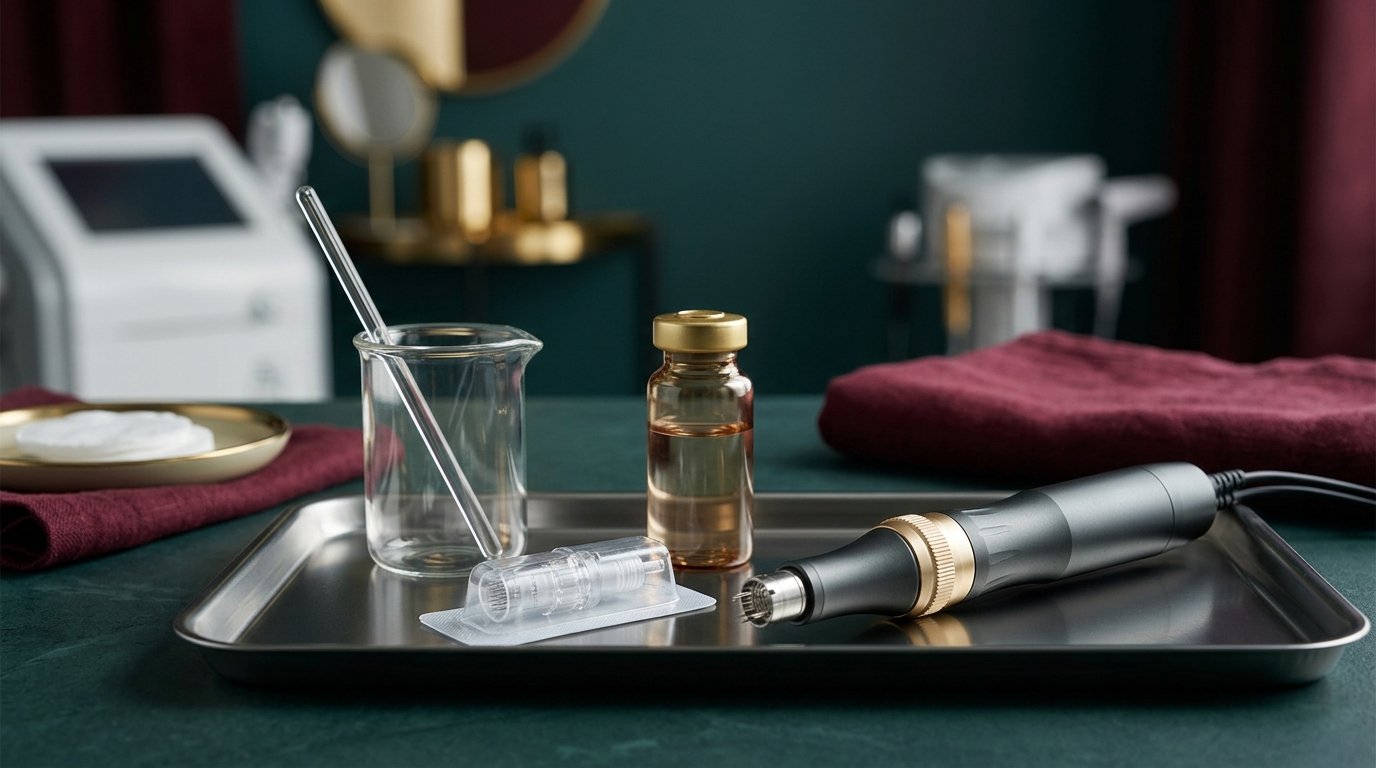
Understanding Price and Value in Istanbul
Istanbul offers a wide range of price points for professional skin treatments. International visitors sometimes compare only the number in euros, dollars, pounds, or Turkish lira and miss the differences in service structure. One quote may cover a short device session, while another includes consultation, photography, preparation, aftercare guidance, and follow-up. Two prices cannot be compared fairly until the included services are clear.
Think about the total treatment journey rather than the isolated session fee. If a plan requires several visits, travel costs, hotel nights, transport, and time away from work can become more significant than the treatment itself. A low session price can become expensive if it requires repeated international travel that was not considered at the beginning.
Packages: useful when they follow a plan
Packages can be convenient when a treatment strategy is already clear and the person knows how often they can return. They can also create pressure when purchased too early. A large package should not be the reason a person continues with a treatment that no longer fits their goals or schedule.
For visitors who live abroad, ask practical questions before committing. How long does the package remain valid? Do all sessions need to happen in Istanbul? Can appointments be adjusted around travel? Is the package tied to a specific protocol, or can the plan change after progress is reviewed? These details affect real value more than a headline discount.
What Premium Care Should Mean
Premium positioning is common in aesthetic medicine and professional skin care, but it should mean more than interior design. A premium experience can include careful selection, clear communication, consistent protocols, respectful scheduling, realistic expectations, clean treatment flow, and organized follow-up.
The environment still matters. Comfortable reception, privacy, thoughtful lighting, clean rooms, and a calm atmosphere can make the experience feel more considered. But the environment should support the service, not replace it. A beautiful room cannot compensate for rushed assessment or unclear follow-up.
Premium care also means being selective. A clinic does not have to recommend the most expensive option or the newest device to demonstrate quality. Sometimes the premium decision is a simpler treatment, a different date, or no procedure on that visit. Selection is part of the service.
Nexja Select, Nexja Butterflies, and Nexja Experience
Within the Nexja brand architecture, Nexja Select describes a curated approach to professional products, devices, and protocols. The idea is not to collect the longest equipment list, but to choose what fits the client’s main concern and the standards of the clinic. In microneedling, selection should be connected to the goal, the treatment plan, and the expected recovery rather than to novelty alone.
Nexja Butterflies refers to Nexja’s transformation team and personnel, not to customers. The concept emphasizes team selection around relevant education, applicable competence or certification, knowledge, experience, and Nexja standards without inventing credentials. The butterfly metaphor represents transformation: “You Choose Change. We Create the Transformation.”
Nexja Experience refers to the complete client journey from first contact and assessment through personalization, environment, communication, application, and aftercare. For a visitor coming to Istanbul from another country, that journey begins before arrival and continues after departure. Clear messages, organized scheduling, understandable information, and reliable follow-up are all part of that experience.
These brand concepts describe service architecture rather than a guarantee of outcome. Their value is consistency: the client should feel that each stage belongs to the same thoughtful system rather than a collection of disconnected transactions.
Common Microneedling Myths and Better Questions
Myth: the deepest setting is automatically the best setting
Depth is one variable in a treatment plan, not a quality score. Different areas of the face have different anatomy, and different concerns call for different treatment intensity. A better question is how the practitioner chooses settings for each area and how those choices relate to the stated goal.
Myth: more visible redness proves that a session was more effective
Immediate appearance is not a reliable measurement of long-term remodeling. A very red face can look dramatic in a social-media post, but the useful outcome is what happens after recovery. The better question is whether the treatment endpoint was appropriate and whether the recovery matched expectations.
Myth: microneedling permanently closes pores
Pores are normal anatomical structures. Improving the appearance of texture can make pores look less prominent in some people, but “permanent pore closure” is not a realistic promise. The better question is what degree of visible texture improvement is plausible.
Myth: one schedule works for everyone
Published studies use different session numbers and intervals. A standardized package can be convenient for administration, but it should not replace individualized planning. The better question is why a particular schedule is being suggested and how progress will be reviewed.
Myth: the newest device must be the best choice
Technology evolves quickly, but “new” is not a substitute for appropriate selection. A newer platform may offer useful features, while an established device may be suitable for another person. The better question is whether the technology and protocol match the concern and whether the team understands how to use them consistently.
Myth: premium care means choosing the most expensive option
Premium care is better understood as a combination of selection, communication, organization, environment, and follow-up. The highest-priced treatment is not automatically the most appropriate. A premium consultation should be able to explain why a simpler option may sometimes fit better.
Myth: beautiful before-and-after photographs guarantee the same result
Photographs can show what happened for another person, not what will happen for everyone. Starting point, skin behavior, treatment parameters, and follow-up all vary. The better question is how closely the published example resembles the concern being evaluated.
Myth: a tourist should maximize the trip by scheduling as many procedures as possible
A crowded treatment itinerary can create more complexity, not more value. Multiple procedures close together can make recovery harder to interpret and can reduce flexibility if plans change. The better question is which priority matters most during the trip and what can reasonably wait.
Myth: low downtime means no planning is necessary
Even limited visible recovery can affect makeup, photography, outdoor activities, work calls, and social plans. The better question is how much buffer would make the trip feel comfortable even if recovery lasts longer than the shortest advertised timeframe.
A Practical Microneedling Glossary
- Atrophic scar
- A scar that sits below the surrounding skin. Rolling, boxcar, and ice-pick patterns are common descriptions used for acne scars.
- Collagen remodeling
- The gradual reorganization and production of structural proteins during healing. This process helps explain why microneedling results develop over time.
- Mechanical microneedling
- Needle-based treatment that creates controlled micro-injuries without intentionally delivering radiofrequency energy.
- Radiofrequency microneedling
- A different modality in which needles also deliver RF energy into tissue.
- Post-inflammatory hyperpigmentation
- Darkening that can appear after inflammation or injury, particularly in people whose skin tends to pigment easily.
- Fitzpatrick skin type
- A classification related to how skin responds to ultraviolet exposure. It is useful but does not describe every aspect of skin tone, pigment behavior, or sensitivity.
- Downtime
- The period during which visible recovery or discomfort affects normal activities, even if formal rest is not required.
- Treatment endpoint
- The visible or clinical response a practitioner aims for during a session based on the protocol.
- Standardized photography
- Before-and-after images captured under comparable lighting, angles, distance, and expression so gradual changes are easier to evaluate.
- Combination protocol
- A plan that combines microneedling with another procedure or product. Combination treatment should be evaluated separately from standalone microneedling.
Understanding these terms can make a consultation much easier. The goal is not to memorize technical vocabulary; it is to recognize when two clinics are using the same word to describe different procedures or when a marketing phrase hides an important distinction.
Frequently Asked Questions About Microneedling in Istanbul
Is microneedling painful?
Sensation varies by area, treatment intensity, device, and individual sensitivity. Professional protocols often include measures to improve comfort, and different parts of the face can feel different. The most useful question is what the clinic’s specific protocol feels like rather than expecting one universal description.
How long does a microneedling appointment take?
The device portion may be relatively short, but the full appointment can include consultation, photography, cleansing, preparation, treatment, and aftercare explanation. When comparing clinics, ask for the total appointment time rather than only the minutes when the device is active.
How soon will I see a change?
Early swelling can temporarily change the appearance of texture, while collagen remodeling develops gradually. For that reason, meaningful evaluation usually looks beyond the first few days. Multi-session plans are commonly reviewed over a longer timeline.
Is one session enough?
Some people notice a short-term refreshed appearance after one treatment, but research and clinical practice often use multiple sessions for scar remodeling and rejuvenation goals. The number should follow assessment and response rather than a universal formula.
Can microneedling remove acne scars completely?
Complete removal is not a realistic promise. The goal is improvement in selected scar patterns. Deep, narrow, or tethered scars may need other approaches, and mixed scars often require a staged plan.
Can microneedling help the appearance of pores?
Improving texture can make pores appear less prominent in some people, but pores are normal structures and cannot be permanently sealed. Marketing that promises “zero pores” oversimplifies skin anatomy.
Is microneedling the same as RF microneedling?
No. Mechanical microneedling creates controlled needle injury without intentional radiofrequency energy. RF microneedling adds energy delivery through needles, creating a different treatment category with its own settings and risk considerations.
Can I have microneedling during a short holiday?
It can be practical for some travelers, but the appointment should fit the itinerary. Consultation, visible recovery, outdoor plans, photography, and the return flight all matter. A short trip works best when the schedule has flexibility rather than treating the procedure as an immovable event.
Should I book the appointment at the beginning or end of the trip?
There is no single answer. Some visitors prefer early treatment so they have time in Istanbul afterward; others prefer the end so outdoor sightseeing happens first. The decision depends on the planned activities and the recovery guidance for the chosen protocol.
What if I have an important dinner or meeting?
Visible recovery varies, so a buffer is useful when appearance matters. Someone with an important event may prefer to place the procedure far enough away that temporary redness, dryness, or flaking is unlikely to interfere.
Is a package always better value?
Not necessarily. A package can be convenient when the treatment plan is already clear and the client can realistically complete it. For international visitors, travel costs and schedule flexibility should be considered alongside any per-session discount.
How do I compare two clinics using different terminology?
Ask both clinics to describe the exact modality, appointment structure, assessment process, recovery expectations, and follow-up. Translating marketing language into concrete details often makes comparison much easier.
What should I look for in before-and-after photos?
Look for comparable lighting, angles, distance, expression, and timing. Be cautious when the before image is darker, closer, or more textured while the after image is softer, brighter, or farther away.
Can I combine microneedling with other treatments on the same trip?
Some people use combination or staged plans, but sequencing should be deliberate. A crowded itinerary can make it difficult to judge which procedure produced which effect and can reduce flexibility if recovery differs from expectations.
Does expensive equipment guarantee a better result?
No. Device quality matters, but outcome also depends on candidate selection, settings, technique, treatment planning, documentation, and follow-up. A sophisticated platform cannot compensate for a poorly matched treatment goal.
Why do clinics recommend different numbers of sessions?
Different goals, scar patterns, treatment intensities, device protocols, and practitioner preferences can produce different schedules. Instead of looking for one “correct” number, ask how the clinic will decide whether the plan should continue or change.
Can I compare microneedling with BBL?
They address skin through different mechanisms. Microneedling is primarily a controlled mechanical-injury approach, while BBL is a light-based technology. Facialistanbul’s guide to BBL skin treatment in Istanbul explains that category in more detail.
Why does consultation matter if I already know I want microneedling?
Because the same visible concern can have different causes and because the correct treatment intensity can vary. Consultation is where the clinic checks whether the requested procedure actually matches the problem rather than simply accepting the device name chosen online.
What is the most useful question to ask before paying?
Ask what outcome the clinic thinks is realistic for your main concern and what it would recommend if microneedling were not available. That answer can reveal whether the recommendation is based on the skin problem or on the device menu.
What should I keep after the appointment?
Save the date, clinic contact, treatment summary if provided, follow-up instructions, and standardized photographs. Those details make it easier to review progress and communicate clearly during future visits.
How to Read Evidence Without Becoming a Researcher
People searching for microneedling often encounter phrases such as “clinically proven,” “study-backed,” or “evidence-based.” Those phrases are useful only when the underlying study is relevant to the exact question. A study on acne scars does not automatically prove the same benefit for melasma, laxity, or enlarged pores. A study using radiofrequency microneedling does not automatically describe standard mechanical microneedling.
Look at what was studied: the indication, number of participants, skin types, device category, number of sessions, follow-up period, and outcome measure. A randomized trial provides different information from a small uncontrolled case series. A systematic review can summarize several studies, but its strength still depends on the quality and consistency of those studies.
Patient satisfaction is also useful but should be interpreted alongside objective outcomes. Someone may be satisfied with a modest change because the downtime was easy, while another person may be disappointed by the same objective improvement because they expected complete correction. Treatment planning should therefore combine evidence with individual priorities.
For consumers, the goal is not to read every paper. It is to recognize when a clinic is using research responsibly. A trustworthy explanation should say what has been studied, what remains uncertain, and how closely the evidence matches the proposed protocol.
How to Read a Microneedling Website Critically
A clinic website can be helpful before you travel, but it should be read as information plus marketing rather than as a personal diagnosis. Look for specific nouns instead of vague adjectives. Words such as “advanced,” “medical-grade,” “premium,” and “next generation” do not tell you what modality is used, what the appointment includes, or how follow-up works.
A stronger page explains the basic mechanism, realistic goals, recovery, the difference between standard and RF microneedling, and why treatment planning varies by person. It should also be willing to discuss uncertainty. Real aesthetic decisions involve trade-offs, and a page that promises perfect outcomes for every skin type is less credible than one that explains variability.
Check whether the first paragraph answers the search intent
A useful article should quickly explain what the treatment is and who the information is for. If the first several paragraphs are only promotional language, the page may be optimized more for branding than for helping a reader make a decision. Direct answers are useful for people and also for modern search systems that try to identify concise, authoritative passages.
Check the internal structure
Long articles are easier to use when they have clear headings, a contents section, tables, lists, and direct answers to common questions. Good structure is not only an SEO technique. It helps a reader move between technical background, practical planning, travel questions, and recovery information without reading every paragraph in order.
Check whether the page names limitations
One of the strongest trust signals is a section explaining what the treatment cannot do. Microneedling is not a universal answer for every scar, wrinkle, pigmentation issue, or tightening goal. A page that acknowledges alternatives is more useful than one that presents a single procedure as the answer to everything.
Check whether external links go to meaningful sources
Links to the FDA, American Academy of Dermatology, PubMed, peer-reviewed reviews, or official manufacturer information allow readers to verify important points. A page does not become trustworthy merely because it has citations, but transparent sourcing is better than asking the reader to accept every claim without context.
A Decision Matrix for First-Time Visitors
| Your priority | Questions to emphasize | Planning focus |
|---|---|---|
| Acne-scar texture | What scar patterns are present? Is microneedling the main tool or part of a staged plan? | Longer-term series, standardized photography, realistic improvement. |
| General skin texture | What visible change is realistic for texture and fine lines? | Gradual results, event timing, maintenance decisions. |
| Limited downtime | What recovery is typical with the proposed protocol? | Work, meetings, travel, makeup, outdoor plans. |
| International travel | How will follow-up work after leaving Istanbul? | Hotel location, transport, flight timing, communication. |
| Price sensitivity | What exactly is included in the quote? | Total journey cost, package practicality, repeat visits. |
| Premium experience | How are assessment, personalization, documentation, and aftercare organized? | Consistency across the entire client journey. |
The matrix is not a scoring system. It is a way to identify which questions matter most to you. Two people considering the same procedure can reasonably choose different clinics because one values the lowest visible downtime while the other values a long-term scar-remodeling plan.
The same logic applies to treatment selection. Someone who wants a subtle, gradual texture change may prefer a different approach from someone seeking stronger resurfacing and willing to accept more downtime. A good consultation makes those preferences explicit rather than assuming every client wants the maximum possible intervention.
Planning a Return Visit
For people who do not live in Istanbul, repeat treatment requires realistic logistics. If several sessions are proposed, map them against work calendars, school holidays, visa requirements where relevant, and the cost of travel. A treatment plan that looks affordable per session can become inconvenient if it requires frequent flights.
Ask whether the clinic expects every follow-up in person or whether some progress reviews can happen remotely with standardized photographs. Remote review cannot replace every in-person assessment, but it can make communication easier between trips. It is also useful to know how much flexibility exists if travel dates change.
If the treatment strategy evolves, the clinic should explain why. Progress may suggest continuing the same protocol, changing intensity, adding another modality, or stopping because the original goal has been reached. The purpose of a series is not simply to complete every session that was originally imagined; it is to move toward a defined goal while reviewing the response.
Final Perspective: Choose a Plan, Not Just a Procedure
Microneedling can be a useful professional option for selected acne scars, texture concerns, fine lines, and aspects of facial rejuvenation. Its appeal comes partly from a relatively straightforward mechanical concept and a recovery profile that can be easier to integrate into daily life than some more aggressive resurfacing procedures. Yet simplicity of concept should not be mistaken for simplicity of decision-making.
A good microneedling Istanbul plan starts by defining the problem. It identifies whether the concern is scar architecture, texture, pigment, active acne, or a mixture. It considers skin tone, recent sun exposure, previous treatment, and travel plans. It distinguishes standard microneedling from RF microneedling. It explains what improvement may be realistic and what the treatment cannot do. It includes documentation, a clear appointment structure, and follow-up.
For international visitors, logistics are part of treatment quality. A well-timed procedure should fit flights, outdoor plans, events, and the possibility that visible recovery lasts longer than the shortest advertised timeframe. A clinic should be willing to adjust the plan when the skin or itinerary does not support the original idea.
The most useful question is therefore not simply “Where can I get microneedling in Istanbul?” It is “Which plan makes sense for my skin, my goal, and my trip?” When that question leads the consultation, the device becomes one part of a larger and more responsible decision.
Quick Summary for International Readers
Microneedling is a controlled needle-based skin treatment used for selected concerns such as atrophic acne scars, uneven texture, fine lines, and aspects of skin rejuvenation. Standard microneedling and radiofrequency microneedling are different categories, so the exact modality should be clear before booking. Evidence supports a role for microneedling, but protocols vary and individual results cannot be guaranteed.
A useful consultation should define the main concern, review relevant history, examine the skin, explain the proposed modality, discuss realistic expectations, and provide a clear recovery and follow-up plan. For acne scars, the type and depth of the scars matter because rolling, boxcar, and ice-pick patterns may respond differently or need different techniques.
For visitors to Istanbul, travel planning matters. Leave enough flexibility for an in-person assessment, consider how outdoor sightseeing fits the recovery period, and think about follow-up after returning home. Compare clinics by the complete service rather than price alone: assessment, communication, documentation, hygiene, aftercare, and continuity all contribute to value.
The simplest decision framework is to start with the goal, not the device. Ask what the clinic believes microneedling can realistically improve, what it is unlikely to change, and what alternatives would be considered if the procedure were not available. That approach keeps the conversation focused on the skin problem instead of the equipment list.
Related Facialistanbul Reading
- Microneedling in Istanbul treatment overview for a concise service-level introduction.
- Microneedling + Exosome treatment page for readers comparing a combination pathway with standalone microneedling; combination suitability should still be assessed separately.
- BBL Skin Treatment in Istanbul for a comparison with a light-based technology category.
1. Define the primary concern
Start with the problem you want to improve, not the device you want to buy. If the concern is acne scarring, the consultation should identify scar type, depth, distribution, active acne, pigment change, and any tethering. If the concern is fine lines or texture, the practitioner should distinguish surface quality from deeper laxity or volume loss. If the concern is pigmentation, the type and stability of pigmentation matter.
2. Review relevant history
A useful history usually includes previous procedures, history of herpes outbreaks, tendency to form raised scars, medication, allergies or sensitivity to numbing products, bleeding or clotting issues, immune status, pregnancy status when relevant, active skin conditions, recent isotretinoin exposure, and recent sun or tanning. The exact questions can vary, but the principle is consistent: treatment should not be planned from a photo alone when relevant health information may change the risk.
3. Examine the skin in person
Photos can help with preliminary discussion, especially for tourists planning before arrival, but lighting, camera processing, makeup, filters, and compression can hide clinically relevant detail. In-person evaluation can reveal active inflammation, dryness, barrier disruption, pigment pattern, scar depth, vascularity, and areas that may need a different approach.
4. Explain the exact device and modality
A clinic should be able to tell you whether the proposed treatment is mechanical microneedling, radiofrequency microneedling, or another needle-based technology. It should also be able to explain why that modality fits the concern. The goal is not for the client to become an engineer; it is for the clinic to demonstrate that it understands the treatment it is offering.
5. Discuss hygiene and single-use components
Needle cartridges that are intended for single use should be new for the session and disposed of appropriately afterward. Reusing a cartridge creates infection risk. The FDA specifically advises patients to ask whether a new needle cartridge is used for each patient and each treatment session. Clean treatment surfaces, hand hygiene, appropriate skin preparation, and adherence to device instructions are part of professional practice, not optional luxury details.
6. Set an outcome target and review alternatives
A good plan should describe what improvement is realistic and what microneedling will probably not correct. If another treatment is better suited to the dominant problem, that alternative should be discussed. Someone with deep tethered rolling scars might need subcision. Someone with active inflammatory acne may need acne control before scar remodeling. Someone seeking major tightening may need a different technology or a medical/surgical option.
7. Build a follow-up plan before the first session
Follow-up matters even for a minimally invasive procedure. International visitors should know how to contact the clinic after leaving Istanbul, what symptoms are expected, what symptoms should trigger urgent review, and whether the clinic can provide documentation to a clinician at home if needed. A WhatsApp number alone is not a complete follow-up policy unless someone is actually responsible for reviewing concerns and directing care appropriately.
Preparing for a Microneedling Appointment
Preparation should be individualized rather than copied from a generic checklist. Still, several planning principles are common. The skin should ideally be calm and free from acute irritation. Strong sun exposure close to treatment can complicate pigment risk and recovery. A person using prescription retinoids, acids, exfoliants, or other active products should ask the treating professional which products should be paused and for how long; the answer depends on the product, strength, skin tolerance, and procedure intensity.
The AAD notes that a dermatologist may recommend a skin-care routine for two to four weeks before microneedling and may advise stopping retinoids or other irritating ingredients for a period before treatment. That recommendation should not be converted into a universal self-directed medication schedule. Prescription medication should not be stopped without guidance from the prescribing clinician.
Travel-specific preparation
If you are flying to Istanbul for treatment, send a concise history in advance but expect the final decision to be made after in-person assessment. Avoid building an itinerary in which treatment must happen on a specific day regardless of skin condition. If the clinic concludes that the skin is irritated or the procedure is not appropriate, the safest plan may be to postpone.
Bring a list or photographs of the skin-care products and medications you currently use. This is especially useful when labels are in another language. If you have had previous lasers, peels, injections, surgery, scar treatments, or episodes of prolonged pigmentation, note approximate dates and outcomes. If you have before-and-after photos from a previous treatment, unfiltered images in consistent lighting can provide useful context.
Photography and documentation
Standardized photographs are valuable because microneedling results are gradual and memory is unreliable. Good baseline images use consistent lighting, camera distance, angle, and facial expression. If scars are the main concern, oblique lighting can reveal texture that flat front lighting hides. A professional clinic should not rely on dramatically different lighting to make an outcome look larger than it is.
What Happens on Treatment Day?
The exact workflow depends on the device and clinic protocol, but a typical session begins with confirming the treatment area, reviewing any changes in health or medication, cleansing the skin, and documenting baseline condition. A topical numbing product may be used when appropriate. The FDA notes that topical anesthetic is commonly applied before microneedling and recommends telling the provider about allergies or sensitivity to numbing medication.
The practitioner then treats the planned areas with the microneedling device. Settings can vary by region because forehead, cheeks, upper lip, nose, and scarred areas have different anatomy and tolerance. A thoughtful session is therefore not necessarily performed at one depth across the entire face. More aggressive treatment is not automatically better; excessive trauma can increase downtime and complication risk without guaranteeing a better result.
What does it feel like?
People commonly describe pressure, vibration, scratching, prickling, heat, or a sunburn-like sensation afterward. Sensitive areas such as the upper lip or bony forehead can feel different from the cheeks. Comfort varies with device type, needle depth, number of passes, individual sensitivity, and whether numbing is used.
What should the skin look like immediately afterward?
Temporary redness, warmth, mild swelling, pinpoint bleeding, tightness, or tenderness can occur depending on treatment intensity. The FDA lists common reactions including redness, tightness, itching, peeling, bruising, and bleeding, while noting that they often resolve over days or weeks. The AAD says treated skin can feel sunburned and that visible redness or darker coloration in darker skin tones can last from a few days to about a week.
Immediate redness is not a measure of success. A dramatically inflamed face does not necessarily mean more collagen will be produced. The treatment endpoint should be selected deliberately rather than chased for a photograph.
Recovery Planning
Recovery can include temporary redness, tightness, dryness, mild swelling, or flaking. Timing varies with treatment intensity and individual response, so travel and work plans should leave room for visible recovery.
Recovery and Aftercare: What to Expect
Microneedling is often described as having limited downtime, but limited does not mean invisible. The treated area may look red or temporarily darker than baseline, feel warm or tight, and develop mild swelling, dryness, or flaking. The intensity and duration depend on treatment depth, number of passes, individual sensitivity, climate, and the rest of the skin-care plan.
The FDA notes that common short-term reactions can include redness, tightness, itching, peeling, bruising, and bleeding. The American Academy of Dermatology likewise notes that treated skin can feel sunburned and that visible redness in lighter skin or temporary darkening in darker skin can persist for several days. The useful point for planning is not the shortest possible recovery but the range of normal visible recovery.
The first day
The early recovery period is usually about keeping the skin calm and following the clinic’s instructions. Because the skin barrier has been intentionally disrupted, a complicated routine with many strong active products is not automatically better. A clear aftercare plan should explain cleansing, moisturization, sun protection, makeup timing, and when the client can return to their usual products.
The clinic should also explain which sensations are expected. Warmth, tightness, mild stinging, or tenderness can be normal depending on treatment intensity. The value of written instructions is consistency: a client who is tired after a procedure or dealing with jet lag should not have to remember a long verbal list.
Days two to seven
Redness often improves over the first several days, although some people remain pink, dry, tight, or slightly rough for longer. Darker skin may show temporary darkening rather than obvious redness. Sun protection matters because inflammation combined with ultraviolet exposure can contribute to unwanted pigment change in susceptible skin.
For a tourist, ordinary sightseeing can become significant environmental exposure. A Bosphorus cruise, rooftop terrace, open-top bus, or long walking route through historic districts can involve hours outdoors. The practical goal is not to stop normal life but to make sure the itinerary fits the clinic’s recovery guidance.
Follow-up should be defined before treatment
A client should know how to contact the clinic with questions after treatment and what kind of concern requires in-person review. This matters more for international visitors because they may be in another country by the time an unexpected reaction develops. A clear follow-up process is part of treatment planning, not simply customer service.
For travelers, it is useful to know what information the clinic can provide if another clinician at home needs context. A brief summary of the modality, treatment area, date, and general protocol can make follow-up easier. The point is continuity, not creating unnecessary medical paperwork.
How Many Microneedling Sessions Are Usually Planned?
There is no universal number. Published studies use different schedules depending on the indication, device, treatment intensity, and outcome being measured. The AAD notes that acne-scar treatment may involve several sessions, while facial-rejuvenation research also commonly uses repeated treatments. A multi-session plan is therefore common, but the exact number should be justified by the concern rather than sold as a fixed package before assessment.
Why session spacing matters
Microneedling depends on recovery and remodeling between treatments. Repeating procedures too quickly can create unnecessary inflammation and may not allow the skin to complete its early recovery. The interval selected by a clinician can vary according to depth, skin response, and treatment goal. A traveler should be cautious about compressing a series into a short holiday simply because they are in Istanbul for a limited number of days.
What should be reviewed between sessions?
Useful follow-up looks at more than whether the client liked the immediate glow. It can include standardized photographs, scar contour, texture, pigment response, duration of redness, sensitivity, aftercare tolerance, and any adverse effects. Settings or even the modality can then be reconsidered. If the first treatment causes prolonged irritation or unexpected pigmentation, repeating exactly the same plan automatically would not be individualized care.
Maintenance is a separate decision
Some people choose occasional maintenance treatments after a series, especially for general skin quality. That is different from saying maintenance is mandatory. Frequency should reflect the person’s goals, skin behavior, budget, and other treatments rather than a permanent subscription model.
Setting Realistic Expectations Before You Book
Microneedling can improve appearance without producing perfect skin. A scar may become shallower, softer at the edge, or less obvious in certain lighting without disappearing. Texture can look smoother while pores remain visible. Fine lines may soften without being erased. Skin can look more even while an underlying pigment condition still needs long-term management.
Before-and-after photographs are useful only when they are comparable. Lighting direction, exposure, skin hydration, camera sharpening, makeup, focal length, facial expression, and distance from the camera can all change the apparent severity of texture. For acne scars in particular, side lighting can exaggerate shadows while frontal lighting can hide them. Standardized photography is more informative than dramatic presentation.
Results are not immediate
Early post-treatment swelling can temporarily make texture look smoother. That is not the same as final collagen remodeling. Meaningful evaluation should happen after acute swelling has resolved and enough time has passed for tissue remodeling. This is especially important when an “after” photograph is taken on the same day as treatment.
Improvement is not the same as cure
Microneedling does not cure active acne, permanently eliminate melasma, stop aging, or guarantee that new scars will not form. If the underlying condition continues, new concerns can develop. A complete plan therefore considers the driver of the problem as well as the visible surface.
Microneedling in Istanbul: Planning Around Travel
Istanbul attracts people for holidays, business, dental care, surgery, hair procedures, and aesthetic treatments. Combining a skin procedure with a trip can be convenient, but itinerary design affects comfort and follow-up. The best treatment day is not automatically the day before departure or the first hour after a long overnight flight.
Before arrival
A remote conversation can help determine whether an in-person consultation is worth scheduling. Clear, unfiltered photographs and a concise history can improve planning. Remote screening is still preliminary. The clinic should reserve the right to change the plan after seeing the skin in person.
Arrival day versus treatment day
Jet lag, dehydration, disrupted sleep, and travel stress do not automatically rule out microneedling, but they can make the experience less comfortable and can make skin look different from baseline. If the trip allows, consultation after settling in may provide a more realistic assessment.
Sightseeing after microneedling
Istanbul is a walking city. Sultanahmet, Eminönü, Karaköy, Galata, the Bosphorus waterfront, and open-air markets can involve long periods outdoors. If the face is freshly treated, that amount of sun and environmental exposure may not fit the aftercare plan. Many visitors prefer to schedule outdoor-heavy activities before treatment and keep the early recovery period more flexible.
Flights and cabin environment
A normal flight does not mechanically undo microneedling, but dry cabin air, long travel time, face touching, masks, and a simplified travel skin-care routine can be uncomfortable soon after treatment. A traveler should also think about what happens if irritation becomes more noticeable after leaving Türkiye. Having a written summary of the procedure and a clear follow-up contact makes remote communication easier.
Beach travel and high-sun destinations
If Istanbul is only one stop before Antalya, Bodrum, Greece, Dubai, or another sun-heavy destination, timing deserves extra thought. A procedure that temporarily leaves the skin sensitive may not pair well with several days of beach exposure. It can be more sensible to schedule microneedling near the end of the trip or on another visit rather than force it into an unsuitable itinerary.
Events, weddings, and photography
People sometimes book microneedling before weddings, conferences, or photo sessions because they hope for brighter skin. Recovery is not perfectly predictable. Redness, dryness, flaking, or temporary breakouts can last longer than expected. An important event is usually not the best time to test a new procedure for the first time; a buffer makes planning more realistic.
Planning Your Istanbul Visit
For international visitors, practical planning is part of the experience. Consider how consultation, treatment, sightseeing, work, dining, hotel time, and the return flight fit together. A relaxed schedule can make it easier to follow the clinic’s instructions and evaluate the skin without rushing from one activity to another.
Build the itinerary around the consultation, not the other way around
A useful travel plan leaves enough flexibility for the in-person assessment to influence timing. Someone may arrive expecting treatment on the first afternoon, but the consultation may suggest a different day, a lower-intensity plan, or another option entirely. Building a small amount of flexibility into the itinerary reduces pressure on both client and clinic.
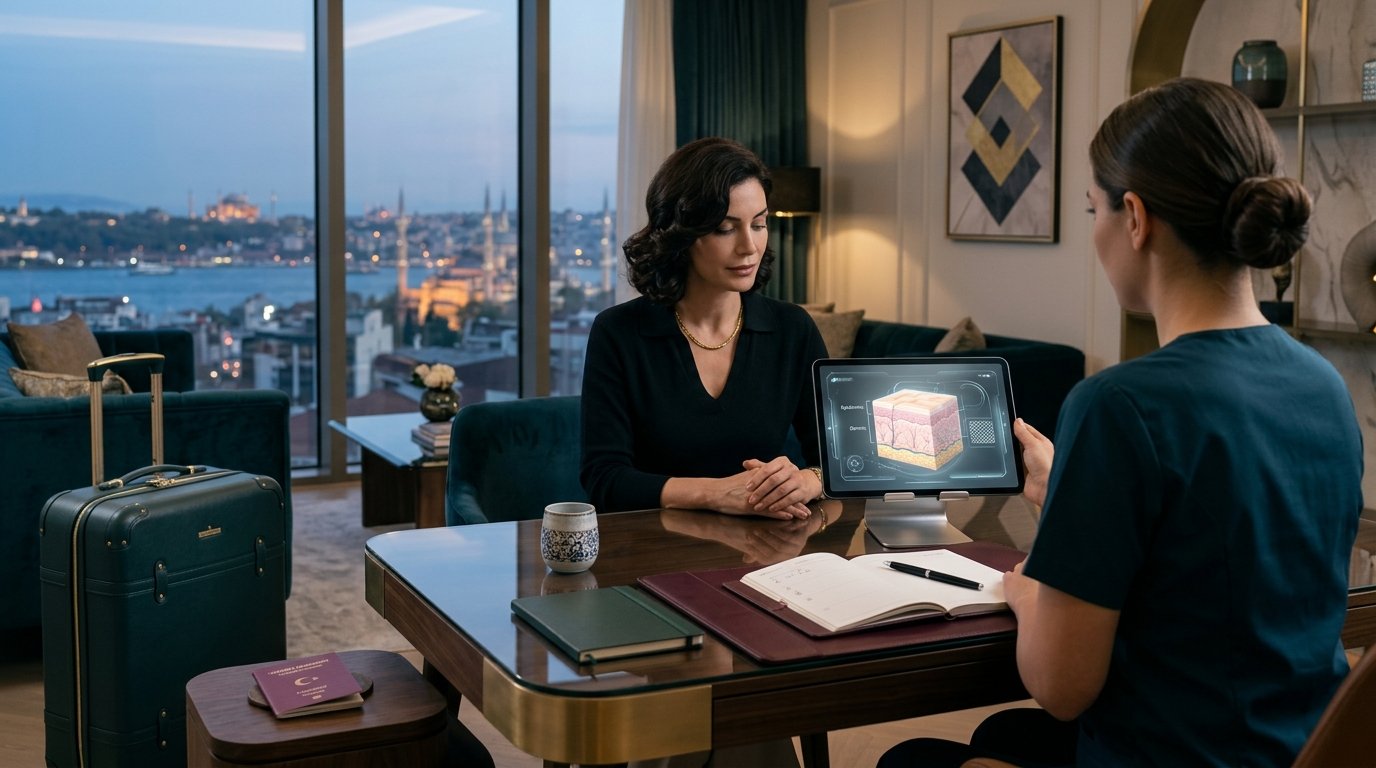
For many visitors, the easiest sequence is to place outdoor-heavy sightseeing earlier in the trip and keep the treatment day and the day after relatively light. That arrangement is not mandatory, but it is practical. It also makes it easier to take standardized photographs and follow a simple routine without constantly moving between hotels, airports, tours, and restaurants.
Think about hotel logistics
Hotel location can matter more than people expect. A clinic visit on the European side followed by a hotel on the opposite side of the city can add significant travel time, especially during busy hours. When comparing appointments, look at the full journey from hotel to clinic rather than the distance on a map. A central hotel with easy public transport or straightforward taxi access can make the day feel much easier.
It is also useful to have a clean, comfortable place to return to after the appointment. A long shopping schedule or nightlife plan immediately afterward may not match the calm recovery period some clients prefer. A treatment day can still be enjoyable; it simply works better when there is less pressure to look camera-ready every hour.
Keep travel documents and treatment information organized
International visitors often communicate with clinics through messaging apps, email, and booking platforms. Keep the appointment confirmation, clinic address, contact number, and any pre-arrival instructions in one place. If the clinic sends a treatment summary afterward, save it with travel documents so it is easy to find after returning home.
A simple note with the treatment date, modality, areas treated, and follow-up contact can be useful when reviewing progress later. This is especially true when a person is comparing photographs several weeks apart and trying to remember which products or procedures were used at different times.
How to Compare Clinics Without Reducing the Decision to Price
Price is a legitimate part of planning, especially for international visitors comparing several destinations. A meaningful comparison, however, should include what is actually being offered. A higher or lower fee does not reveal the consultation depth, device category, image documentation, follow-up process, or how clearly the clinic explains alternatives.
Ask whether the quoted fee is for one area or the full face, whether consultation is included, whether the appointment includes preparation time, whether aftercare guidance is provided, and whether follow-up is part of the service. Two clinics can use the same word “microneedling” while offering very different appointment structures.
Compare total value, not only the session fee
A low session price may look attractive until travel, hotel nights, transport, repeat visits, and time away from work are added. For a multi-session plan, those logistical costs can become larger than the treatment fee itself. It is useful to think in terms of total treatment journey rather than a single line on a price list.
A more expensive session is not automatically better either. Premium positioning should be supported by a better-organized experience, clear communication, careful assessment, transparent expectations, and professional follow-up. Luxury language without process is still only language.
Packages should follow planning
Packages can be convenient when the treatment plan is already clear, but the package itself should not define the plan. If a person has not yet had an in-person assessment or does not know how their skin responds, committing to a large number of sessions can create unnecessary pressure to continue even if the strategy later changes.
For visitors who live abroad, package practicality matters as much as the discount. Ask whether all sessions need to be completed in Istanbul, how long the package remains valid, and whether follow-up can continue remotely between visits. The best package is one that can realistically be completed.
How to Read Before-and-After Photographs Critically
Before-and-after photography can be valuable, but photographs can also exaggerate or hide texture. Lighting direction is one of the biggest variables. Side lighting creates shadows that make scars look deeper; flat frontal light can make the same scars look softer. Changes in camera distance, focal length, exposure, sharpness, skin hydration, makeup, and facial expression can also change the apparent result.
Look for comparable conditions
Useful comparison images are taken at similar angles, in similar lighting, with the same facial expression and without obvious smoothing filters. If the “before” photograph is dark, high contrast, and close to the skin while the “after” is bright, soft, and farther away, the visual difference may reflect photography as much as treatment.
For acne scars, multiple angles are especially important. A frontal photograph may miss contour changes that are visible from the side. A clinic using standardized photography can show progress more honestly and can use the same images to decide whether the treatment plan is working.
Timing matters
An “after” image taken immediately after treatment can be misleading because temporary swelling can make the surface look smoother. Long-term evaluation should happen after the early recovery phase and after enough time has passed for remodeling. When a multi-session series is planned, photographs taken before each session can show the direction of change over time.
Ask what the image represents
Not every photo on a clinic website is necessarily a patient result. Some may be stock imagery, manufacturer images, or editorial illustrations. A trustworthy website should make that distinction clear. If an image is presented as a treatment result, it should be possible to understand what procedure was performed and over what time period without relying on dramatic captions.
How to Read a Microneedling Website Critically
A clinic website can be useful before traveling, but it should be read as information plus marketing, not as a diagnosis. Look for specific nouns rather than vague adjectives. Words such as “medical-grade,” “advanced,” “premium,” and “next generation” do not tell you what modality is used, what the consultation includes, or how follow-up works.
A stronger page explains the basic mechanism, realistic goals, recovery, the difference between standard and RF microneedling, and why treatment planning varies by person. It should also be willing to discuss uncertainty. Real aesthetic decisions involve trade-offs, and a page that promises perfect outcomes for every skin type is less credible than one that explains variability.
Look at the sources
External references to organizations such as the FDA, the American Academy of Dermatology, PubMed, or official device manufacturers allow readers to verify important claims. A page does not become trustworthy merely because it has citations, but transparent sourcing is better than asking the reader to accept every statement on faith.
Internal links can also show whether the clinic treats the topic as part of a broader education system. For example, a person comparing texture treatments may benefit from reading about light-based options, chemical peels, acne-scar strategies, or post-treatment care rather than seeing only one sales page.
Communication Quality Is Part of Treatment Quality
International clients often judge a clinic first through WhatsApp, email, Instagram, or a website form. Fast replies are convenient, but speed is not the only measure of quality. A strong first-contact conversation should help clarify the main goal, explain what can and cannot be decided remotely, and make the next step easy to understand.
Good communication also includes consistency. The information given by reception, the practitioner, the website, and the aftercare message should not contradict each other. If one person says the procedure has no downtime while another later describes several days of visible recovery, confidence drops quickly.
Language matters
Istanbul serves clients from many countries, so language support can make a major difference. The important point is not simply whether someone can translate a price. The client should be able to understand consent, expectations, aftercare, and follow-up. If a concept is difficult to explain in the client’s preferred language, the clinic should slow down rather than rely on assumptions.
For that reason, multilingual communication is part of the broader Nexja Experience concept: the client journey should remain understandable from first contact through aftercare, not only during the procedure itself.


